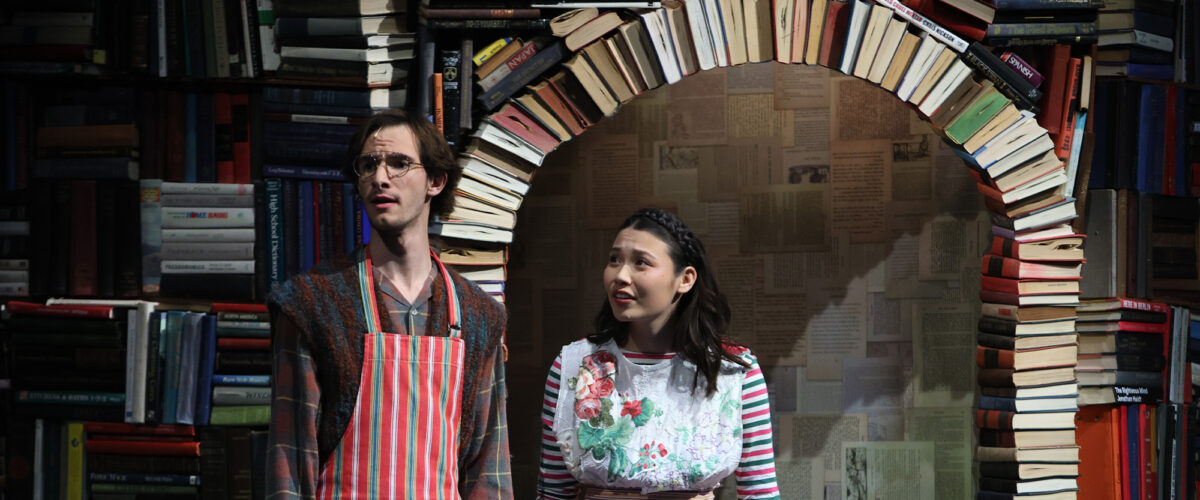
We create a safe forum in which you are free to experiment and critically examine the results. Although you will be equipped to proceed to graduate and professional schools in theatre, the major is primarily directed toward those interested in studying theatre as an interpretive and communicative tool, and finally as an artistic phenomenon. Students who follow appropriate course sequences and demonstrate sufficient ability in their work are encouraged to engage in projects that require a high level of responsibility and skill development.
Why Study Theatre?
The theatre department teaches acting, directing, playwriting, design, literature, theory and history, as well as all aspects of technical and production work. The theatre major is a highly integrated academic program, providing students with curricular and co-curricular opportunities in the cultural contexts and collaborative practices of theatrical art. So that you’ll have the fullest experience, we work to create many varieties and levels of student involvement, including traditional classroom interactions; advanced work in acting, design, directing, and scholarship; and mentored relationships with faculty and guest artists.
Though the program is demanding, our majors are also ambitious. In a typical class of 6–10 majors, it is not unusual to find some students carrying double majors in everything from physics to religion to political science. Theatre students have studied abroad at Oxford, earned fellowships for post-graduate study, and graduated Phi Beta Kappa. Williams is also affiliated with the National Theatre Institute for intensive theatre study off-campus.
Front Row Access
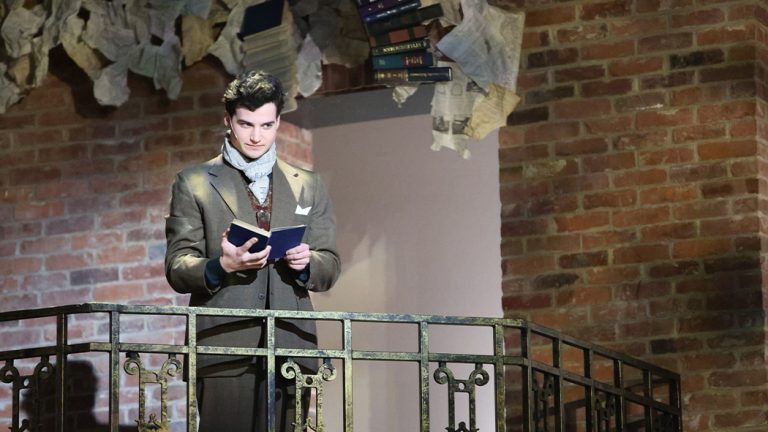
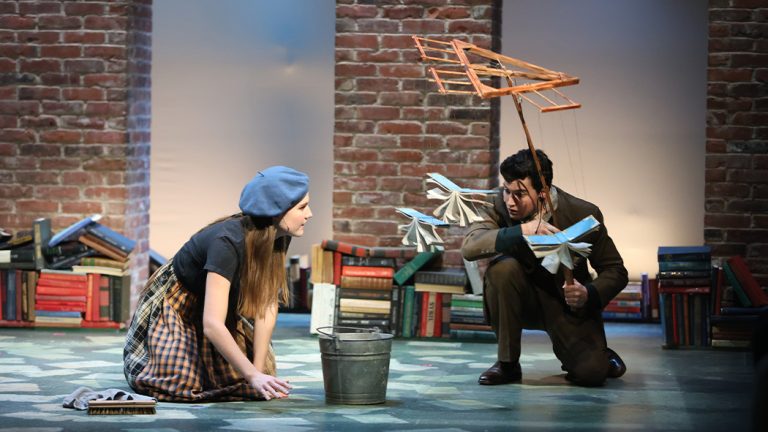
Take a look at our recent productions, meet our student performers and see what’s playing at the ‘62 Center for Theatre and Dance.

Major Requirements
Majors complete nine required courses and must also contribute to department productions in a variety of ways. Students have the opportunity to study the theory as well as the practice of theatre, and to examine western and non-western theatrical traditions. Because a deep understanding of theatre requires training and experience with the synthesis on stage, the major includes curricular study of production and performance, as well as continued participation in departmental stage production.
Major requirements include:
- Theatre 101 The Art of Playing: An Introduction to Theatre and Performance
- Theatre 201 Worldbuilding: Staging and Design For The Theater
- Theatre 301 Embodied Archives: Global Theatre & Performance Histories
- Theatre 401 Practicing Theory: Senior Seminar
- Five additional elective courses, taken from the department’s other offerings (including courses cross-listed with Theatre)
- Participation in a minimum of four department productions. Participation in at least one of these four must be in stage management.
Electives
Two of the five electives must be taken at the 200-level or higher by the end of the student’s junior year, and an additional two of the five must be taken at the 300-level or higher by the time of graduation.
Substitutions of other Williams’ courses, or of Study Abroad courses, may be made only with the consent of the department chair. Students should consult with the department chair regularly in planning a balance of practice and scholarship in their elective choices and in mapping a route through the major.
Production Requirement
All Theatre majors are required to participate in a minimum of four department productions. Participation in at least one of these four must be in stage management. Enrollment is by audition or appointment within the Theatre department. Assignment to productions in stage management must be made in consultation with the department Chair.
The department normally produces three productions per academic year. Students may enroll in multiple productions in the same semester and may repeat a production course by permission of the department Chair.
For each departmental production they participate in, a student will receive a partial credit. Production credits do not accrue, nor do they count towards a student’s 32 required course credits for graduation.
State of the Art Arts
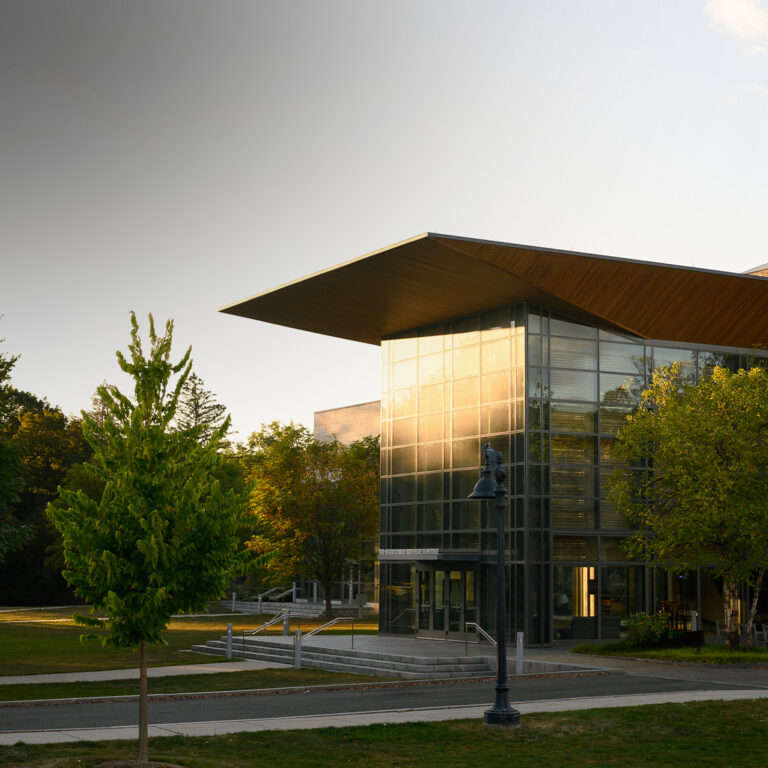
The ’62 Center for Theatre and Dance provides teaching, rehearsal, performance, and technical spaces for the Williams College Department of Theatre and is the summer home of the Williamstown Theatre Festival. It is equipped with three stages, a sprung floor studio with panoramic views of the Berkshire mountains, two additional practice spaces, and a costume shop.
The Degree with Honors in Theatre
Students considering admission to the Honors program in Theatre must have achieved at least a 3.5 grade point average in all Theatre courses, with a minimum of five courses completed by the fall term of their junior year (this GPA must be maintained throughout the senior year in order to achieve Honors), and have already demonstrated both ability and experience through coursework, production, and/or performance.
Applicants must also have a plan in place to complete their Stage Management requirement by the end of the first term of their senior year. For projects including a production element, all performances must occur within the second term of the yearlong Honors project.
Admission into the program will be determined on the basis of the student’s acceptance of the terms and conditions stated by the faculty. Students may request a specific faculty advisor. For more information, application timelines, proposal requirements and production categories, log in here.
Study Abroad
The theatre department attempts to work individually with majors and prospective majors who desire to study abroad. With careful planning, it is quite easy for students to complete the major in Theatre if they study abroad for one semester of their junior year. For those wishing to study abroad for more than one semester of junior year, a more complicated situation may arise, but one that often can be successfully managed through close consultation with the department chair.
Students are encouraged to consult with the department chair early in their Williams careers if they anticipate a combination of theatre major and study abroad.
Audition Information
For audition information, please contact Jennifer C. Hard, Production Manager, 413-597-2594 or [email protected].
Featured Courses
This is an introduction to the art and practice of making theatre. Students will learn about history, aesthetics, and approaches to performance.
This tutorial is an introduction to the analysis of socio-historical contexts of movement-based art and performance.
In this course students will examine the power of public presence through theory and practice.
Learning Objectives
We aim for students majoring in Theatre to:
- Pursue artistic practice in theatre-making and performance along with scholarly inquiry and the critical study of drama, and to recognize how these necessarily interrelate.
- Gain strong familiarity with historical contextualization and histories of theatre, and be attentive to the physical and social conditions of performance.
- Be proficient in a variety of disciplinary, practical and theoretical approaches to the study of theatre.
- Develop responsibility to craft and to the collaborative processes of theatre-making; and be open to collaborative methods, modes of thinking, and ways of creating.
- Develop close reading and critical analysis skills.
- Gain a sophisticated sense of how performance interacts with other artistic disciplines.
- Understand how the live presentation of bodies in space with sound and images creates opportunity for expression that is unique and powerful.
- Develop critical and performance skills through independent projects and individually-directed or conceived productions.
- Experience a wide range of challenges, including traditional classroom interactions; advanced work in acting, design, directing, or scholarship; and mentored relationships with faculty and guest artists.
- Learn by doing, both inside and outside of the classroom, and be alert to the wider place of the discipline within the humanities by drawing upon courses offered by faculty of the Language, Literature, Music, and Art Departments.
- Be attentive to ways the study of theatre, and the creation and presentation of theatrical works, fits into and enriches the overall environment of the College, and the wider world.
- Develop the traits of character which are associated with academic and civic virtues: including open-mindedness, commitment to community, ethical concern, resourcefulness, humility, kindness, respect, initiative and concern for others.
- Be suitably prepared to work in theatre professionally if this is their goal.