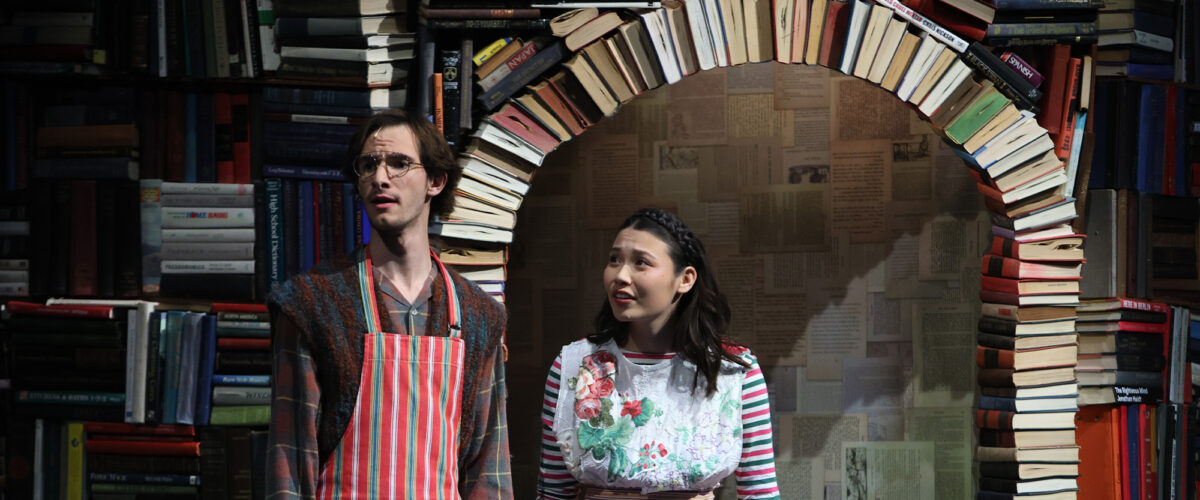
The Department of Theatre is committed to the merging of embodied practice and scholarship in the fields of theatre and performance studies. The curriculum is dedicated to the study, practice, appreciation, and interpretation of theatre, performance, and other time-based arts. The major in theatre emphasizes the collaborative nature of the theatre and performance making by drawing upon courses offered by faculty of the language, literature, music, and art departments.
Theatre Courses
THEA 101 (F) SEM The Art of Playing: An Introduction to Theatre and Performance This is an introduction to the art and practice of making theatre. Students will learn about history, aesthetics, and approaches to performance. Emphasis will be on the analysis of embodied practices and the relationship between the stage and everyday life. Through readings, audiovisual materials, performance exercises, and discussions we will engage with theatre as a constantly evolving art form. This course, open to all students, is a gateway to the major in Theatre, and is a prerequisite for THEA 201, THEA 204, THEA 301, and THEA 401. Taught by: Shanti Pillai | Catalog details THEA 102 (F) TUT Historical Research in Performance Studies This tutorial is an introduction to the analysis of socio-historical contexts of movement-based art and performance. Coursework will include readings about methods and analytical frameworks, while an important component of the course will be in-person viewings of artwork and performances at the 62 Center, in the college museum, and in surrounding institutions. During the semester, students will write and revise three essays to practice documenting, interpreting, and writing about movement-based artwork and performances as historical and cultural mediums. The course will enable students interested in dance, theater, and visual arts to hone their skills in the practice of analyzing still and moving images, while also offering students of history and art history the opportunity to develop competency in historical research. Taught by: Munjulika Tarah | Catalog details THEA 103 (F, S) STU Acting: Fundamentals In this course students will examine the power of public presence through theory and practice while expanding their talents, sensitivity, and imagination, and will increase their self-awareness, confidence, creativity, and other skills that are useful in social situations, public speaking, theatre performances, and virtual interactions. Taught by: Omar Sangare | Catalog details THEA 104 (S) LEC Greek Literature: Performance, Conflict, Desire In the Iliad, Paris’ desire for the famously beautiful Helen leads to the Trojan War, the devastating conflict between the Trojans and the Greeks retold and reimagined time and again in ancient Greek literature. The stories of Troy and its aftermath were performed not only as epic poems (as in the Iliad and the Odyssey), but also re-enacted by singing and dancing choruses, dramatized on the tragic stage, and recounted in oratory. Beginning with the Homeric epics, this course explores the recurring and ever-shifting debates, longings, hostilities, and aspirations that drive Greek literature and shape its reception, with a particular focus on questions of performance context and audience. Our attention to sound, movement, and staging will be enriched by consideration of select examples from the rich reception history of Greek myth in modern theater and dance. The nexus of performance, conflict, and desire will also give us a distinct perspective on many important topics within the study of Greek culture, including the embodiment of personal and collective identities, the workings of Athenian democracy, and the development of literary genres. This course will include readings from, e.g., Homer, Sappho, Herodotus, Aeschylus, Sophocles, Euripides, Aristophanes, Thucydides, and Plato, as well as viewings of relevant performance works. All readings are in translation. Taught by: Sarah Olsen | Catalog details THEA 109 (S) TUT The Art of Yoga: Practice, Philosophy, Politics, Possibilities This course offers an immersive, interdisciplinary approach to hatha yoga, the branch of yoga that emphasizes bodily techniques for channeling energy, and achieving balance and quietude. It has been practiced and theorized variously in South Asia since ancient times. More recently, beginning in the late 19th century, it has served as a source of inspiration for artists in various disciplines, including the theatre. Our work will follow four interrelated paths that will provide a broad context for our own experience and offer us tools for developing creativity: 1) We will dedicate ourselves to the careful study of the physical practice of yoga asanas, giving emphasis to biomechanical principles of alignment. Our study will include some basics of yoga anatomy; 2) We will study some allied philosophical principles, as they emerge from the Sanskrit text, Patanjali’s Yoga Sutras, and some current commentaries on that text, by means of expanding the significance of our practice to all areas of our lives; 3) We will discuss scholarship on its ancient origins and current manifestations; 4) We will examine how artists have incorporated elements of yoga into their practice. To explore how yoga might support our own artistic and innovative thinking, we will pair our practice with creative exercises. In this way, the course aims to explore the relationship of theory and practice. It will be of interest to students in the arts and anyone interested in fostering artistry and the imagination. Students must be prepared to engage in a physical practice of asana, as well as commit to reading, writing, and discussion. No previous experience with yoga is required. Taught by: Shanti Pillai | Catalog details THEA 129 STU Institutional Critique Last offered Spring 2019 This introductory course will investigate the performance potential of the radical art making methodology known as Institutional Critique. Influenced by Situationalism, and the Fluxus movement, Institutional Critique emerged as a way for artists to respond to the art worlds elitism, monopoly on culture, and dependency on Capitalism. Through collaborative performance based projects and readings students will explore the possibility of art to critically intervene in the hegemonic order and insight change within power relationships. We will also explore related movements such as Socially Engaged Practice, a term that describes art that is participatory and focuses as people as the medium. Artists covered will include: Thomas Hirshhorn, Tim Rollins, and Andrea Fraser. You do not need any prior experience just a willingness to use the power of voice and body. Taught by: Allana Clarke | Catalog details THEA 141 LEC Opera Last offered Fall 2023 An introduction to the history of opera, from the genre’s birth c. 1600 to the present. At various points in its 400-year development, opera has been considered the highest synthesis of the arts, a vehicle for the social elite, or a form of popular entertainment. Opera’s position in European cultural history will be a primary focus of our inquiry. We will also study the intriguing relationship between text and music, aspects of performance and production, and the artistic and social conventions of the operatic world. The multidimensional nature of opera invites a variety of analytical and critical perspectives, including those of music analysis, literary studies, feminist interpretations, and political and sociological approaches. Works to be considered include operas by Monteverdi, Lully, Charpentier, Handel, Gluck, Mozart, Rossini, Donizetti, Verdi, Wagner, Bizet, Puccini, Strauss, Berg, Britten, Glass, and Adams. Taught by: W. Anthony Sheppard | Catalog details THEA 150 LEC The Broadway Musical Last offered Spring 2026 Named for a specific road but enjoying a global impact, the Broadway musical has intersected with multiple styles and societal concerns over the past century. In this course, we explore the American musical theater’s roots and relationship to opera, operetta, vaudeville, minstrelsy, and Tin Pan Alley. Traveling through the genre’s history, we will encounter a wide range of musical styles, including ragtime, jazz, rock, and hip hop, and will explore several genre transformations, such as movies made into musicals and musicals into movies. We will develop a range of analytical skills as we investigate connections between choreography, lyrics, music, staging, and production. Throughout the semester, we will consider the genre’s representations and reflections of ethnicity, race, sexuality, and class. The syllabus includes representative works by Gilbert and Sullivan, Cohan, Gershwin, Kern, Weill, Rodgers and Hammerstein, Lerner and Loewe, Bernstein, Sondheim, Lloyd Webber, Tesori, and Miranda, with particular focus on such works as Showboat, Oklahoma!, Guys and Dolls, West Side Story, Hair, Rent, and Hamilton. Taught by: W. Anthony Sheppard | Catalog details THEA 201 (S) STU Worldbuilding: Design for the Theater This course examines designers’ creative processes as they investigate a theatrical text and then dream-into-being the fictional worlds of a hypothetical production. Class will consist of several practical projects in different areas of design. Because the course focuses on cross-disciplinary collaboration, students will practice responding to one discipline with another or amplifying one discipline with another: e.g. generating visual ideas in response to music, or musical ideas in response to an image, or creating a story in response to an existing space. We will practice a two-pronged technique in response to a text: developing a personal, intuitive creative response while simultaneously supporting all logistical requirements, resulting in an inventive yet dramaturgically sound design. Emphasis will be on folding this individual work process into a larger group collaboration by refining methods of communication, presentation, and group critique. Taught by: Anya Klepikov | Catalog details THEA 206 STU Directing for the Stage Last offered Fall 2025 An introduction to the resources available to the Stage Director for translating interpretive concepts into stageworthy physical realization. Kinetic and visual directorial controls, as well as textual implications and elements of dramatic structure, and strategies of working with actors and other collaborators will be studied in detail. Most assignments will involve hands-on directing projects presented in class for collective critique. Taught by: Samer Al-Saber | Catalog details THEA 207 STU Acting: Physical Theatre and Body Language Last offered Spring 2025 This semester Theatre 207 will focus on processes of Physical Theatre. The class is open to students interested in developing their ability in communication through the art of body language. Assigned research, analysis, discussions, and improvised exercises on stage will give us the opportunity to expand our understanding of physical vocabulary and will help us to express our intentions by evocative behavior. Based on various theatre techniques, this course will hone artistic skills for performance and improve students’ confidence in their interactions with other people. Taught by: Omar Sangare | Catalog details THEA 208 STU Voice, Speech & Song for the Actor Last offered Fall 2017 Continuing the vocal technique work in THEA 205, this course provides an intense practice that further deepens the body-voice connection, builds and troubleshoots speech technique, and expands vocal strength, range and endurance through song. Through incorporating the resonator techniques of Roy Hart and Meredith Monk, the speech drills of Edith Skinner and the fundamentals of musical training for the voice, students finish the course able to complete an hour long full voice/speech/song work out. In addition to building a repertoire of voice, speech and singing drills; students will explore how to “act” a song, combining speaking and singing, using songs from the plays of Bertolt Brecht. Taught by: Kameron Steele | Catalog details THEA 210 SEM The Art of Making Art: Production Management Across the Arts Last offered Fall 2025 An introductory look at management across the performing arts from the point of view of the Production Manager and Artistic Producer. How do these team members facilitate the conceptual ideas of creative teams while balancing the practical realities of the business of the arts? This course will examine how collaborators in a variety of fields breakdown barriers, embrace change and recover from failures. Through exercises, textual analysis and research projects participants will develop a theoretical creative project and will explore the management process in the following areas: communication, collaboration, scheduling, budgeting, human resources, negotiation and creativity. Taught by: Jennifer Hard | Catalog details THEA 211 SEM Performing Greece Last offered Spring 2021 Modern readers often encounter Homer, Sappho, Sophocles, and the Greek orators through written texts, yet their first ancient audiences experienced the words of these authors not in silence and solitude, but in live performance contexts. This course, therefore, will take up performance as a critical lens for interpreting ancient Greek literature, situating these works within a rich culture of song, dance, speech, and debate. We will survey the evidence for the musical, visual, and embodied aspects of Greek literature, and also reflect on the rewards and limits of enlivening the ancient world through the reconstruction and re-imagination of its performative dimensions. Our attention to performance will give us a distinct perspective on many important topics within the study of Greek culture, including the construction of personal and collective identities, the workings of Athenian democracy, and the development of literary genres, and it will also enable us to consider the reception and reperformance of Greek myth and literature from new angles. All readings are in translation. Taught by: Sarah Olsen | Catalog details THEA 214 SEM Writing for Stage and Screen Last offered Spring 2020 This studio/workshop course is designed for students interested in a semester-long immersion in the practice of dramatic writing for theater, film, television and audio. Students should expect to write most days. Our focus will be on the fundamentals of story, and the cultivation of each writer’s individual voice. In addition to reading existing dramatic texts of various genres and forms, and completing weekly prompts and exercises exploring character, dialogue, structure, theme, conflict and world building, students will work toward a longer final project. Students will present their own work regularly, and respond to each other’s work. The course will culminate in a staged reading of excerpts for the campus community. Taught by: Ilya Khodosh | Catalog details THEA 215 SEM Performance Ethnography Last offered Fall 2019 The course aims to explore the theory, practice, and ethics of ethnographic research with a focus on dance, movement, and performance. Traditionally considered to be a method of research in anthropology, ethnography is the descriptive and analytical study of a particular community through fieldwork, where the researcher immerses herself in the culture of the people that she researches. In this course students will be introduced to (i) critical theory that grounds ethnography as a research methodology, (ii) readings in ethnographic studies of dance and performance practices from different parts of the world, and (iii) field research in the local community for their own ethnographic projects. This is primarily a discussion-based seminar course and may include fieldwork, attendance at live performances, film screenings, workshop with guest artists etc. No previous dance or performance experience is assumed or required. Taught by: Munjulika Tarah | Catalog details THEA 216 (F) SEM Asian/American Identities in Motion The course aims to explore dance and movement-based performances as mediums through which identities in Asian and Asian American (including South Asian) communities are cultivated, expressed, and contested. Students will engage with how social and historical contexts influence the processes through which dance practices are invested with particular sets of meanings, and how artists use performance to reinforce or resist stereotypical representations. Core readings will be drawn from Dance, Performance, Asian, and Asian American Studies to engage with issues such as nation formation, racial and ethnic identity politics, appropriation, tradition and innovation among other topics. This is primarily a discussion-based seminar course, and might also include screenings, movement workshops, and discussion with guest artists and scholars. No previous dance experience is required. Taught by: Munjulika Tarah | Catalog details THEA 217 (F) STU Acting Through Impulse Acting Through Impulse: An actor’s job is inherently contradictory: we must remain present and alive onstage but craft a coherent, repeatable performance. We must access depth and intensity of feeling but do so sustainably, while remaining grounded in our bodies. This course will explore the link between aliveness and preparation, between impulse and regulation. Forging those links requires cooperation between the imagination, the body, and the text. Together, we will approach impulse from several angles: first, through movement and image, then through the operations of the nervous system, and finally through scenework. There will be journal and written assignments, but the bulk of the classwork will be practice-based, incorporating physical exercises, warm-up training, monologue work and scene performance. Taught by: Erica Terpening-Romeo | Catalog details THEA 219 (S) STU Dungeons & Dramaturgy: Collaborative Storytelling Through Character Analysis and Physical Dramaturgy In this course we will apply rigorous dramaturgy, character work, and long-form improvisation training to the format of a TTRPG (tabletop role-playing game). Students will choose a literary or dramatic character to play in a D&D-style game system. We will split our time in the first several weeks of the course between physical training and textual analysis/research. Then, in the second half of the course we will shift into active role play. I will serve both as professor and GM (game master), guiding the group through a world created for and around their assembled characters. We will work together in our role-play sessions to tell a rich, satisfying story grounded in our various source texts. Students will learn and exercise the skills of dramaturgical research, character analysis, vocal and physical character work, improvisation, and collaborative storytelling. They will also learn (and take part in building) the rules and mechanics of an adaptable game system that they can take with them outside of this course and beyond! Taught by: Erica Terpening-Romeo | Catalog details THEA 220 SEM Greek Tragedy Last offered Spring 2024 Ancient Greek tragedy was a cultural phenomenon deeply embedded in its 5th-century Athenian context, yet it is also a dramatic form that resonates powerfully with 21st-century artists and audiences. This course examines tragedy on both levels. We will read such plays as Aeschylus’ Agamemnon, Sophocles’ Electra, and Euripides’ Medea in English translation, considering their literary and dramatic features as well as their relationship to civic, social, and ritual contexts. We will discuss such topics as the construction of gender and identity on the dramatic stage, the engagement between tragedy and other literary genres, and the distinctive styles of the three major Athenian playwrights. We will also survey a set of recent productions and adaptations of these plays, with a particular focus on how modern playwrights and producers use Greek tragedy to explore justice, power, race, gender, status, and sexuality. We will consider how a dramatic form largely produced by and for Athenian citizen men became a creative resource for a remarkably diverse range of 21st-century artists, and explore how modern productions offer fresh perspectives on ancient material. All readings will be in English. Taught by: TBA | Catalog details THEA 222 TUT Solo Performance Last offered Spring 2020 In this tutorial, students will study the process of the creation of one-person performance pieces and will work individually or in collaboration to create original solo works. Each student will perform their own piece at the end of the semester in a final public performance. Students will learn about developing a general production concept and scenic vision, choosing or writing a script, building a character, designing (set, lighting, costume, and sound), publicity, and combining all aspects of theatrical craft to create a successful solo piece. Course time will be divided between class discussion and individual rehearsals with the instructor. Students interested in acting, directing, writing, producing, dramaturgy, design, stage management, and criticism are all welcome. Taught by: Omar Sangare | Catalog details THEA 225 (F) SEM Facilitating Creativity: Introduction to Stage Management Theory In this course students will explore the pillars of stage management (leadership, communication, safety, collaboration, empowerment) and theatre making from the point of view of the stage manager. Using the production process (pre-production, rehearsals, tech, performances, closing) as the framework, students will develop communication and organizational tools that break down barriers in the creative process. Management theory is integrated into each step, allowing each student to identify how their practice can be informed by theory and to begin cultivating their individual management style. Taught by: Jennifer Hard | Catalog details THEA 226 SEM Gender and the Dancing Body Last offered Spring 2026 This course posits that the dancing body is a particularly rich site for examining the history of gender in America and beyond. The aim of the course is to explore ideas related to gender as prescribed by dominant cultural, social, and religious institutions, and how dance has been used to challenge those normative ideologies. We will examine a wide range of dance genres, from stage performances to popular forms to dance on television, with particular attention to the intersections of race and class with gender. This is primarily a discussion-based seminar course and may also include film screenings, movement workshops, discussions with guest artists and scholars. No previous dance experience required. Taught by: Munjulika Tarah | Catalog details THEA 227 TUT Diversity Through Performance Last offered Spring 2026 Theatre can be viewed not be a destination but a vehicle in which we can embark upon a journey of storytelling. Audiences and performers take away inspirations, dreams, and hopes, all the while experiencing new voices and realizing progressive change. In this tutorial, students will create and explore a stage character who might seem strange, foreign, or unacceptable to the cultural beliefs. Who you are performing on stage is not you! It is a character for the audience to reflect upon. By exploring and analyzing human nature to develop their character, students will examine how people form beliefs, make choices, and ultimately, act. Performers do not have to be aligned with or support the beliefs of the character they play. Each student will conclude their exploration by writing a script and presenting the essence of their research in a brief performance that portrays the character based on the student’s imagination, experience, or drama literature. Taught by: TBA | Catalog details THEA 229 SEM Modern Drama Last offered Spring 2026 An introduction to major plays and key movements in European and American theatre since the late nineteenth century. Our focus will be on close reading, with attention also to questions of performance and production. Plays to be discussed will likely include: Ibsen, Hedda Gabler; Wilde, The Importance of Being Earnest; Chekhov, The Cherry Orchard; Pirandello, Six Characters in Search of an Author; Brecht, Mother Courage; Miller, Death of a Salesman; Beckett, Waiting for Godot; Hansberry, A Raisin in the Sun; Pinter, Betrayal; Churchill, Cloud Nine; Stoppard, Arcadia. Taught by: James Pethica | Catalog details THEA 231 (S) SEM Race and Performance How does race function in performance, and, dare we say, “live and in living color?” How does one deconstruct discrimination at its roots? From a perspective of global solidarity, we will read plays every week and examine how race functions in theater and performance. This class offers students a discussion that does not center whiteness, but takes power, history, culture, philosophy, and hierarchy as core points of debate. In the first three weeks, we will establish the common terms of the discussion about stereotypes, representation, and historical claims, but then we will quickly move toward an advanced conversation about effective discourse and activism through art, performance, and cultural production. In this class, we assume that colonialism, slavery, white supremacy, and oppressive contemporary state apparatuses are real, undeniable, and manifest. Since our starting point is clear, our central question is not about recognizing or delineating the issues, but rather, it is a debate about how to identify the target of our criticism in order to counter oppression effectively and dismantle long-standing structures. Not all BIPOC communities are represented in this course, as claiming comprehensive inclusion in a single semester would be tokenistic and disingenuous. Instead, we will aspire to understand and negotiate some of the complexities related to race in several communities locally in the U.S. and beyond. Taught by: Samer Al-Saber | Catalog details THEA 232 (S) SEM American Dreams Deferred: Postwar Drama in the U.S. “What happens to a dream deferred?” asks Langston Hughes in his poem “Harlem,” the titular source for Lorraine Hansberry’s 1959 drama A Raisin in the Sun. Focusing on the myth of the “American dream” and its tragic deferrals, both onstage and off, this course offers an introduction to U.S. drama in the postwar era, from roughly 1945 to the present. Other content for discussion may include: O’Neill’s A Long Days Journey Into Night, Miller’s Death of a Salesman, Williams’ The Glass Menagerie, Styne/Sondheim/Laurents’ Gypsy, Albee’s The American Dream, Shepard’s Curse of the Starving Class, Fornés’ Mud, Wilson’s Fences, Mamet’s Glengarry Glen Ross, Kushner’s Angels in America, Parks’ The America Play, Alfaro’s Electricidad, Hwang’s FOB, Mac’s 24 Decade History, Vogel’s Indecent, and Nottage’s Sweat. Emphasis will be placed on close reading, analysis, and discussion of plays and their theatrical productions. We will also examine how constructions of gender, race, ethnicity, sexuality, immigration status, and ability play into theatrical critiques of the American dream. As of today, roughly 70% of Americans say they do not believe in the American dream, yet its mythos continues to haunt the dramatic imagination. Taught by: TBA | Catalog details THEA 233 TUT Theatre Masters: Become One of Them Last offered Fall 2021 How well do you know Stanislavsky, Strasberg or Adler? This tutorial offers an exploration of the most notable theatre artists from the past and present. Students will select a specific master with a unique theatrical style, and will study that iconic artist’s particular method or approach. Students will be encouraged to choose any master who had made a significant contribution to theatre — such as Constantine Stanislavsky, Stella Adler, Sanford Meisner, Lee Strasberg, Bertolt Brecht, Michael Chekhov, Jerzy Grotowski, Tadeusz Kantor, Pina Bausch, Tadashi Suzuki, Anne Bogart, etc. Each student will conclude their exploration by writing a script and presenting the essence of their research in a brief performance (for the camera) — portraying the legendary icon at work, in a social situation, or in solitude. You learn more about others when you become them, if only for a moment. Taught by: Omar Sangare | Catalog details THEA 234 (S) STU Acting and the Camera This course introduces and develops foundational skills and techniques that are specific to filmed performance. Students will discover how to incorporate these skills into a process that is spontaneous and repeatable. Using exercises, scenes and screenplay analysis, you will expand your expressivity for work with the camera. We will also touch on techniques for use in auditioning for filmed performance. Students will be required to read screenplays and reflect on and respond to viewings of world cinema, their own recorded work and that of their classmates. Taught by: Marc Gomes | Catalog details THEA 239 STU Introduction to Dramaturgy: The Art & Practice of Storytelling Last offered Fall 2024 The dramaturg is a storyteller and major collaborator in theatre. Working as part of an artistic ensemble, the dramaturg helps to tell a story, shape a theatrical production, and facilitate the rewarding process of creating a world on stage. This seminar/studio course will introduce students to the fundamentals of dramaturgy, including: new play development, production research, literary management, educational outreach, criticism/journalism, community engagement, and translation/adaptation. Assignments over the term will be hands-on, practical, creative, and project-based and include independent writing, research, and oral presentation. We will write, and we will revise. We will also read plays and discuss urgent topics in the theatre industry. During some terms, students may be invited to participate as dramaturgs on Theatre Department productions. As a culminating project, students will complete a creative written adaptation and accompanying dramaturgical casebook for a source of their choosing. Students may be asked to attend live performances and exhibitions when relevant. Taught by: Amy Holzapfel | Catalog details THEA 250 TUT Global Feminist Theatres: From Plays to Demonstrations Last offered Spring 2026 What makes a work of theatre feminist? How does live performance engage with different models of feminism, liberal, radical, materialist, or post? Is “feminism for everybody,” as bell hooks argues, or only for a select few? Focusing on the work of women and femme-identifying artists of the global majority, this tutorial examines the social, artistic, and political relations of feminism to theatre and performance worldwide. Emphasis will be placed on collective, participatory, and communal modes of theatre, as well as activist and demonstration contexts in which feminist performance has played a major role. Artists and groups to be considered may include: Spiderwoman Theatre, Caryl Churchill, Sphinx Theatre, Ntozake Shange, Griselda Gambaro, Cherríe Moraga, Arethusa Speaks, Maya Krishna Rao, Lisa Kron, Young Jean Lee, Taylor Mac, Alexis Scheer, Clare Barron, Kimberly Bellflower, and others. Criticism may include writings by: Audre Lorde, Judith Butler, bell hooks, Gloria Anzaldúa, Kimberlé Crenshaw, Eve K. Sedgwick, Jill Dolan, and José E. Muñoz. This course will follow a standard tutorial format, with students taking turns each week either presenting a 5-page paper or responding to the work of their peer. In up to one case, students may opt to present a more creative or auto-critical response as their paper. Taught by: Amy Holzapfel | Catalog details THEA 256 STU The Expressive Body Last offered Spring 2020 This course aims to allow students to develop the body’s capacities for expression and reflect on the experience of movement. On one hand, we will enhance our potential as performers — both in the rehearsal process and on stage. On the other, we will explore how training our corporeal intelligence can enrich our everyday lives. Studio sessions will seek to cultivate strength, endurance, flexibility, alignment, and balance so that we can gradually expand the body’s range of safe possibilities as we begin to work with images, gesture, and emotions. Exercises will be drawn from a range of movement and theatrical techniques including yoga, Bharatanatyam, contemporary dance, Grotowski, butoh, and Schechner’s Rasaboxes. Integral to our work will be consideration of the relationship between words, objects, and moving. Concurrently, we will read, write, and discuss some significant ideas about the consciousness of the body to expand our understandings of ourselves from various perspectives. The spirit of the class is one of bold investigation and refined observation in the context of supportive camaraderie as we all grapple with encountering the new, the surprising, and the wonderfully unexpected. Taught by: Shanti Pillai | Catalog details THEA 258 STU Color in Art, Design and Performance Last offered Fall 2025 Color is a powerful tool of expression in art and design. In this studio course, students will play and experiment with color to better understand its behavior and possibilities. Our exploration will include simple studies with colored paper, experiential activities with natural and theatrical light, and discussions of art objects, spaces, performance, and infographics. We will observe and document natural color phenomena such as shadows, rainbows, and the aerial perspective of the surrounding mountains. Through analysis and through making our own creative decisions, we will work to understand how artists and designers use color to express, communicate and even manipulate our perception. Selected readings will provide some context for how available technologies and scientific thinking around color at a particular historical moment have affected the use of color in art. One example of this are the French Impressionist painters featured at the Clark, who actively incorporated contemporary scientific discoveries around color perception into their work. No previous experience with design and art is required: bring your curiosity and be open to seeing things differently. Taught by: Anya Klepikov | Catalog details THEA 266 (F) STU Introduction to Playwriting Are you tired of the classics? Were you frustrated by casting choices in the past? Have you struggled to find a play to direct? Sometimes, you must step away from the canon and create your own work. Do you have something to say about race, gender, ethnicity, nationalism, yourself, and the Other? Do you have a story to tell? Did you ever want to write your own play but didn’t know how to start? This is your chance. In this course, you will participate in a series of workshops that will lead to the writing of your first play. You will be guided through the principles of playwriting, beginning with understanding the basics: plot, character, dialog, setting, and theatricality. The mechanics of playwriting will be enhanced by a theoretical understanding of the concepts of genre, style, and aesthetics. Every week, your homework will be to write new dialogs, leading to the first draft of your first play. In class, students are expected to read each other’s work aloud and, on occasion, to stage it. By the end of the semester, having brought at least one play into the world, you will not become an experienced playwright, but you will be well on your way to understanding the foundations of the craft. This course culminates with a festival of public staged readings of original student work. Taught by: Samer Al-Saber | Catalog details THEA 271 SEM Acting Out: Performativity, Production, and Politics in East Asian Theatres Last offered Spring 2025 “Asian Theaters,” for those in the West, can conjure up a variety of exotic impressions: spectacle and cacophony, mysterious masks and acrobatic bodies, exquisite styles and strangely confusing conventions. Although Asian theaters have been studied systematically in the West for at least a century, the West has never truly left its “othering” look at them. Yet, what is “different” for the West is bedrock for Asian cultures. Theatre, one of the most important and dynamic forms of cultural production and communication, has actively involved all strata of Asian societies for a millennium. How to explain theatre’s continued presence and relevance for Asian nations? What do the traditions of Kun, Kabuki, and P’ansori reveal about the cultures and communities in which they were created? This course seeks to understand from the Asian perspective, rather than “exoticize” and “other,” musical and dance theatres from China, Japan, and Korea. Examining the evolving presentations of signature dramas dating from the sixteenth to the eighteenth centuries, we will act out Asian theatres in the following ways: (1) by reading the original plays in translation in tandem with their contemporary and intercultural reproductions, we will explore how Asian theatres fare in the era of globalization within and beyond national borders; (2) by revealing the “technologies” of writing, reading, acting, and staging these plays in different cultural milieus, we will consider what kinds of language and rhetoric, forms of music and movement, as well as visual components are deployed to convey evolving messages; (3) by considering key performances held outside of the proscenium stage, we will gain exposure to alternative theatrical spaces in Asian and diasporic communities that reform performing conventions, reconfigure staging environments, and renegotiate cultural values. In this manner, we will together gain an appreciation for the aesthetic devices, thematic concerns, and production politics of East Asian theatres and their global reproductions. Class materials include drama, production videos, and invited zoom sessions with Asian theatre practitioners and directors who live in the U.S. and other diasporic communities. All materials are in English. No language prerequisite.
Funded by the Global Initiatives Venture Fund, this course includes an all-expense-paid travel component, a cultural and academic exchange project titled “Redefining Amateurism: Experientail Learning with Student Theatre in Contemporary China,” which will bring up to eight Williams students to Nanjing, China during the Spring Break (3/23-4/3/2025). Students will participate in workshops with playwrights and theater-makers in contemporary China and engage in black-box theater productions with students from Nanjing University and Shanghai Theatre Academy. This travel component is OPTIONAL for students taking this course. However, students enrolled in this class will receive priority consideration to be included in the free travel project. Selection criteria include active participation, excellent performance in the course, etc. Taught by: Man He | Catalog details THEA 272 STU Theatre & Environment: Site, Nature, Ecoperformance, Utopia Last offered Spring 2022 What is theatre’s relation to the environment, whether natural or social? How does the site, place, or ecology of a performance change its meaning and reception? What role can live performance play in grassroots campaigns for climate action or environmental justice? How can we use theatre to, in the words of adrienne maree brown, “practice, in every possible way, the world we want to see?” In this combined seminar/studio course, participants will work collaboratively to create a series of mini-performances based on four categories: site, nature/ecology, ecoperformance, and utopia. Acknowledging the deep inequities (racial, gendered, ethnic, class-based) that constitute all human and environmental interaction, we will work to understand how art’s relationship to the environment is itself shaped by the historical legacies of empire and global capitalism. As a contribution to the work of the studio, each student will share independent research on an artist, activist movement, or collective of their choice, such as: Hito Steyerl, Ellie Ga, Marta Rosler, Joan Jonas, Paul Chan, Theaster Gates, Bread and Puppet, Punch Drunk, En Garde Arts, Artichoke Dance, Talking Birds, Extinction Rebellion, Greenpeace, and others. As a special project in the class, we will collaborate with The Zilkha Center to create performances that engage directly with topics relevant to the campus and surrounding community. This is a seminar and maker’s course that invites students to create, develop, perform, and share their work with each other and, in some cases, public audiences. Taught by: Amy Holzapfel | Catalog details THEA 284 SEM Global Digital Performance Last offered Fall 2020 This course explores the ways in which digital technologies are shaping performance practices. We will consider theater, dance and performance art, as well as the use of social media in political movements and everyday life. We will begin by examining the long history of mediatization in performance. From painting, puppetry and photography to video, VR and Tik Tok, performers’ bodies have always been, in some sense, “mediated.” We will interrogate the affects and power relations at stake in questions of “liveness,” paying particular attention to how the representation of bodies is embroiled in longstanding imperialist projects of representing the “Other,” racialized and gendered modes of viewing, and global regimes of neoliberal surveillance. On the other hand, we will examine the role digital communication platforms play in political resistance. We will apply our growing understanding of the pitfalls and potential of digital technologies to examining the aesthetic strategies and political projects of artists and their audiences from various parts of the world. Throughout our work we will acknowledge how access to new technologies, as well as the meaning given to their use, vary between national, cultural, and class contexts. This includes keeping in mind the “digital divide” so that we can chip away at our common sense assumptions that the internet and digital art making are inherently democratic. Taught by: Shanti Pillai | Catalog details THEA 285 STU Lighting Design for Performance Last offered Spring 2026 Lighting Design touches every element of a theatrical production’s visual world. This class will provide instruction in how to translate a dramaturgical point of view into a lighting design. The process of lighting design for the stage combines storytelling and craft. This class will provide instruction in the basic physics of light and color, the use of angle, intensity, color, texture and movement of light as compositional storytelling tools. Basic practical knowledge about stage lighting equipment will also be covered. Students will use this foundational knowledge to translate their creative concepts into full lighting designs which will include creation of lighting paperwork, focusing lights in the theater, writing cues, and other programming skills. The course will use technical readings as well as music, plays, musicals, opera and dance to discover the lighting design process. The class format will be a combination of lectures, demonstrations, discussion and practical labs. Taught by: TBA | Catalog details THEA 286 STU Sound Design: Foundations & Experiments Last offered Spring 2025 What roles can sound play in a theatrical context? How porous is the border between music and sound? What happens when we begin to consider our surroundings through the lens of sonic potential? We will explore the fundamentals of sound design beginning with deep listening, sonic ideation from script analysis, musique concrète, creative audio manipulation techniques, and principles of theatrical system design. We will then delve into experiments approaching the cutting edge of sound including real-time systems, custom controllers, and spatial sound. Our focus will be on sound design for live performance but several topics will apply to recorded media as well. Some fluency in a digital audio workstation (DAW) preferred but not required. Taught by: Michael Joseph Costagliola | Catalog details THEA 289 STU Introduction to Scenic Design: The World of a Fairy Tale Last offered Fall 2025 This introductory course offers the opportunity to experience the process of creating a scenic design in the context of Sondheim’s Into the Woods musical. How does a set designer create the world of a fairy tale, in this case, a deconstructed fairy tale? The Theatre Department’s Fall production of “Into the Woods” as well as other productions of fairy tales will be our inspiration while we explore the language, tools, and technical skills involved in the creation of a scenic design. We will also consider adjacent instances of 3-D fairy tale worlds in visual art including the concurrent Mass MOCA installation of Osman Khan’s “Road to Hybridabad”. Each student will create their individual scenic design for Into the Woods. Students will work through the different steps of the scenic design process from text analysis and visual research to sketching, model-building and drafting. In learning to communicate artistic ideas through technical drawings, students will also expand their understanding of digital technology by drafting in the Vectorworks software, an entertainment industry standard. For those who want to engage in leadership roles related to scenic design in productions on campus and in the department, this is a great first step. No previous scenic design experience is necessary. Taught by: Anya Klepikov | Catalog details THEA 290 STU Theatre Department Production Last offered Spring 2021 Participation in the production program is offered as a partial credit fifth course, is open to all students, and can only be taken on a Pass/Fail basis. Theatre Majors are required to participate in four department productions, and must serve as stage manager for one of them. Depending on their role in the production process, students will be admitted to Theatre Production courses by permission of the department Chair, following casting and the assembly of the artistic and production team. Students may participate in a production in one of three major roles: stage management, performing (actor or actress, musician, dancer, etc.), or non-performing (director, designer, dramaturge, choreographer, music director, production manager, etc.). Stage managers or performers should expect to be in rehearsals, generally scheduled during the evening hours from 6-10PM, for up to twenty hours per week during a five to ten-week long production process, as well as up to ten hours per day during tech weekend and up to six hours per day during the performance run of the show. Non-performing roles may be expected to be involved in the production process before the start of rehearsals, participating in meetings, auditions, as well as a post-mortem process for each show. Entrance into a production for actors and major artistic roles are based on competitive auditions or prior experience. There is no online registration. Repeatable course numbers are designated as follows: 291 (Stage Management Production I); 292 (Stage Management Production II); 293 (Stage Management Production III); 294 (Performing Role Production I); 295 (Performing Role Production II); 296 (Performing Role Production III); 297 (Non-Performing Role Production I); 298 (Non-Performing Role Production II); 299 (Non-Performing Role Production III). Evening courses and exams will take precedence over half credit courses. Students may still participate in department productions even if they choose not to enroll for credit. Taught by: Omar Sangare | Catalog details THEA 301 (F) SEM Global Theatre Histories The great performer Taylor Mac once said that the job of any theatre artist is to “honor the past while moving culture forward.” This course introduces students to the archives of global theatre and performance history, from ancient times to roughly 1900. We will also consider how artists today interrogate historical sources as way to “move culture forward.” Topics may include: performance cultures of ancient Egypt, Greece, and Rome; classical theatres of India, China, and Japan; dance and masquerade forms of Italy, Mesoamerica, Korea, and Africa; dramatic cultures of early modern England, France, Spain, and Germany; and popular theatres in the U.S., Scandinavia, and Russia. While attending to theatre’s formal aspects, we will focus on the relationship of performance to culture, politics, and society. Note: This course is required for Theatre majors and is a prerequisite for THEA 401. Taught by: Amy Holzapfel | Catalog details THEA 302 TUT Scenic Design and Experimental Performance Last offered Spring 2015 The artistic, intellectual, and practical roles of a set designer vary widely, from the spectacle of Broadway to the do-it-yourself ingenuity of downtown theater. In contemporary experimental theater designers are essential parts of the ensemble, contributing equally to devised work alongside directors, writers, performers and dramaturgs. Design is not viewed as a response to the script, but rather an initial condition: a world whose creation describes the limits of the play while also providing the necessary components for that play to exist. In this way the act of designing and the act of devising can be seen as inextricably entwined–even interchangeable.
This course explores a range of techniques and methodologies utilized to create stage environments in traditional and experimental modes. Grounded in textual analysis and research, and emphasizing process, critique, and revision, we will create theoretical stage designs in response to a variety of performance texts. These may include plays, musicals, operas, physical- and dance-theater, and other work that is deeply grounded in the physicality of performer, spectator and performance environment. Emphasis will be on sketching and model-making as the primary means for developing and communicating design ideas Drafting and digital tools will also be factors in course work, which will include training and mentorship in all materials and craft. Taught by: David Gürçay-Morris | Catalog details THEA 304 SEM The Gay Menagerie: Gay Male Subcultures Last offered Fall 2022 Bears. Cubs. Otters. Pups. Twinks. Radical Fairies. Leathermen. Mollies. Drag queens. Dandies. Sisters of Perpetual Indulgence. Gay men, including gay trans men, have organized themselves into various subcultures within their community for centuries. This seminar is devoted to exploring these subcultures in (a mostly US-context) in greater detail using ethnographic texts, anthropological studies, historical accounts (including oral histories), and media. Topics include cruising and flagging, the anthropological significance of gay bars, histories of bath house culture, rural vs urban queer experiences, the ball scene, drag, diva worship, the reclamation of “fabulousness and faggotry,” the leadership roles of trans women and effeminate gay men in activist movements, gay gentrification, the growth of gay consumerism/ gay tourism/homonationalism, hierarchies of masculinity in the gay community (i.e., masc for masc culture), HIV/AIDS and the politics of PrEP, chemsex, the role of racialized dating “preferences,” genealogies of BDSM and leather culture, sexual health and discourses of “risk,” the politics of barebacking and other sexual practices, queering consent, and the effects of hookup apps on gay culture. In addition to lectures, and discussions, there will also be some low-key performance-studies based exercises in queer praxis (e.g., drag workshops, mock debates, animal improvisation, role playing, etc.) Taught by: Gregory Mitchell | Catalog details THEA 305 (F) STU Designing Character: Introduction to Costume Design for Performance This course introduces students to the processes and techniques of costume design for performance. Students will practice building character and storytelling by creating sketches in response to text, music, and movement. Coursework is project-based and will focus on skills such as developing a discriminating eye when searching for best quality period research (we will lean on sources like WCMA’s Object Lab and Special Collections), tailoring the medium of expression to an artistic idea (watercolor/pastel/paper collage/freehand drawn/digitally drawn/AI generated), and using the budget to your creative advantage. Class projects will include Ben Heineman’s historical French Revolution play Terror is the Order of the Day, Stravinsky and Balanchine’s fairytale ballet The Firebird, and Anne Washburn’s post-apocalyptic play Mr. Burns a post-Electric Play. Drawing experience is not required, and students will have the opportunity to work with different rendering approaches from hand drawing to Photoshop and AI generation. In addition to required local performance viewings, the course features several figure drawing sessions with a live model and professional guests associated with the production of Mr. Burns… directed by Erica Terpening-Romeo at the ’62 this fall. Taught by: Anya Klepikov | Catalog details THEA 306 (S) STU Acting Shakespeare Acting Shakespeare: In this course we will learn to understand, unpack, and embody Shakespearean text. Our work will be both intellectually and physically rigorous, with equal time spent on the meaning and mechanics of the language–and decoding the secret directions for actors Shakespeare embedded in his plays–and on the physical and vocal training necessary to fully embody these texts. Actors must feel empowered to take full ownership of Shakespeare’s work, rather than being too reverent or shrinking in its shadow. So we will spend the final part of the semester “meddling” with Shakespeare, finding opportunities to explode, expand, and explore these endlessly resilient and versatile plays. Class work will include written assignments as well as rigorous scene work and monologue work. We will work with selections from several plays, including Hamlet, Twelfth Night, Measure for Measure, Romeo and Juliet, and Richard III. Taught by: Erica Terpening-Romeo | Catalog details THEA 309 (S) STU Scene Study: Chekhov and Realism This course introduces students to realist acting techniques through scene study drawn from the plays of Anton Chekhov. Students will examine how Chekhov’s contribution to realism developed in the late nineteenth and early twentieth centuries, alongside playwrights such as Ibsen and Strindberg, marked a shift from plot-driven drama toward character, interiority, and social circumstance as central elements of dramatic action. Using scenes from The Seagull, Uncle Vanya, Three Sisters, and The Cherry Orchard, students will learn to identify objectives, obstacles, and given circumstances as mechanisms for scene analysis and as a roadmap for the actor’s work. Through rehearsal and class presentations, students will develop an understanding of realism as a late modern theatrical form shaped by changing ideas of subjectivity, time, and social life. The course emphasizes disciplined rehearsal processes and collaborative scene work, offering students a framework for engaging Chekhov’s plays living material for contemporary performance. Taught by: Marc Gomes | Catalog details THEA 316 STU Scenic Design for the Stage Last offered Fall 2024 Students in this course will explore the tools and techniques required to create physical environments for live performance. An exploration of how text and research effects visual ideas and the development of a strong visual world that supports the text of the piece. Students will explore and develop the use of sketching, drafting, photoshop, and physical model making in this course. Taught by: Lawrence Moten | Catalog details THEA 317 SEM Black Migrations: African American Performance at Home and Abroad Last offered Fall 2025 In this course, students will investigate, critique and define the concepts migration and diaspora with primary attention to the experiences of African Americans in the United States and Europe. Drawing on a broad definition of performance, students will explore everything from writing and painting to sports and dance to inquire how performance reflects, critiques and negotiates migratory experiences in the African diaspora. For example, how did musician Sidney Bechet’s migration from New Orleans to Chicago to London influence the early jazz era? How did Katherine Dunham’s dance performances in Germany help her shape a new black dance aesthetic? Why did writer James Baldwin go all the way to Switzerland to write his first novel on black, religious culture in Harlem? What drew actor/singer Paul Robeson to Russia, and why did the U.S. revoke his passport in response to his speeches abroad? These questions will lead students to investigate multiple migrations in the African diasporic experience and aid our exploration of the reasons for migration throughout history and geography. In addition to critical discussions and written analysis, students will explore these topics through their own individual and group performances in class. No prior performance experience is necessary. Taught by: Rashida Braggs | Catalog details THEA 321 SEM Arts Organizing in Africa and the Diaspora Last offered Spring 2024 At the heart of this class is the question, how do artists and organizations use the performing arts to effect social change in their communities? Drawing from a number of case studies from throughout Africa and the African Diaspora, we will first endeavor to understand and contextualize issues related to education, social uplift, the environment, and the economy as they relate to specific communities. We will then examine how a series of organizations (from grassroots campaigns to multinational initiatives) utilize the performing arts in response to those issues.
Among the issues we will discuss at length are:
-How do performers and organizations navigate the interplay between showcasing the performance talents of individuals and groups and foregrounding an issue or cause? More broadly, what dilemmas emerge as social and aesthetic imperatives intermingle?
-What are the dynamics between people acting on a local level within their communities and their various international partnerships and audiences?
-How can government or NGO sponsorship help and/or hinder systemic change?
By the end of the semester, students will be equipped with conceptual frameworks and critical vocabularies that can help them ascertain the functions of performance within larger organizations and in service to complex societal issues. Throughout the course, we will watch and listen to a variety of performances from traditional genres to hip-hop, however this class is less about learning to perform or analyze any particular genre than it is about thinking through how performance is used as a vehicle for social change.
Case studies will include youth outreach and uplift in Tanzania through the United African Alliance, campaigns to promote girls’ education in Benin and Zimbabwe, community-wide decolonizing initiatives through the Yole!Africa Center in the Democratic Republic of Congo, and the cultural reclamation of a mining town in Suriname through the arts organization, Stichting Kibii. Taught by: Corinna Campbell | Catalog details THEA 328 SEM American Social Dramas Last offered Fall 2016 As Shakespeare wrote memorably in As You Like It, “All the world’s a stage, and all the men and women merely players.” Sociologists have heeded Shakespeare’s wisdom, arguing that social and political events are “performances” that take shape in accordance with familiar cultural scripts, and indeed that social actors implicitly interpret real-world events using plot structures from literary and dramatic genres such as romance, irony, comedy, and tragedy. We will explore this thesis through the lens of contemporary American political events, including the Clinton-Lewinsky scandal, September 11, Hurricane Katrina, the 2012 presidential election, and current debates over Confederate symbolism. We will also pay careful attention to the unfolding drama associated with the 2016 presidential election. How do social performances and struggles to “control the narrative” shape the meanings and outcomes of political events? Are they merely “spectacles,” or wellsprings for genuine civic participation? What role do political comedy, satire, and social media play in shaping the trajectory of contemporary events? Major authors will include Victor Turner, Clifford Geertz, J.L. Austin, Erving Goffman, and Jeffrey Alexander. Throughout the semester, each student will develop a significant project on a political event of their choosing. Taught by: Christina Simko | Catalog details THEA 330 SEM New Orleans as Muse: Literature, Music, Art, Film and Theatre in the City Last offered Spring 2020 This course will look at the representation of a city and how it has influenced artists. Students will read, listen to, and view a selection of the literature, music, film and art that represent the city from both pre-flooding and current re-building. Reading selections will include examples such as Harper’s Weekly (Lafrcadio Hearn), The Awakening (Kate Chopin), A Streetcar Named Desire (Tennessee Williams), The Moviegoer (Walker Percy), Why New Orleans Matters (Tom Piazza), A Confederacy of Dunces (John Kennedy O’Toole), New Orleans Sketches (William Faulkner), One Dead in the Attic (Chris Rose). Film examples such as A Streetcar Named Desire, An Interview with a Vampire, The Curious Case of Benjamin Button, When the Levees Broke, Treme, Waiting for Godot (in the 9th Ward). Music selections from examples such as Louis Moreau Gottschalk, Jelly Roll Morton, Louis Armstrong, Fats Domino, The Meters, Kermit Ruffins and the Rebirth Brass Band. Art selections will come from a variety of sources such as THE OGDEN Museum of Southern Art and Prospect 1, 2, & 3. Taught by: Deborah Brothers | Catalog details THEA 333 STU Living Things: Bodies and Objects in Sculpture and Performance Last offered Spring 2023 This studio course seeks to promote art making that transgresses the boundaries between the visual and performing arts to see a life that animates both bodies and objects. Cultivating various approaches to the experience of embodiment and kinesthetic responses to objects, props, and clothing, students will perform sculptures and sculpt performances indoors and outdoors. Exploring relationships between time and space will support creating works that suggest and invite movement, encourage interaction, and investigate the physical potency inherent in objects, people, and performance. Emphasis will be made on collaborative process and developing dialogue between actors, dancers, and visual artists. Taught by: Shanti Pillai | Catalog details THEA 336 SEM Boucicault to McDonagh: Irish Theatre, 1870 to the present Last offered Fall 2023 During the Irish Literary Revival of c.1885-1920, Irish writers sought to assert “Irishness” as culturally distinctive, and resisted the marginalizing impacts of British colonial rule. The achievement of Independence in 1923 brought years of insularity and censorship, but over the past three decades Ireland’s embrace of globalization and the hybridizing impacts of postmodernism has led to a remarkable flowering of creative vitality. This course will trace the evolution of Irish theatre over the past century-and-a-half. We will read plays by Dion Boucicault, Oscar Wilde, W.B.Yeats, J.M.Synge, Augusta Gregory, George Bernard Shaw, Douglas Hyde, Sean O’Casey, Samuel Beckett, Brendan Behan, Brian Friel, Marina Carr, Frank McGuinness, Christina Reid, Conor McPherson, and Martin McDonagh, and also chart the course of the founding and history of the Abbey Theatre, one of first National Theatres in Europe. Taught by: James Pethica | Catalog details THEA 340 (S) SEM Shakespeare on Page, Stage and Screen: Text to Performance Four centuries on, Shakespeare still challenges us. How should we weigh the respective claims of our own era’s concerns–with matters of gender, sexuality, race, class, or materiality, for instance–against historicist attention to the cultural, political and theatrical circumstances in which his plays were actually written? And when it comes to realizing the texts in dramatic performance, such challenges–and opportunities–multiply further. Critical fidelity to Shakespeare’s times, language and theatrical milieu prioritizes a historical authenticity that can be constraining or even sterilizing. At the other extreme, staging the plays with the primary aim of making them “speak to our times” risks revisionary absorption in our own interests. We will read six plays, of different genres and written at different periods of Shakespeare’s career. These will likely be Romeo and Juliet, Henry V, Twelfth Night, Hamlet, The Tempest, and A Midsummer Night’s Dream. Close reading of the texts will be the priority, but we will also attend to the demands and opportunities of performance, and assess a range of recent film and stage productions. Taught by: James Pethica | Catalog details THEA 341 SEM Performing Masculinity in Global Popular Culture Last offered Spring 2026 This course examines popular cultural contexts, asking what it means to be a man in contemporary societies. We focus on the manufacture and marketing of masculinity in advertising, fashion, TV/film, theater, popular music, and the shifting contours of masculinity in everyday life, asking: how does political economy change the ideal shape, appearance, and performance of men? How have products – ranging from beer to deodorant to cigarettes — had their use value articulated in gendered ways? Why must masculinity be the purview of “males” at all; how can we change discourses to better include performances of female masculinities, butch-identified women, and trans men? We will pay particular attention to racialized, queer, and subaltern masculinities. Some of our case studies include: the short half-life of the boy band in the US, hip hop masculinities, and the curious blend of chastity and homoeroticism that constitutes masculinity in the contemporary vampire genre. Through these and other examples, we learn to recognize masculinity as a performance shaped by the political economy of a given culture. Taught by: TBA | Catalog details THEA 345 SEM Contemporary American Theatre: Poetry, Politics, Place Last offered Spring 2024 As Gertrude Stein once remarked, “The hardest thing is to know one’s present moment.” What is going on in U.S. theatre today? Who are the dramatists and theatre makers of the present moment? This survey course will introduce students to twenty-first century American drama and performance, focusing on the poetic, political, and environmental aspects of the art form. Topics to be considered may include: theatre as social practice, the rise of artivism, participatory, site-specific, and immersive theatre, social justice theatre, supernaturalism, changing labor practices in the industry, and the turn to digital performance. Artists and companies to be considered may include: Suzan Lori-Parks, Branden Jacobs-Jenkins, Quiara Alegría Hudes, Anne Washburn, Taylor Mac, Hansol Jung, Clare Barron, Jeremy O. Harris, Lucas Hnath, Lauren Yee, Larissa FastHorse, Jihae Park, The Civilians, Elevator Repair Service, Jackie Sibblies Drury, Eboni Booth, Sanaz Toossi, Alexis Scheer, and Jacklyn Backhaus. Assignments will include both critical and creative responses to the material addressed in the class. Whenever possible, we will attend live performances on campus and in the regional community. Taught by: Amy Holzapfel | Catalog details THEA 346 STU To Be Or Not To Be: Theatrical Decision-Making Last offered Spring 2011 In this advanced acting course, students will examine a wide range of motivations, decisions, mistakes, and consequences that dramatic characters encounter. Through discussions and analysis of selected play, students will find key moments that define tragedy, and will explore the ways in which characters change their behavior to resolve conflict. How do characters respond to problems? Could they make better choices? What can we change about our own decision-making? How do we protect ourselves from mistakes? Fundamental dilemmas will be examined through theory and improvisation. The results of our exploration will be presented in a final performance. This theatrical experience will prepare students for future challenges on the stage of life. Taught by: Omar Sangare | Catalog details THEA 348 (S) TUT Palestine: Theater, Culture, History, and Politics After a brief historical introduction, this course covers Palestinian life since the twentieth century, using a combination of historical sources and artistic works, including A Movement’s Promise: The Making of Contemporary Palestinian Theater, and Rashid Khalidi’s popular book, The Hundred Years’ War on Palestine. The course surveys key milestones in the lives of Palestinians over the past century. For students of theater, Palestinian plays and films are taught as representations from non-Western, postcolonial, and Global South contexts. For students interested in Middle Eastern history, Arab culture, and Palestine, the chronology presents the historical context through the eyes of Palestinian writers. In addition to contextual readings, the class reads plays from Anthology Stories Under Occupation and Other Plays from Palestine and primarily watches Palestinian documentary films for analysis and interpretation. This tutorial combines historical rigor with the creative spirit to better understand Palestine. Taught by: Samer Al-Saber | Catalog details THEA 350 STU Devised Performance: The Art of Embodied Inquiry Last offered Spring 2018 This studio course offers students hands-on experience in devising new performance work as an ensemble. Looking to the work of practitioners and collectives like Jerzy Grotowski, El Teatro Campesino, Tectonic Theater Project, Pina Bausch, Belarus Free Theatre, Nrityagram, and SITI Company, we will challenge ourselves to really probe what live performance is capable of. How might we think of performance as a research methodology? As a lifestyle? As a form of political action? This class will function as a laboratory, forming its own unique structure for developing and realizing a live performance. The course provides an opportunity to navigate the complex dynamics present in collaborative creation. Guest classes with practitioners will offer a fuller range of skills for the student ensemble to utilize during the devising process. Work-in-progress presentations spaced regularly throughout the semester will allow the ensemble to receive feedback from small, invited audiences, as well as the opportunity to apply that critique to an ongoing creative process. At the end of the semester the accumulated work will have a public presentation in a workshop format. Taught by: Shayok Misha Chowdhury | Catalog details THEA 365 SEM Beckett, Pinter and Stoppard Last offered Fall 2025 Samuel Beckett, Harold Pinter and Tom Stoppard have been amongst the most influential playwrights of the anglophone theatre since 1950. This course will explore their mutual concern with the capacities and dysfunctions of language, their questioning of Art’s value and the scope for originality in the post-nuclear and postmodern era, and, above all, their collective focus on the extent to which selfhood may be realized in and through performance. Besides reading major plays, we will also give some consideration to the dramatic work crafted by these writers for radio, television and film, and to the political and social commitments animating and counterpointing their literary careers. Readings may include: Endgame, The Caretaker, Rosenkrantz and Guildenstern are Dead, Krapp’s Last Tape, The Homecoming, No Man’s Land, Betrayal, Waiting for Godot, Dogg’s Hamlet, The Invention of Love, Arcadia, Rock ‘n’ Roll, Not I, Rockaby, A Kind of Alaska, Catastrophe, The Real Thing, Indian Ink, Artist Descending a Staircase and One for the Road. Throughout, we will give consideration to these works as both literary and theatrical texts. Taught by: James Pethica | Catalog details THEA 385 STU The Sculptural Costume and It’s Performance Potential Last offered Spring 2019 A team-taught studio art / theatre course designed to explore the rich territory of the wearable sculpture and its generative role in art and performance. From ritual costumes, to Carnival, to Dada performance, to Bauhaus dance, to Helio Oiticica’s Parangole, and Nick Cave’s sound-suits, there has been a rich tradition where sculpture and costumes merge. Students will study artists who have bridged distinctions between the theatrical costume and the sculptural object as well as produce hybrid objects that explore the range of possibilities within this collaborative practice. The students will produce object-costumes involving a wide variety of media, from recycled materials to new technologies, while striving to develop their individual artistic voices. Taught by: Amy Podmore | Catalog details THEA 387 TUT Ibsen, Chekhov and the emergence of Modern drama Last offered Spring 2022 This course will center on the plays of Henrik Ibsen and Anton Chekhov, key figures in the development of Modern European drama. Prospective readings will include Ibsen’s A Doll’s House (1879), The Wild Duck (1884), Rosmersholm (1886) and Hedda Gabler (1890); Chekhov’s The Seagull (1896), Uncle Vanya (1900), Three Sisters (1901) and The Cherry Orchard (1904): along with August Strindberg’s Creditors (1889) and Oscar Wilde’s An Ideal Husband (1894). We will chart the development of dramatic realism and naturalism, and situate these plays in the context of the late-nineteenth century “ache of modernism”, with supplemental readings that highlight changing conceptions of identity and subjectivity, emerging strains and contestations over gender and sexuality, and the wider sociological, political and technological changes of the period. The course will also be centrally concerned with these playwrights’ innovative explorations of the investigations of theatre’s capacities and limitations in representing social reality and the ‘performance’ of selfhood. Taught by: James Pethica | Catalog details THEA 393 SEM Staging Identities Last offered Fall 2020 The construction of selfhood is always to some extent a performative act–as Shakespeare’s Jacques says, “All the world’s a stage / And all the men and women merely players[.]” That performance is inherently dual, since constituted both for the audience of the wider social world, and for the self who seeks to act. Drama as a genre, with its constant negotiation of the competing claims of illusion and the operations of reality, is invariably interested in the exploration of social identity, in the tensions between public and private selfhood, and in the functions of ‘performance’. In this course we will examine theatre’s response to the challenge of self-fashioning in the modern era, and consider the wider ontological status of performance as a category within the context of twentieth century drama and theatrical staging. Readings will include Shakespeare’s Hamlet and plays by Chekhov, Pirandello, Churchill, Shepard, Lori-Parks, Beckett, Walcott, Pinter and others, along with selected criticism, theory, and psychoanalytical writings. Taught by: James Pethica | Catalog details THEA 397 (F) IND Independent Study: Theatre Theatre independent study Taught by: Amy Holzapfel | Catalog details THEA 398 (S) IND Independent Study: Theatre Theatre independent study Taught by: Amy Holzapfel | Catalog details THEA 401 (S) SEM Senior Seminar: Practicing Theory This class constitutes a culminating course of study for the Theater major. It aims to delve deep into consideration of the relationship between theory and practice, between text and performance, and between performer and audience. We will explore a selection of influential ideas and methodologies that have shaped both making theater and thinking about theater. Seminar members will read and consider both theoretical and artistic texts. Through discussion and experimentation, we will endeavor to understand how theater engages with everyday life. Throughout the semester, focus will be maintained on the contributions of the members themselves, in both scholarly contributions to seminar sessions, and in artistic contributions through the presentation of assigned creative projects. Taught by: Shanti Pillai | Catalog details THEA 416 SEM Senior Seminar: The Art of Minor Resistance: Advanced Readings in Race, Gender, Performance Last offered Spring 2020 This seminar will study stagings and aesthetic theories of dissent in feminist, queer, anti-colonial, and anti-racist performance. An attunement to performance and to the minor is also a turn toward minoritarian knowledges and lifeworlds. Of interest will be modes of sensing and relating that are not often legible as political–including aesthetics of opacity, quiet, disaffection, aloofness, and inscrutability–but could be understood as critiques of political recognition. Performance is a capacious rubric in this class that will include performance art, social media, photography, music videos, poetry, street protest, and everyday life. Students will learn to describe, interpret, and theorize performance through discussion, writing, and creative form. Taught by: Vivian Huang | Catalog details THEA 455 (F, S) STU Advanced Practicum This independently designed practicum offers an opportunity for students to gain practical, hands-on experience in theatre at an advanced level by receiving course credit for serving as an assistant to a faculty member on a Theatre Department production. Students interested in assisting a faculty member or guest artist on a production in any non-acting capacity–directing, design (costume, lighting, multimedia, scenic, sound), dramaturgy, or technical management–may enroll in the Advanced Practicum, pending the approval of a designated faculty advisor as well as the Department Chair. Working closely with the faculty advisor, the student will both serve as an assistant on the production and design a curriculum of readings and assignments intended to complement the experience of the assistantship. If funding allows, practitioners in the professional theatre will be invited as guest evaluators. Though the nature of each assistantship will vary according to the demands of each production, the experience of the assistantship will ideally simulate that which a student might undertake within the professional theatre. Taught by: Amy Holzapfel | Catalog details THEA 493 (F) HON Senior Honors Thesis: Theatre Theatre senior honors thesis; this is part of a full-year thesis (493-494). Taught by: Amy Holzapfel | Catalog details THEA 494 (S) HON Senior Honors Thesis: Theatre Theatre senior honors thesis; this is part of a full-year thesis (493-494). Taught by: Amy Holzapfel | Catalog details
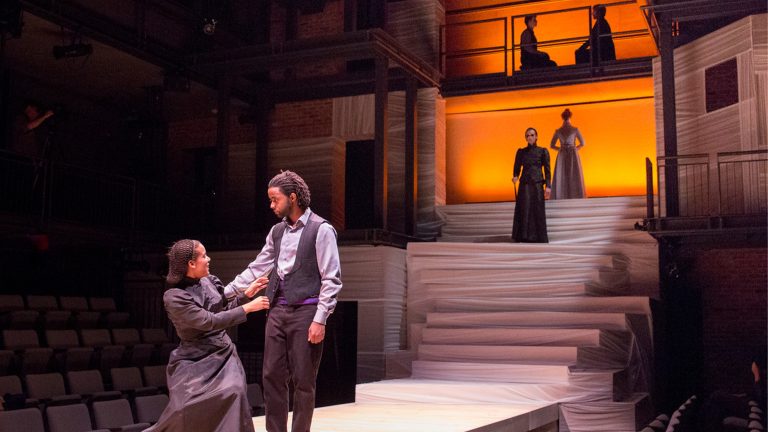
Curriculum & Required Courses
Find the right course for you, whether you’re exploring theatre and the performing arts through an elective or declaring your major.