Academics
“The tight-knit community and deliberate intellectual life widened my worldview and made me a more independent and responsible thinker.”
A Williams Education
Make Your Own Discoveries
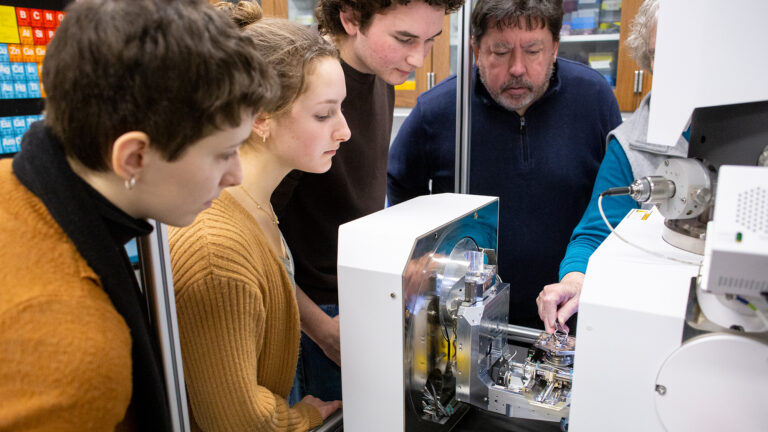
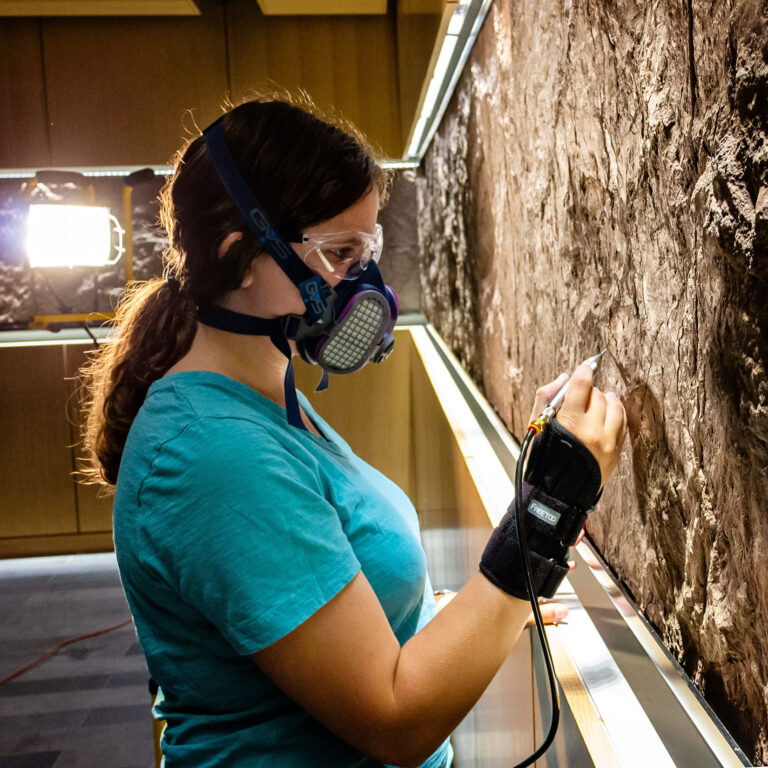
Williams is both a teaching and research institution, meaning students studying in any field—whether political science, chemistry or studio art—engage in independent and faculty-mentored research. With more than 300 funded research positions available every summer, you can answer unasked questions and solve problems no one’s considered.
Meet Our Faculty
Learning is a remarkable partnership here. With a student-to-faculty ratio of 7 to 1, you can sit across from leading scholars who want to know what you think, how you think and who you are. Williams professors are readily available to continue an in-class conversation or serve as your mentor.
Personal Connection
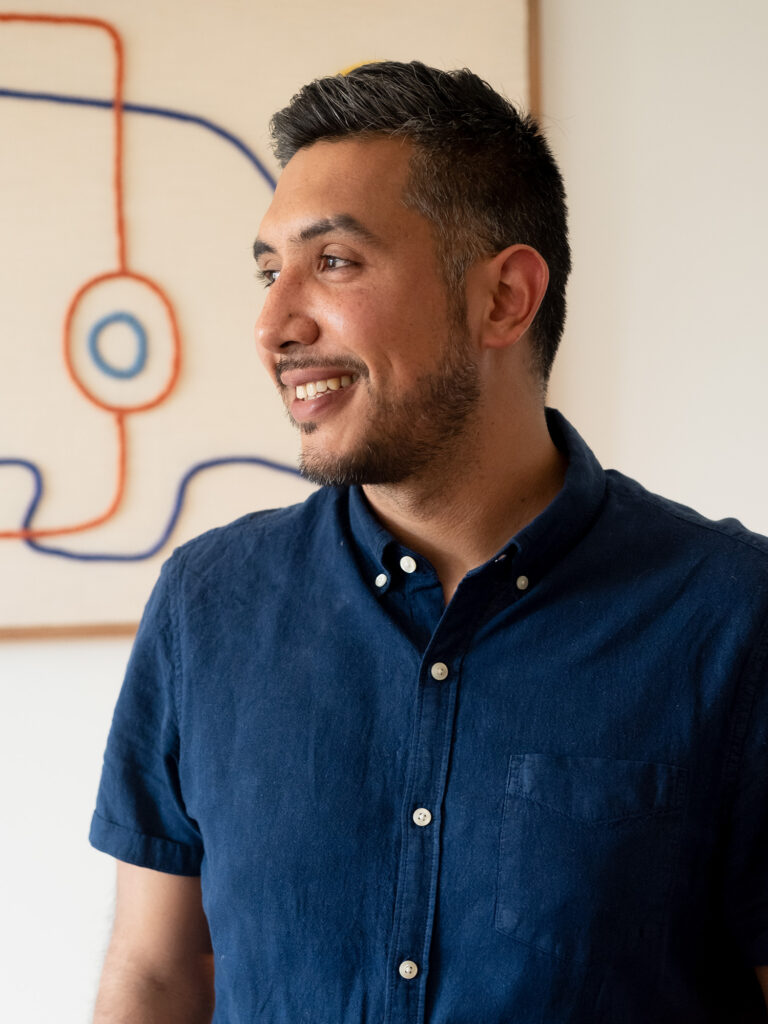
In his research on the brain—and in mentoring transfer and Latinx students—psychology professor Victor Cazares draws from experience.
The conversation began with a dog walk in the woods.
On one of their regular strolls near campus, psychology professor Victor Cazares told computer science professor Katie Keith about his need for more computing power to support his research investigating how brains encode memories.
The two applied for—and received—nearly $745,000 in funding from the Massachusetts Life Sciences Center, plus $83,200 from Williams, to purchase powerful servers called a GPU cluster to analyze vast amounts of data for Cazares and other researchers across campus.
The cluster, affectionately called GPMoo, “allows us to make predictions and develop models that are just at the limit of our human capacities,” Cazares says.
His interest in brain behavior stems from a deeply personal connection—his father’s own battles with schizophrenia.
Likewise, Cazares’ involvement in mentoring transfer and Latinx students comes from his own experience as a transfer student. Inspired by small classes and hands-on engagement at the community college he first attended in California, he aims to recreate that same close-knit learning environment at Williams.
In addition to teaching courses such as “Feelings and Emotions: Shaping the Brain and Society,” “Experimentation and Statistics” and “From Order to Disorder(s): The Role of Genes and the Environment in Psychopathology,” Cazares is a faculty advisor for Williams’ newly formed Transfer Student Union.
He is also involved with SUBE, a newly formed student-run organization focused on empowering Latinx students to develop professional pursuits in STEM+ fields.
Read about how Cazares and others are using the GPMoo, and learn more about his research and support for transfers and Latinx students.
The Libraries
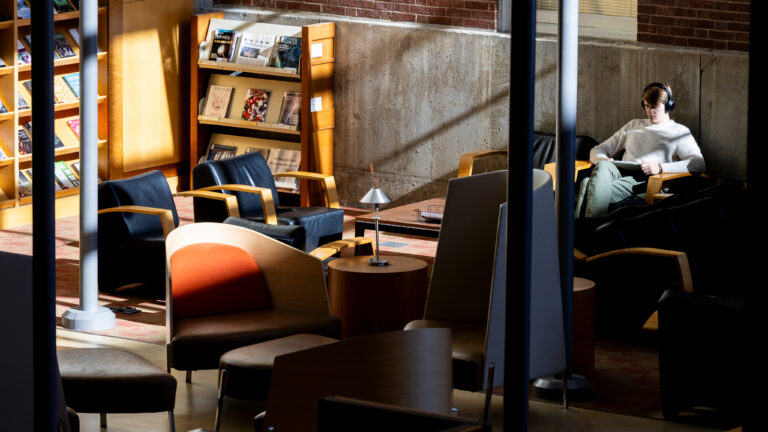
Our libraries are more than just study centers. Inside, you’ll find space for communal learning where ideas are exchanged, new discoveries are formed and connections are made.
Library Stats
17,000+
linear feet of archival and manuscript materials in the Chapin Library and College Archives
100K+
volumes in the Schow Science Library
24-hr
access to Sawyer Library’s historic reading room, multimedia-equipped classrooms, recording studio and exhibition spaces
Learning by Doing
A Williams education isn’t limited to the classroom. It’s hands-on and immersive. You’ll encounter firsthand the issues you’ve studied and learn to think more critically about them.
Data-driven
New AI-optimized computer servers support data analysis across disciplines—and fuel discussions about the environmental impacts and ethics of AI.
Inside the Collection
Interns are combing through the Williams College Museum of Art’s collection and considering new ways to use and display the 15,000 objects.
Secret Language
Can plants warn each other of nearby threats? In biology professor Cynthia Holland’s lab, students are researching if plants release compounds to communicate.
Keep Exploring
Discover how Williams can be the perfect place for your educational journey.