Develop your intellectual, physical and artistic potential. Investigate embodied knowledge. Study individuals and communities to develop multiple perspectives. Work with faculty to develop these lines of inquiry to pursue in tandem with other major courses of study throughout the college.
Why Study Dance?
Our courses support close study of physical practices, histories, politics, cultural context and musical interpretation. Through techniques, research and creative inquiry, you will deepen your capacity for interdisciplinary discovery.
The department curriculum offers complementary study in the disciplines of Theater, Visual Art, Africana Studies, American Studies, Anthropology, Asian-American Studies, Global Studies, Women’s Gender and Sexuality Studies, Music and Performance Studies.
We offer a range of levels, genres and topics that are open to all Williams students seeking dance as a way to expand their studies. Designated courses are offered for full or partial academic credit and in some instances, PE credit; see the Physical Education department for dance classes offered for PE credit. Students seeking to anchor academic and creative study in dance may pursue the Contract Major option.
Featured Courses
There is a reason why collective activism and impulses toward revolution are called “movements.” Movements have bodies, actions, rhythms, voices, and stories. They are embodied, and they create change through this embodiment.
“I dance not to entertain but to help people better understand each other.” –Pearl Primus Modern dance was born of a desire to create expressive forms of movement that could depict real human experience, rather than the fantasy and escapism that some of 20th century American popular culture provided.
The course aims to explore dance and movement-based performances as mediums through which identities in Asian and Asian American (including South Asian) communities are cultivated, expressed, and contested.
Contract Major Option
Designated department courses are offered for full academic, partial academic, and/or PE credit. We do not currently offer a major or concentration in dance.
Students seeking to anchor their academic and creative study in dance may pursue the contract major option. The purpose of a contract major is to allow highly motivated students to follow a course of study outside the boundaries of established majors. Students have the opportunity to draw from the wealth of offered courses to develop a major that corresponds to their particular interests and goals. It is recommended to begin your pursuit of a contract major as early as possible during the first semester of your sophomore year.
Learning Objectives
The Dance Department aims to provide the development of the student’s intellectual, physical and artistic potential within the context of a liberal arts education.
Studio Courses
Students engaged in studio courses will have a fundamental understanding of the dance form(s) they are studying, including ballet, modern, and African dance and percussion. They will be able to execute the principles of the technique(s) they have chosen to study, be fluent in the vocabularies of the form(s), and graduate with a deep awareness and appreciation for the embodiment of dance art forms.
Seminar & Tutorial Courses
In seminar and tutorial courses, students explore movement as a lens of inquiry in the humanities and social sciences. Within this framework, dance, broadly defined, is considered as a practice that forms identities, subjectivities, and communities. These courses focus on how dance is part of larger socio-political and historical movements. During coursework, students explore the different ways artists use dance to interrogate, resist, or reinforce hierarchies and stereotypes, thus engaging with the potential of movement practices to offer nuanced perspectives about a culture’s ethos and ideologies.
Students will:
- Understand dance as part of inquiry in Humanities & Social Sciences
- Have a broad view of dance, not just as a cultural text, but also as a visual, intellectual and embodied practice
- Know the cultural and socio-political context of the emergence of different dance forms, and how they function as a part of their larger socio and political context
- Be able to identify, contextualize and compare styles
- Understand the relationship and impact of dance and music in the context of cultures studied
- Identify styles and have context for them
- Understand the broader context of dance, including stereotypes and hierarchies
- Have an understanding of the history and potential of dance as an agent for social change
Performing Ensembles
Students will develop fluency in the movement style(s) of their ensemble. Students who choose to pursue choreographic projects learn the craft of staging a work, including the design and implementation of all of the production elements. Students may elect to develop a basic understanding of the technical aspects of theatre by applying for short-term, paid positions as stagehands, light board operators, stage managers, costume shop assistants, etc.
Ensembles are the site for active engagement and research in the body through ongoing practice, instruction and mentorship by faculty and guest artists. Participation in performances, community engagement, and conferences leads to deep understanding of dance and musical practices in action.
Collection Connection
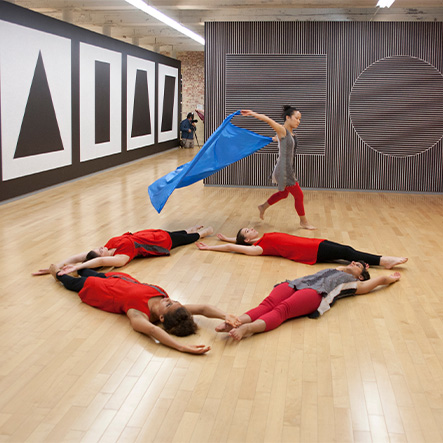
As part of a fall 2023 course, dance professor Munjulika Tarah and her students spent time at the Williams College Museum of Art (WCMA), studying an exhibition of works curated specifically for them.
Visiting Artists
Our department regularly offers workshops, artist residencies, internships, performances, field trips, and collaborations that reflect the vital role of dance in our community. Artists and companies who have been in residence include: New York City Ballet members, Ronald K. Brown and Evidence, H.T. Chen & Dancers, Dianne Walker, Anouk van Dijk, Danis “La Mora” Perez and Francisco Mora Catlett, Compagnie Heddy Maalem, Obo Addy and Okropong, Liz Lerman, ZviDance, and Bill T. Jones/Arnie Zane Dance Company.
Studios and Stages
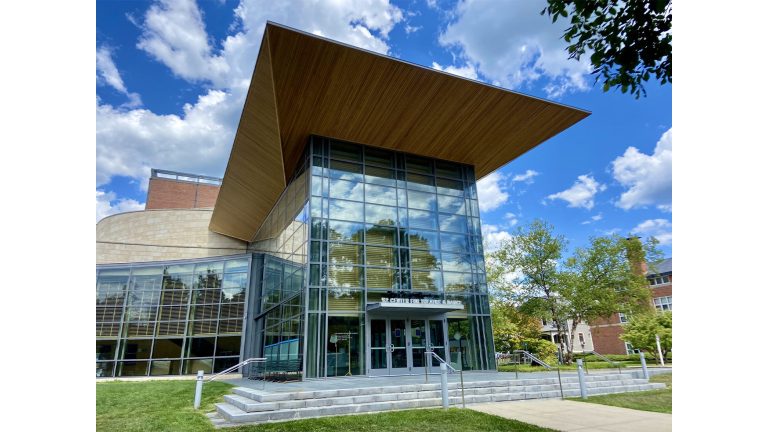
’62 Center for Theatre and Dance
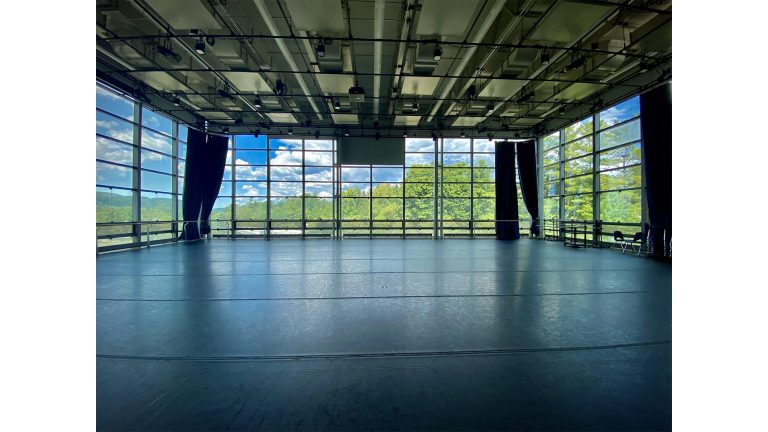
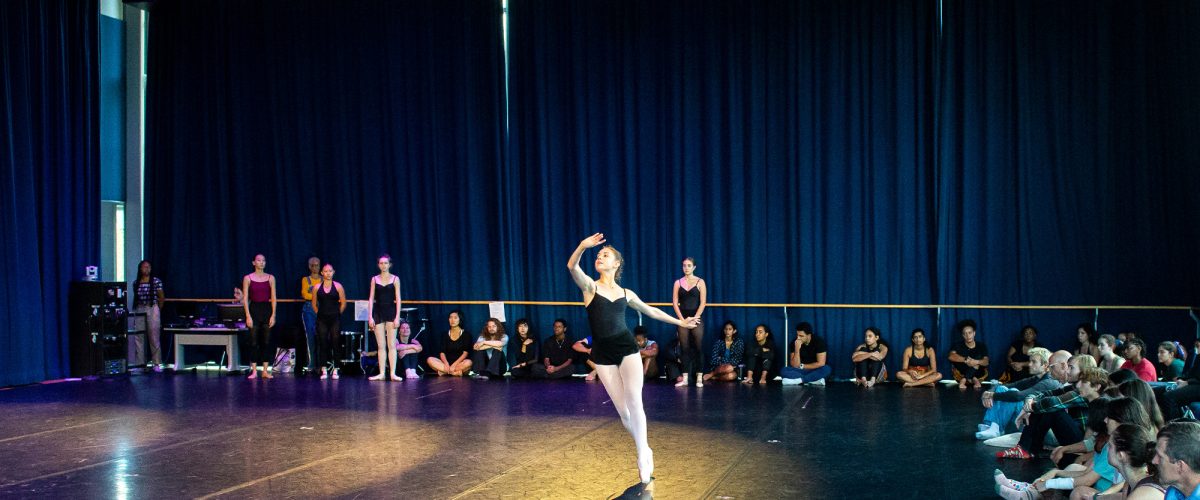
Dance Studio
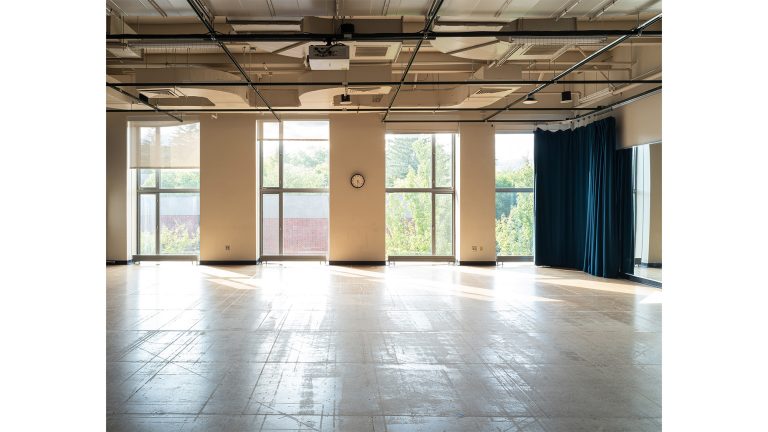
Shared Studio
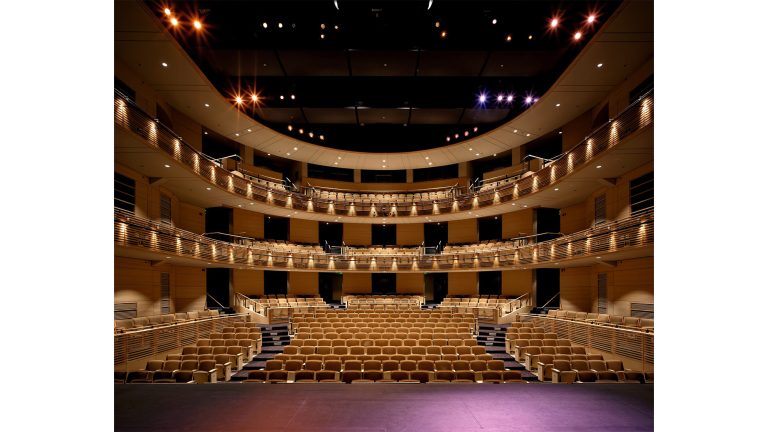
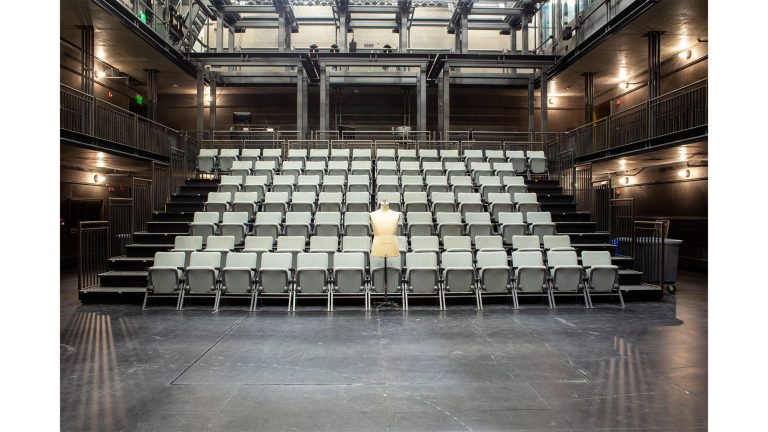
Main Stage