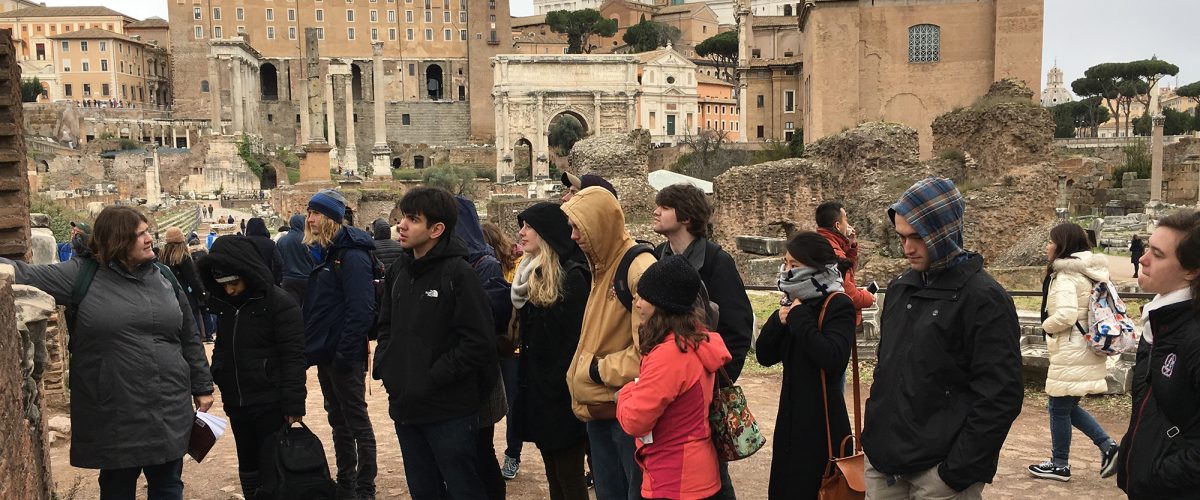
A major in classics invites sustained investigation into the ancient world through various methods, including Greek and Latin language and literature as well as historical, archaeological, art historical, and comparative modes of inquiry. The major can be pursued along either of two tracks. One features advanced coursework in either Greek or Latin, and the other requires more courses that engage with the history and visual cultures of the ancient Mediterranean world.
Why Study Classics?
The languages, literature, religion, philosophy, art and science produced in classical antiquity continue to reward study for their own sake, and they also elucidate the world we inhabit today. Studying Greek and/or Latin language and the history and culture of the ancient world develops cognitive flexibility and a broad base of knowledge that builds a strong foundation for a wide range of careers, as well as providing sustaining sources for reflection and pleasure that will last a lifetime.
Any level of engagement in the Classics department will complement your other studies at Williams, from a single introductory course all the way through a major. We welcome everyone to see how the study of classical antiquity informs every other part of the liberal arts.
Major Requirements
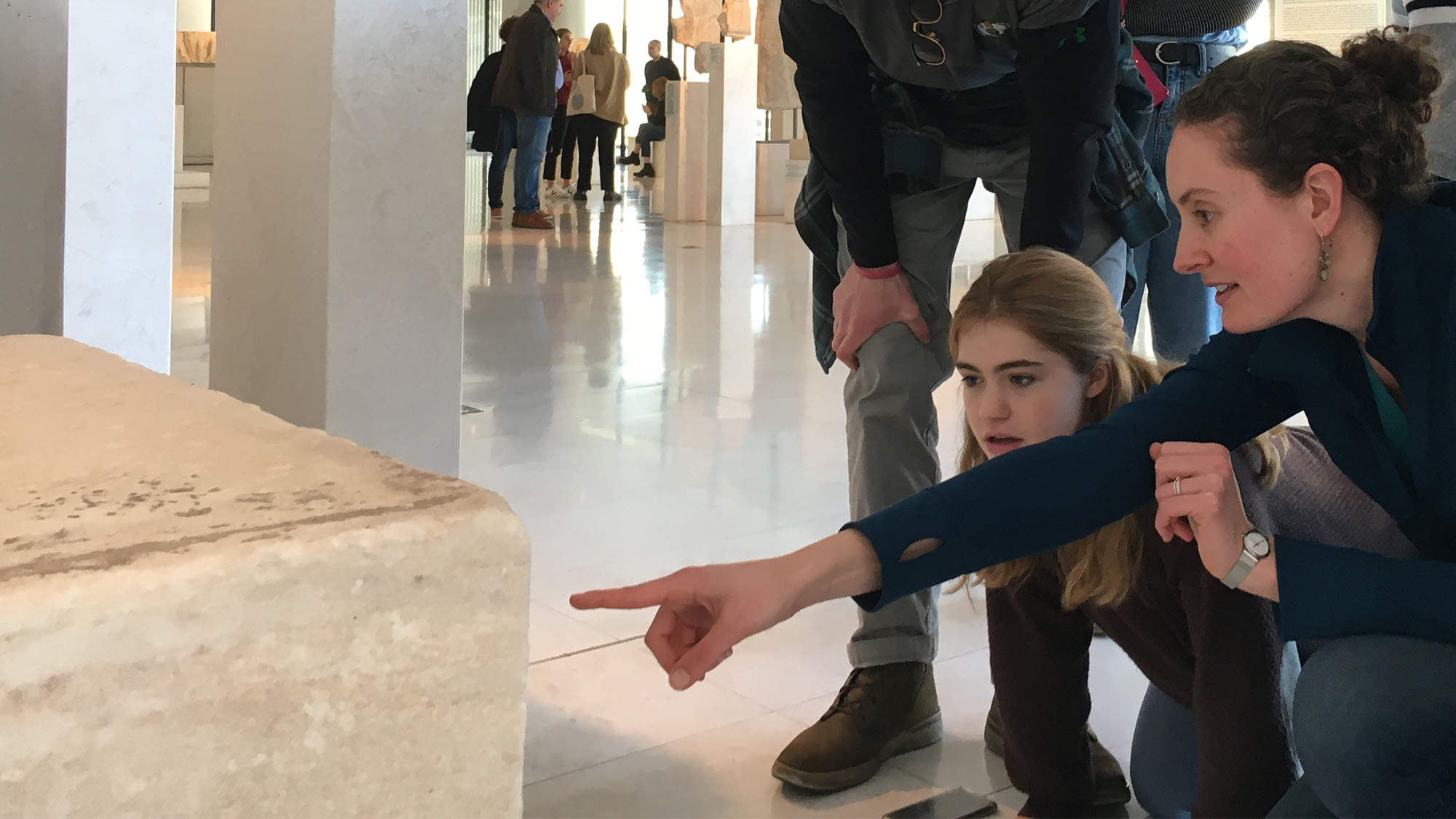
You will find classics at Williams a rich and varied field in which every aspect of ancient Greek and Roman culture is considered worthy of study. You will take at least nine credits with coursework emphasizing either Greek and Latin or Classical Studies.
As a major, you will participate fully in the life of the department by attending lectures and other departmental events. If you would like to major in classics, please consult with the department chair, who will help you make a well-balanced and comprehensive selection of courses appropriate to your interests.
Learning Objectives
All of our offerings challenge students both to confront the foreignness of these ancient cultures and to explore the profound connections between them and our own. We aim to awaken our students’ sense of curiosity and wonder, to promote their thoughtfulness, and to encourage them to discover the satisfaction that comes from developing competence in difficult technical skills while acquiring knowledge both broad and deep, and likewise, to foster their capacity for historical, literary, and cultural analysis, which processes will find endless practical applications in their post-collegiate lives.
Coursework in the Classics Department is designed with these learning objectives in mind:
Required Courses
There are two paths toward a degree in classics. Route A emphasizes more coursework in Greek and Latin, while Route B includes more Classical Studies courses.
Route A
- Six courses in Greek and/or Latin, with at least two 400-level courses in one language
- Three additional courses from the offerings in Greek, Latin, or Classical Studies or from approved courses in other departments and programs
Route B
- Two courses, one each from any two of the following categories:
- Literature (CLAS 101 or 102)
- Visual and material culture (CLAS 209 or 210)
- History (CLAS 222 or 223)
- Four courses in Greek or Latin with at least one at the 400-level, or the four-course sequence CLLA 101, 102, 201 and 302
- Three additional courses from the offerings in Classical Studies or from approved courses in other departments and programs
Degree with Honors
Students who wish to be considered for the degree with honors write a thesis or sometimes pursue an appropriate independent study. An honors project gives you an opportunity to work in depth on a topic of your own devising and to develop the techniques and critical methods with which you’ve become acquainted during your regular coursework.
You will identify and meet with a potential advisor for the project by the end of Winter Study in your junior year. Additionally, you will:
- maintain a minimum GPA of 3.3 in the classics major and demonstrate original or superior ability in your classics courses
- complete a minimum of ten semester courses in classics, not including the honors thesis or independent study
Prizes and Scholarships
The department awards several prizes each year to students who have done distinguished work in Classics. These prizes are announced at the Commencement Ivy Exercises:
David Taggart Clark Prize in Latin (first-year or sophomore)
Benedict Prize in Greek, First and Second Prizes
Benedict Prize in Latin, First and Second Prizes
Rice Prize in Greek and/or Latin (junior or senior)
The Charles Bridgen Lansing Fellowship in Latin and Greek is awarded annually to one or more students or alumni/ae to support graduate work in Classics or closely related fields, or to support undergraduate study during the summer in the US or abroad. Students must make a formal application for a Lansing Fellowship to the Classics department chair.