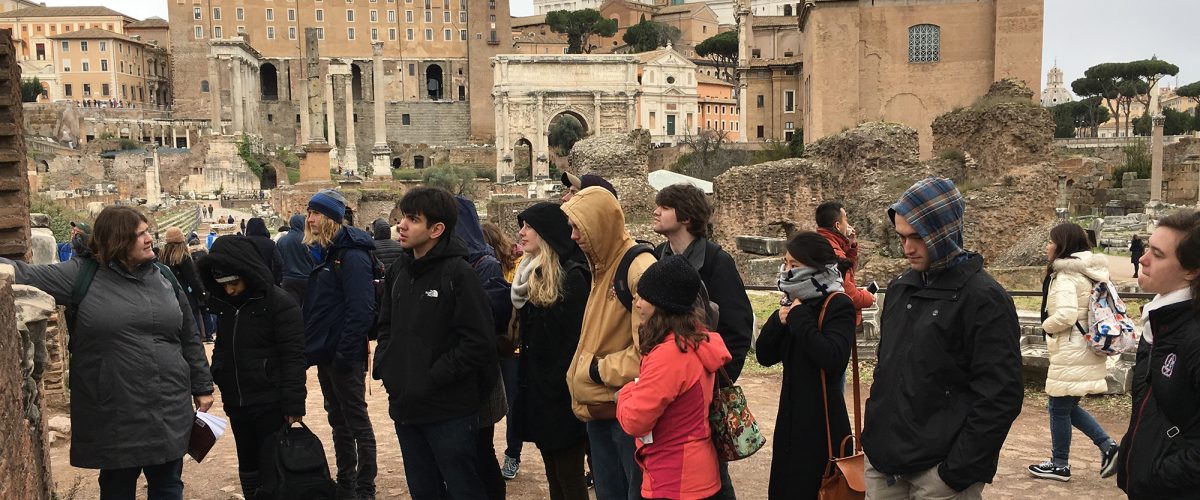
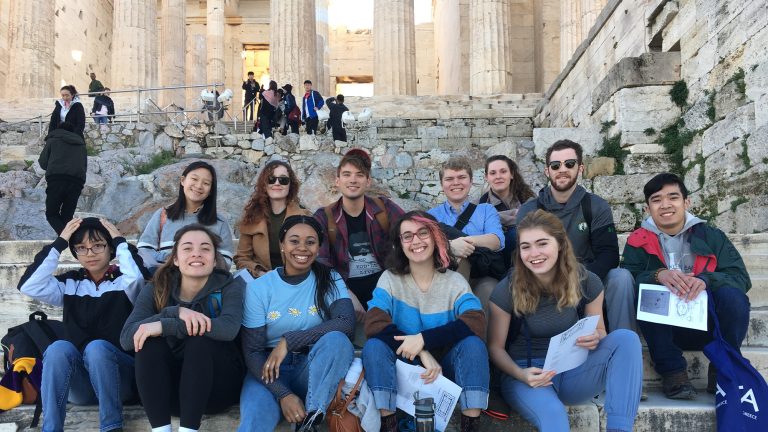
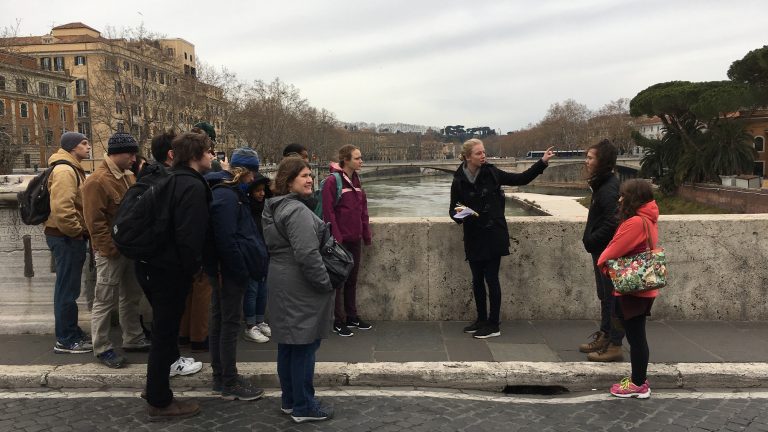
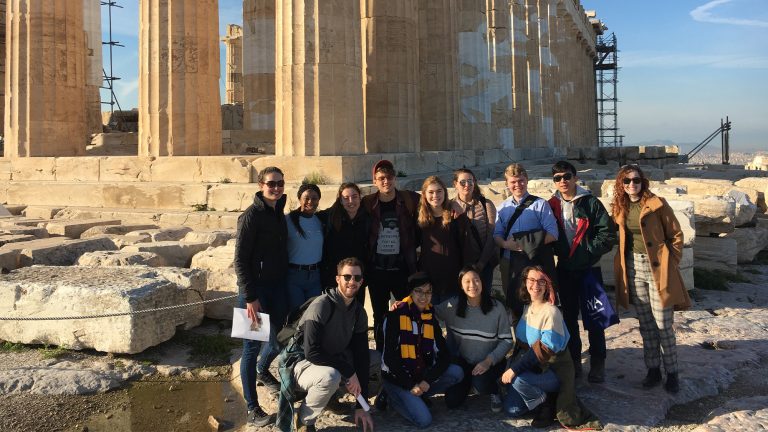
Many excellent opportunities for summer study, including archaeological fieldwork, are available both abroad and in the United States. Students seeking financial assistance should consult the Dean of the College’s office; note especially that, for travel abroad, Williams offers some Summer Travel Fellowships for Rising Seniors. The Classics Department may also be able to provide some financial assistance for study in this country or abroad through the Lansing Fellowship that it administers. Other forms of financial assistance include the Archaeological Institute of America’s The Jane C. Waldbaum Archaeological Field School Scholarship and the Frank M. Snowden Jr. Undergraduate Scholarship, sponsored jointly by the AIA and the Society for Classical Studies.
Williams does not normally award college credit for summer course work, but the Classics Department may give credit towards the Classics major for some summer courses (e.g., intensive Greek and Latin courses and some archaeological field schools). Consult the chair.
Summer Programs Abroad
Summer programs of long standing in Greece, Italy, are sponsored by institutions like College Year in Athens, The American School of Classical Studies at Athens, The Vergilian Society, and The American Academy in Rome; other fine programs in Greece, Italy and other parts of the Graeco-Roman world are overseen each year by universities in this country and Europe. Most summer programs abroad are designed to take full advantage of their proximity to archaeological sites and monuments, and of the overall physical and cultural environment in which they are located; some are essentially supervised travel programs.
Archaeological Field Schools and Other Fieldwork
While many summer programs abroad incorporate the study of archaeological sites and visits to them, archaeological field schools provide students an opportunity for working in the field (including at maritime sites) while receiving systematic instruction in archaeological methods and the larger historical context of the site at which they are working, including visits to other sites. Participation in a dig that is not associated with a field school can also provide valuable experience.
Note that, unlike other kinds of summer programs abroad, nearly all of which are located in Greece and Italy, archaeological fieldwork is conducted at classical sites from the Ukraine to Tunisia, Israel to Great Britain, and everywhere between, including Greece and Italy.
By the very nature of archaeological fieldwork and funding, opportunities in fieldwork vary a good deal from year to year. A vital resource is this list, maintained by the American Institute of Archaeology. (Note that information about projects for a summer season often becomes available only in the preceding January, or even later.) It is particularly important for students to consult faculty. Professor Antonia Foias in Anthropology can be helpful, especially for opportunities in New World archaeology but also for general advice to all students interested in archaeology.
Summer Courses in the United States
Most Williams students are interested in taking introductory Greek and Latin courses offered each summer throughout the United States at a number of universities and some colleges. These courses are very intensive, covering in about eight weeks what our 101-102 courses cover in two semesters, and they fully prepare students for our Greek or Latin 201 in the following fall. A few students take intermediate Greek or Latin summer courses in order to move through our language sequence more quickly, to be better prepared for the Williams-Exeter Programme or other study abroad, or to ensure that study abroad does not disrupt their overall progress in Latin or Greek. These intermediate courses tend to be less intensive than the introductory courses but nonetheless quite valuable.
To learn about the many Classics courses available at colleges and universities in the United States each summer, consult the Classics faculty at Williams.