
Courses
Gain deeper understanding of the social world through our wide-ranging curriculum. Majors complete nine courses in the department. Below is a sample of the types of courses offered by the department.
Anthropology & Sociology Courses
-
ANSO 205 (F, S) SEM Ways of Knowing
An applied exploration of how one makes sense of the social world through interpretive social research. Some of the key questions of the course are: What are the philosophical and epistemological underpinnings of social inquiry? How does one frame intellectual problems and go about collecting, sifting, and assessing field materials? How do qualitative and quantitative approaches to social inquiry differ? How are they similar? What is the importance of history to sociological and anthropological research? How do social researchers use archival and other documentary materials to interpret society? What is the relationship between empirical data and the generation of social theory? What are the ethical dilemmas of fieldwork and of other kinds of social research? How do researchers’ personal biographies and values shape their work? We will approach these problems both abstractly and concretely, through readings in epistemology as well as a series of case studies, drawing upon the experiences of departmental faculty and guest speakers. The course will also feature hands-on training in qualitative methods, in which students design and undertake their own pilot projects.
Taught by: Olga Shevchenko, Ben Snyder | Catalog details
ANSO 305 (F) SEM Social Theory
An introduction to social theory in anthropology and sociology, with strong emphasis on enduring themes that cut across disciplinary divides. How does social theory help us critically analyze the world in which we find ourselves? How do social thinkers construe “society” and “culture,” and have these constructions withstood challenges over time? What role does human agency play in the unfolding of social life, and where does that sense of agency come from in the first place? What are the forces that animate social interaction on the level of individuals, social groups and complex units like nation-states? What are the possibilities and limits of systematic approaches to the study of human social experience? The course emphasizes differences between interpretive frameworks as well as the common elements that contribute to a deeper understanding of the social world.
Taught by: Joel Lee | Catalog details
ANSO 402 (S) SEM Senior Seminar
This capstone seminar combines substantive discussion and individual research. Half of the course will be dedicated to discussion of topics of enduring significance to both anthropology and sociology. Through readings and class discussions of selected publications, we will address current debates, dilemmas, and developments in anthropology and sociology. The other half of the course will be devoted to original individual student projects involving qualitative social science methods (such as participant-observation, archival study, discourse analysis, material culture analysis or ethnographic interviews, among other possibilities). At the end of the course, students will present their projects to the seminar.
Taught by: Phi Su | Catalog details
-
ANTH 101 (F, S) LEC How To Be Human
Is there such a thing as ‘human nature’? This course is an introduction to cultural anthropology (also known as social anthropology), the study of human society in all its profound variety. Through deep, sustained, systematic participation in and observation of a particular social context, anthropologists seek to comprehend and illuminate the human condition. Anthropologists’ insights into the ways in which human institutions – language, economy, religion, social stratification, law, sexuality, art, the state, and many more – are culturally constructed and reproduced have transformed the way the world is understood. Puncturing ethnocentrism, anthropology’s attentiveness to the ideas and practices of cultures in every part of the globe vastly enriches the archive of human answers to human problems. The distinctive methods of the discipline enable anthropologists to discover patterns and phenomena not discernible in other modes of enquiry. With such findings anthropologists are able to make critical interventions in public discourse and to demonstrate how deeply we are all shaped by cultural forces.
Taught by: Nathalie Arnold, Kenza Yousfi | Catalog details
ANTH 103 LEC Pyramids, Bones, and Sherds: What is Archaeology?
Last offered Fall 2025
Anthropology examines not only living societies, but also prehistoric cultures whose remains are found worldwide. This course will present how archaeology reconstructs the various aspects of human society from the physical record of prehistory. How do we study the subsistence and settlement patterns, the political and social organization, and the economy and ideology of prehistoric societies who have left behind mute material records? The objective of anthropological archaeology is to bring to life these prehistoric cultures through archaeological analysis. The different goals, approaches and methodologies of modern archaeology will be discussed theoretically and then applied to case studies.
Taught by: Antonia Foias | Catalog details
ANTH 134 TUT Leaving the World Behind: The Literature of Reclusion
Last offered Spring 2020
Living in a time of political and social turmoil, Confucius told his followers: “When the realm has the Way, show yourself; when it lacks the way, hide.” Reclusion here is a moral choice, justified by the ethical decline of the state. But it could also be a mortal necessity in a period in which government service was a distinctly hazardous pursuit. In other contexts becoming a hermit could instead be figured as aesthetic stance meant to preserve one’s artistic integrity against the dominant claims of society. This course looks at the literature of reclusion-living a life of seclusion from society-in a range of different cultures and periods, from ancient China to contemporary America. With sources that include poems, essays, novels, and films, we will investigate a set of issues surrounding radical seclusion. What different forms does reclusion take? Can one be a hermit without being completely separated from society? What is the relationship between hermits and the state-to what extent does one depend on the other? What are the philosophical and moral implications of eremitism? Is separating oneself from human society an inherently immoral act? What is the relationship between reclusion and technology in the contemporary world? What is the nature of solitude and can it be experienced in a group (for example, in contemporary “intentional communities”)? While most of our work will focus on textual analysis, there will be an experiential component to the course as well. Each student will design and implement their own experiment in (short-term) eremitism.
Taught by: Christopher M. B. Nugent | Catalog details
ANTH 138 TUT Spectacular Sex
Last offered Fall 2020
From Beyoncé’s Coachella performance to Donald Trump’s social media antics, spectacles captivate us. Spectacles may be live shows, media events, or even everyday performances ranging from interactive advertisements to viral video sensations. But what are the uses of spectacle? Why are some compelling while others fall flat? How do spectacles control society or maintain social norms? And, importantly for our purposes, how does spectacle shape gender in society? Or from another angle, how does sexuality infuse spectacle? This tutorial introduces students to theories of spectacle ranging from the ancient Greeks to Marxist-inspired thinkers in the 20th century. In particular, we will examine how feminist thinkers have contributed to this literature and how theories of spectacle relate to questions of gender and sexuality. Our weekly readings focus on pairings of theoretical readings with writing on popular cultural examples and case studies. Some possible topics include sporting events, charity ad campaigns, music videos, political events, and social media.
Taught by: Gregory Mitchell | Catalog details
ANTH 162 (S) SEM Languages of East Asia
A survey of the Chinese, Japanese, and Korean languages in their linguistic and cultural context. Working with various types of multimedia including audio, video, and texts, we’ll take up the phonetics, phonology, morphology, syntax, and lexicon of these three major East Asian languages, including also their history and writing systems as well as how they function in the societies where they are spoken. Though the emphasis of the course is on linguistic description and analysis, there will also be an applied component, as part of which we’ll learn several dozen common expressions in each language. Some of the questions to be discussed are: What are the similarities and differences among these three languages? How are and how aren’t they related? How did the modern standard form of each develop and what is its relationship to any non-standard languages or dialects? How do these three languages reflect sociolinguistic phenomena such as gender, class, and politeness? How do the writing systems of these languages function and what is the role of Chinese characters in them? What has been the influence of Classical Chinese on Modern Chinese, Japanese, and Korean? How have these languages changed due to influence from English and other languages? How are they used in Asian American speech communities? And what are the prospects for their future development, including the influence of computers and digital communications? While this course is not intended as a comprehensive introduction to linguistics, it does introduce many basic terms and concepts from that discipline.
Taught by: Cornelius Kubler | Catalog details
ANTH 208 SEM The U.S. and Afghanistan: A Post-Mortem
Last offered Fall 2025
The United States attacked and defeated the Afghan Taliban regime over in the course of a few short weeks in 2001. Within a few years, the finality of that victory was brought into question as the Taliban regrouped and eventually reasserted itself as a formidable guerilla army that the U.S. military could not easily defeat. At the same time that it was facing a more difficult military challenge than anticipated, the United States got bogged down in the process of nation-building, as well as efforts at social reform. This course examines the history of American involvement in Afghanistan, beginning with the Cold War when the U.S. used Afghanistan as a test case for new models of political modernization and economic development. We will go on to discuss the U.S. support for Islamist political parties during the Soviet occupation of Afghanistan in the 1980s and the consequent rise of the Taliban, and the role of Afghanistan in the September 11th attacks and the “War on Terror” that followed. The course will conclude with a consideration of the impact and legacy of the two decades of nation-building and social reform carried out by the United States since 9/11.
Taught by: David Edwards | Catalog details
ANTH 209 SEM Siberia: Region Making and Imperial Imagination in Russia
Last offered Fall 2025
Siberia is often framed as an essential part of Russia and a repository of all that is Russian. However, imaginations of Siberia also paint contradictory images of the region: as a heaven or a hell, a wasteland or a breadbasket, a place of freedom or a place of imprisonment, a Russian colony or as the Russian heartland. This course takes as its root that Siberia is not any one thing and not any one place. Rather, Siberia is an idea and set of representations that change over time. In this course, we will analyze and unpack this idea. The course asks: what is Siberia; how did Siberia become so integral to Russia and ideas of Russianness; who defines Siberia; what are the images of Siberia and for whom do they matter; and what do these imaginations of Siberia facilitate and obscure? To answer these questions, we will engage in an interdisciplinary study of Siberia incorporating ethnography, history, film, and literature. The primary goal of the course is to expose students to the various ways Siberia has been imagined, who it has been imagined and represented by, and how these imaginations and representations have lives of their own. In doing so, the course will help students view Russia through its peripheries rather than through Moscow and Saint Petersburg and will enable students to grapple with how “regions” are created.
Taught by: TBA | Catalog details
ANTH 210 LEC The Challenge of ISIS
Last offered Spring 2017
What is ISIS and what does it want? Using historical and anthropological sources and perspectives, the course considers the origins, ideology and organization of the Islamic State. Beginning with an examination of early radical movements, including the Muslim Brotherhood, the Afghan mujahidin and Taliban, and al-Qaeda, the course will go on to investigate how ISIS derives important aspects of its ideology and organization from these earlier movements and how it deviates from them. We will look at unique aspects of the movement, such as its use of social media, its extensive destruction of ancient historical sites, its staging of spectacles of violence, and its recruitment of Muslims from Europe and North America. We will also examine the ideological constitution of the movement, including its attitude toward and treatment of non-Muslims, its conceptualization of itself as a modern incarnation of the original Islamic caliphate, the ways in which it justifies its use of violence, and its apocalyptic vision of the present-day as End Time. Finally, we will evaluate current responses to ISIS, in the West and among Muslims in the Middle East and elsewhere, in terms of their effectiveness and strategic coherence.
Taught by: David Edwards | Catalog details
ANTH 211 SEM Music, Nationalism, and Popular Culture
Last offered Fall 2024
This course surveys the manner, function, and contexts through which sound and ideas of national belonging are linked. We will consider influential and iconic musicians (e.g. Umm Kalthoum, Amalia Rodriguez, Bob Marley, Carlos Gardel), international forums for the expression of national sentiment (the Olympics, World Cup, and Eurovision competitions), and a wide range of instruments, genres, and anthems that are strong conduits for national sentiment. Drawing on the work of critical theorists including Benedict Anderson, Michael Herzfeld, and Homi K. Bhabha, we will pursue a number of analytical questions: What parallels exist between musical and political structure? How do nations adjust as their policies and demographics change? How are cultural forms implicated in postcolonial nation building projects? What marginal populations or expressive forms are included, excluded, or appropriated in the formation of national identity? Finally, what differences emerge as we change our focus from a national to an international perspective, or from officially endorsed representations of national culture to unofficial popular forms of entertainment?
Taught by: Corinna Campbell | Catalog details
ANTH 212 LEC Foundations of China
Last offered Fall 2021
This course examines the foundational period of Chinese civilization, from the earliest evidence of human activity in the geographical region we now call China, through the end of the Han dynasty in the early third-century CE. This is the period that saw the creation and spread of the Chinese script (a writing system that would be the dominant one in East Asia for thousands of years), the teachings of Confucius (whose ideas continue to play a role in the lives of billions of people today), the construction of the Great Wall (which is not, as it turns out, visible from space), and the creation of the imperial bureaucratic system (that was, in essence, the progenitor of the modern bureaucratic state). We will proceed chronologically but focus on a set of thematic topics, including language and writing, religion and philosophy, art and architecture, politics and economics, and science and technology. While this course is entitled “Foundations of China,” we will take a critical perspective on narratives, both Chinese and Western, that see Chinese history as an unbroken history of a single “civilization.”
Taught by: Christopher M. B. Nugent | Catalog details
ANTH 214 LEC The Rise and Fall of Civilizations
Last offered Fall 2023
Over the centuries, philosophers and historians have asked how societies evolved from simple hunter-gatherer bands to complex urban civilizations. Human prehistory and history have shown the repeated cycles of the rise, expansion and collapse of early civilizations in both the Old and New World. What do the similarities and differences in the development of these first civilizations tell us about the nature of societal change, civilization and the state, and human society itself? The course will examine these issues through an introductory survey of the earliest civilizations in Mesopotamia, Egypt, India, Mesoamerica and South America. Classical and modern theories on the nature, origin, and development of the state will be reviewed in light of the archaeological evidence.
Taught by: Antonia Foias | Catalog details
ANTH 215 SEM Performance Ethnography
Last offered Fall 2019
The course aims to explore the theory, practice, and ethics of ethnographic research with a focus on dance, movement, and performance. Traditionally considered to be a method of research in anthropology, ethnography is the descriptive and analytical study of a particular community through fieldwork, where the researcher immerses herself in the culture of the people that she researches. In this course students will be introduced to (i) critical theory that grounds ethnography as a research methodology, (ii) readings in ethnographic studies of dance and performance practices from different parts of the world, and (iii) field research in the local community for their own ethnographic projects. This is primarily a discussion-based seminar course and may include fieldwork, attendance at live performances, film screenings, workshop with guest artists etc. No previous dance or performance experience is assumed or required.
Taught by: Munjulika Tarah | Catalog details
ANTH 216 TUT Cities and Urbanism of the Ancient World
Last offered Fall 2024
This is a course on cities in the ancient world, which will examine four major ancient urban centers (Nineveh and Nimrud, Iraq; Teotihuacan, Mexico; and Angkor, Cambodia) and end with a sustained, in-depth exploration of urbanism in prehispanic Maya civilization. As more and more people move into cities across the world, human societies are becoming forever transformed. This transformation into an urban globalized world has ancient roots at the beginning of the first civilizations in Euroasia and the Americas. We will delve into the nature of the urban transformation by first exploring sociological and anthropological definitions of urbanism, and recent studies of modern urbanism. We will look at Nineveh, Nimrud, Teotihuacan, and Angkor to consider how ancient urbanism was distinct from modern cities, while at the same time, ancient urbanites had to deal with similar issues as residents of modern cities. We will then examine in more depth the cities of prehispanic Maya civilization, answering such questions as: how different were Maya cities from other premodern ones? Is there one type of Maya city or many? How different was life in Maya cities from life in Maya villages? What were the power structures of Maya cities? How common were immigrants and slaves in these ancient cities?
Taught by: Antonia Foias | Catalog details
ANTH 217 SEM Indigeneity Today: Comparative Indigenous Identities in the US and Russia
Last offered Spring 2026
Indigenous movements for land, rights, and cultural preservation have spread to and originated in all corners of the world. However, the global nature of these movements at times obscures ways of being Indigenous in differing contexts. This course analyzes Indigeneity in both the United States and Russia today. Through reading and analyzing ethnography, theory, and literature, it focuses on Indigenous peoples in a comparative context. Rather than prioritizing concern with Indigenous peoples emerging from the US, it attempts to demonstrate what Indigeneity has been in both the United States and Russia and what it is and means today. It asks the following questions: what is Indigeneity and who is Indigenous; how is Indigenous identity constructed and by whom; and what convergences and divergences exist in Indigeneity between the US and Russia or for that matter in other contexts? To help answer these questions, in this course we will grapple with Indigeneity as a social category and other social formations, especially ethnicity, nationality, and race. Topics include: Indigeneity and the State, Revitalization and Resurgence, Indigenous People and Nature Protection, and Hemispheric and Global Indigeneities.
Taught by: TBA | Catalog details
ANTH 218 (S) SEM Thinking and Being with Animals: Introduction to Multispecies Ethnography
Across the world, human beings have viewed animals as: ancestors, teachers, friends, kin, humans-in-disguise, food, raw material, workers, pests, enemies and threats. In many contexts, the ‘human’ is defined in relation to the ‘animal.’ Yet this relation and what being ‘animal’ or ‘human’ can mean are construed in diverse and contradictory ways in different times and places. Even as some insist on the embodiedness and ‘animal’ nature of all humans, ideas about what it means to ‘be (an) animal’ have long underwritten colonial violence, racism and inequality. Systems of oppression routinely ‘animalize’ and ‘dehumanize’ communities to render them expendable, and resistance to such projects can entail an insistence on multispecies care. This introduction to multispecies ethnography also draws on anthropology, indigenous, ecofeminist and critical animal studies to ask: what work the terms ‘animal’ and ‘human’ have done and do in diverse contexts; how specific animals and ideas about ‘animality’ have been enlisted in nationalist, colonial, and military projects; and what daily, intimate relations to nonhuman beings can look like across cultures. Engaging a wide range of specific, situated human relationships to particular animal beings, we complicate our understandings of what it means to be alive with others on this planet. Concepts we engage include: sympoiesis or ‘co-becoming,’ holobiont, interspecies care and conflict, ecocide, mutuality and relationality
Taught by: Nathalie Arnold | Catalog details
ANTH 219 LEC The Art and Archeology of Maya Civilization
Last offered Spring 2026
The ancient Maya civilization was one of the most sophisticated and complex cultures of prehispanic Central America. Its complex calendrics, astronomy, mathematics, art and hieroglyphic writing system are celebrated worldwide. The course will examine the trajectory and nature of ancient Maya civilization from the combined perspectives of archaeology and art history. The origins and evolution of the Maya states during the Preclassic period (1000 B.C.-A.D. 250) will be explored through the rich archaeological remains and Preclassic art styles. The Classic Maya civilization (A.D. 250-1000) will then be presented through a detailed survey of the archaeology, art and hieroglyphic texts of this period. Finally, the collapse of Classic Maya civilization and its transformation and endurance during the Postclassic period and under early Spanish rule (A.D. 1000-1600) will be critically evaluated through a review of the archaeological, iconographic, and ethnohistorical evidence.
Taught by: Antonia Foias | Catalog details
ANTH 220 (S) SEM The Financialization of Life: Debt Securities, Secondary Markets, and Social Transformation
What is financialization, where can we find it, and how does it shape our personal lives and societies? While the term has become ubiquitous, it was used little before the 2007 financial crisis. Since then, people have become particularly concerned by the power, volatility, and potential effects of financial markets, just as they are increasingly anxious about the ways in which financial interests might underpin their lives. This course takes the Wall Street bull by the horns, enabling us to grasp the meaning, function, and consequences of processes of financialization today. The course is organized in weekly, thematic modules. Each week, you will be introduced to an area that has come to be driven by securitized debt and secondary markets. We will explore the phenomenon of financialization in the spheres of housing, education, healthcare, corporations, consumption, development, statecraft, and crisis response, gaining insight into the causes and real-world effects of financialization. In doing so, our goal is to demystify financialization, moving away from the popular tendency to either naturalize or demonize financial markets. Instead, this course invites you to analyze financialization as a cunning ‘fix,’ a lucrative device, and a problematic but universalist project in the context of shifting political-economic structures and gaping inequality. Throughout, we will maintain a social perspective that puts ordinary people at the center of this phenomenon. How does financialization affect going to college and getting a degree? Making home and holding property? Falling ill and receiving healthcare? Getting a job and making a living? Gaining and exercising rights as citizens of states? Together, we will find answers for these questions in conversation with a diverse line-up of scholars and practitioners.
Taught by: TBA | Catalog details
ANTH 222 SEM Heroes, Saints and Celebrity
Last offered Fall 2018
This course examines the ways in which cultures select, ritually celebrate, institutionally harness, and ultimately devour people designated as ‘extraordinary’. We will begin by considering cultural archetypes and theories of the hero and how heroism has been understood in different eras and cultural contexts. Using Weber’s theory of charisma as a foundation, we will look at a number of specific case studies to evaluate the relationship between individual creativity and action and the demands of social conformity and control. Finally, we will examine how charisma is commoditized in the form of the celebrity in contemporary American culture.
Taught by: David Edwards | Catalog details
ANTH 223 SEM Ethnic Minorities in China: Past and Present
Last offered Spring 2021
According to the most recent census conducted in China in 2010, of the 1.3 billion population of China, more than 110 million (8.49%) were ethnic minorities (shaoshu minzu). Most of the minority groups reside in autonomous regions and districts, which constitute 64% of China’s total acreage. This course introduces students to the multiethnic aspect of China’s past and present. We will ask the central question of “what is minzu” and address various topics such as the minority-group identification project; the definition of minzu (translated as “ethnic group,” “nationality,” or “race” by different scholars); the intersections between language, religion, tourism, diaspora and ethnicity; historical sino-centric views about “foreigners” and “barbarians” as well as the roles that “barbarians” have played in China’s long history. We will examine how social differences and hierarchy are constructed and discuss how power plays in the shaping of “ethnicity.” A multidisciplinary approach will be adopted for the course, taking in sources from anthropology, history, literature, ethnic studies, and cultural studies. Throughout the course, the pedagogical techniques of “intercultural dialogue” will be adopted to encourage students to discuss their own ethnic experiences and compare ethnic minority issues in China with similar issues in the United States. Students are also encouraged to come up with real-world solutions and strategies to deal with issues of racism, bias, and discrimination.
Taught by: Li Yu | Catalog details
ANTH 224 (S) SEM Diversity, Belonging and Mobility in the Persian Gulf Region
The Persian Gulf region is often imagined from the West as a space of extremes: a realm of hypercharged modernity, fabulous wealth, and spectacular consumption; a region where fossil-fuel extraction has forced a total break with a more ‘authentic’ past; and where fantastic transient pleasures are underwritten by the systematic exploitation of laborers from across the Global South. Yet how do the diverse inhabitants of this region–indigenous, citizen, migrant, resident or expatriate–imagine and narrate their own histories and futures, experience daily life, and create community? What do family, friendship and the search for meaning look like in highly planned environments that some have called ‘non-places’? How do futuristic discourses about this region both draw on and obscure centuries-old regional networks of cultural and economic exchange? And, crucially, how does Orientalism continue to shape Western perceptions of this vital region of the world? In a context where non-citizens often far outnumber citizens, the Gulf is a rich context for interrogating our understandings of tradition and modernity, belonging, mobility and labor. Together, we encounter: indigenous desert, fishing and pearling communities whose ways of life prior to ‘the time of oil’ continue to animate debates about the future; women in Oman whose lives have been transformed by new economies; long-time residents of Dubai creating community across generations; Gulf poets and musicians remaking traditional forms to express contemporary concerns; and workers from across the Global South whose lives unfold between diverse homelands and repeated labor contracts in the UAE, Qatar and Kuwait. Ultimately, we ask what theorizing from and with the Gulf region can teach us about our shared world, the larger global forces that similarly impact communities and places that can seem very distant from each other, and anthropology itself.
Taught by: Nathalie Arnold | Catalog details
ANTH 225 SEM Ways of Seeing
Last offered Fall 2025
This course examines the potential of images for revealing aspects of cultural normally obscured by the written word and for transmitting different, sometimes undervalued insights and knowledge of the social world. The central focus of this course is documentary film, and we will consider both the theory and practice of the documentary in the United States and abroad as it has evolved over time and as it is evident in contemporary filmmaking. In the course of the semester, we will examine some of the ways in which filmmakers, and ethnographic filmmakers in particular, have approached the task of documenting and understanding different aspects of social reality. Among the questions that we will consider are the following: What is the relationship between written texts and images? What is it that documentary films “document?” What is the relationship between images and stories, and should the techniques used in fiction films to construct voice, point of view, identification, narrative sequence, etc. apply as well in the creation of nonfiction films? What is the role of film in anthropology, and how does ethnographic filmmaking relate to anthropology and to the broader documentary film tradition? In the last part of the course, we will consider the proliferation of cell phone videos and platforms such as Youtube and Instagram and their significance for the documentary film genre more generally.
Taught by: David Edwards | Catalog details
ANTH 228 SEM Jihad
Last offered Fall 2019
Most studies of the global jihad movement focus on ideology, operations, and strategy. Numerous studies have also focused on the individual psychology of those who join jihad groups. Often ignored are the cultural dimensions of Islamic jihad. This course examines both the “global” culture of jihad–those cultural elements of the movement that are common across national and linguistic borders–and the particular ways in which jihadi groups reflect and respond to the local cultures in which they operate. Among the topics to be considered are the ways in which jihad adherents use ritual, poetry, graphic imagery, dress and grooming codes, music, film, social media, dream interpretation, and mythology to fix their place in the world and advance their political and social agendas. The course will also examine the role of violence in creating a distinctive and exclusionary social milieu within jihad groups and in defining the relationship between these groups and the societies that surround and, in some cases, support them. Of particular interest for the course will be the ways in which cultural elements of jihadi groups and the jihadi “lifestyle” are mobilized to attract new recruits to the jihadi movement.
Taught by: TBA | Catalog details
ANTH 230 Musical Ethnography
Last offered NA
Music provides a constant accompaniment to most of our lives, from mundane activities to personal or collective moments of celebration and grief. Often, we experience music’s impact on us without fully considering how it shapes our ideas and experiences. Drawing on ethnomusicology, anthropology, and related fields, this course explores how music can illuminate people’s practices of being-in-the-world. Musical ethnography describes both the means by which scholars pursue this line of questioning, and also the written work that results from such an investigation. This course features a hands-on approach to musical ethnography. Students will each conduct ethnographic fieldwork in a musical community within Williamstown and the surrounding area. Coursework will survey approaches to methodology (modes and degrees of researcher involvement, practical skills related to documentation), issues of ethics, and social and musical analysis.
Taught by: TBA | Catalog details
ANTH 231 LEC The Sounds of Language: An Introduction to Phonetics and Phonology
Last offered Fall 2025
This course offers an in-depth exploration of the sound systems of human languages. Topics include the mechanics of sound transcription, production, and perception; sound symbolism–how and why different sounds evoke concepts such as strength and size; sound change rules (e.g., the “t” can sometimes sound like “l” as in “latter” but not always as in “attend”); and sound markedness–what types of sounds are common in human languages, acquired by children earlier, and lost earlier by people with language disorders. Throughout these topics, we will quantitatively measure sound features like frequency and duration, analyze sound data, and/or create formal rules based on data. We will use English and Japanese–two very distinct languages–as primary examples, exploring how languages with vastly different structures nonetheless conform to universal linguistic principles. No prior knowledge of Japanese is required, and JAPN/ASIA 131 is not a prerequisite. However, students who have taken JAPN/ASIA 131 are welcome and will find this course an excellent continuation of their linguistic studies.
Taught by: Masashi Harada | Catalog details
ANTH 232 SEM Town and Gown: Investigating the Relationship of College and Community
Last offered Spring 2020
Team-taught by an anthropologist and a journalist, this course investigates the relationship between Williams College and the surrounding communities of Northern Berkshire County via ethnographic/journalistic research conducted by students. The course will look at several case studies centered on “town-gown” relations in different eras and locations in order to contextualize and provide comparative material for understanding the relationship of Williams to its neighboring communities. Among the topics to be considered and possibly investigated will be the social and economic effects of colleges on local communities, the role of alcohol and athletics in town/gown relations, and how the increasing corporatization of academic institutions has changed the nature of town-gown interactions and the place and role of institutions of higher education in their communities. The focus of the course will be on student research, and a large percentage of class time will be devoted to learning the basic techniques of ethnographic and journalistic research, including interviewing, oral historical research, survey research, and participant-observation. Each student will conduct a major research project of their own devising, which will culminate in an investigative report and a public presentation.
Taught by: David Edwards | Catalog details
ANTH 233 SEM Spiritual Crossroads: Religious Life in Southeast Asia
Last offered Spring 2019
No region of the world presents a richer tapestry of religious beliefs, practices, and institutions than Southeast Asia. Buddhism, Hinduism, Christianity and Islam are all to be found and all of them interpenetrate and contend with each other and with a deep undergirding of animism, shamanism, and mystical folk belief systems. This course will survey these religious traditions through time and space, looking in particular at the growing tension between religion and the state as fundamentalism and religious militancy have spread into the region in recent times. All of Southeast Asia will be covered, but particular attention will be devoted to Indonesia, where religious blending and the growth of new fundamentalism are both especially marked.
Taught by: Peter Just | Catalog details
ANTH 234 SEM Masculinities
Last offered Spring 2012
What does it mean to be a man? This course approaches masculinity in its various forms as a culturally constructed category and as an achieved aspect of social identity. We will look at characteristics of manhood as they are imagined cross-culturally: man as warrior, lover, husband, father, protector, provider, disciplinarian, abuser; we will look at how manhood is variously achieved and how it can be lost; and we will look at forms of masculinity as they articulate with modes of sexuality and gender. The course will make extensive use of cinema in exploring these themes.
Taught by: Peter Just | Catalog details
ANTH 235 LEC Refugees and Migrants
Last offered Fall 2018
An overflow of refugees to the EU and alarmist electoral campaign rhetoric in the U.S. have intensified the issue of international migration around the world. Right- and left-wing politicians and their constituents, human rights activists and state officials, journalists and NGOs discuss, argue, and mull over causes and consequences of population change, strategies of migration management, and predicaments of social integration. In this course, we will examine the emerging conditions of international migration. Specifically, we will focus on how contemporary welfare and labor regimes, claims on citizenship rights, immigration rules, public deliberations, and interethnic and racial experience shape the movements of people and affect their lives by controlling their bodies, subjectivities, social networks, health, and labor. We will draw on domestic and international case studies as we examine a controversy surrounding the Arizona immigration law, DACA debates, challenges of a migration crisis in EU, rural-to-urban migration in India, and a complexity of refugee flows in the Caucasus and the Middle East. We will briefly engage with the subtleties of migration estimation, such as the politics of population censuses, and will analyze consequences of immigration on host populations.
Taught by: Lisa Koryushkina | Catalog details
ANTH 240 SEM Work as a Cultural System
Last offered Spring 2025
“You know my reputation,” sang Billy Joe Shaver, “I am everything I do.” In many ways we are homo faber, the species that makes its world and we are defined by what we make, by the work we do. This course will undertake a broad survey of work as cultural systems across time and space. How do societies define work, how do they organize it? Who controls the processes of work, who controls the product of work? When is work an act of pure creation and when is it stultifying labor? How is work enabled and how is it compensated? What defines the difference between work and leisure and how are they valued? How does control over access to work, the organization of work, and the appropriation of its products determine difference, power, and equity in a society? These questions will guide an examination of work drawing on works of philosophy, history, ethnography, literature, and film examining people at work ranging from hunter-gatherers to tin miners, from slaves to corporate managers, from merchant mariners in the age of sail to physicians struggling to adapt to computerized medical records.
Taught by: Peter Just | Catalog details
ANTH 242 SEM The Country and the City in the Classical World
Last offered Spring 2020
A growing urban-rural divide is defining political discourse around the world. The interrelation and tension between “city” and “countryside” are not new, however, but date back to the time when cities first began. How do cities occupy and transform, interact with and displace rural landscapes? What are the values, stereotypes, and ideals–as well as artistic, literary, and architectural forms–associated with the city and the countryside? What role does one play in the political, social, and economic life of the other? With a focus on ancient Greece and, especially, Rome, this course will combine archaeological evidence and contemporary scholarship with primary sources ranging from Hesiod, Theocritus, Vergil, and Propertius to Cato the Elder, Varro, Vitruvius, and Pliny the Elder, to examine an array of topics including land surveying and colonization; agrarian legislation; the urban food supply; rustic religion in the city; urban parks and gardens; and the concept of the pastoral. Together, we will explore the city and the countryside – not just as places, but also as states of mind. All readings are in translation.
Taught by: Nicole Brown | Catalog details
ANTH 243 SEM Reimagining Rivers
Last offered Fall 2025
In the era of climate change and widening inequality, how we live with rivers will help define who we are. Rivers are the circulatory systems of civilization, yet for much of modern history they have been treated as little more than sewers, roads, and sources of power. Today they are in crisis. Rivers and the people who rely on them face a multitude of problems, including increased flooding, drought, pollution, and ill-conceived dams. These problems will threaten human rights, public health, political stability, and ecological resilience far into the future unless we learn to manage rivers more justly and sustainably. Can we reimagine rivers before it is too late? This course will pursue this question by examining the social, cultural, and political dimensions of conflict over rivers in the twentieth and twenty-first centuries. Drawing on scholarship from a wide range of social science and humanities disciplines and focusing on case studies in Asia, Africa, Europe, and the Americas, it will explore a diverse array of sources: film, fiction, ethnography, history, journalism, and more.
Taught by: Nicolas Howe | Catalog details
ANTH 246 TUT India’s Identities: Nation,Community, & Individual
Last offered Spring 2020
This tutorial considers India’s multiple and intersecting identities, in relation to climate emergencies, resource scarcities, and ongoing struggles for power and status across very different parts of India. We examine the intersectional identities that produce solidarity and opposition within landscapes always already structured by power and inequity. How do communal and individual identities such as gender, class, caste, sexuality or religion shape social conflict and ongoing struggles for power in India today? We examine key moments in Indian history that that continue to produce social conflict and fluidity such as Partition, the riots in Gujarat, Hyderabad, and Delhi that have shaped the modern landscape of communal identity, as well as the contested border such as Ladakh as well as Jammu & Kashmir. Our readings will include ethnographic, sociological, historical fiction, and oral history. Students choose their own topics to delve into for final weeks of the semester.
Taught by: Kim Gutschow | Catalog details
ANTH 248 SEM Body Politics in South Asia: Gender, Sex, Religion, and Nation
Last offered Spring 2015
This course examines the relationship between body, gender, sex, and society in South Asia, using three countries and religions—India, Sri Lanka, and Bangladesh, and Hinduism, Buddhism, and Islam—as its foil. The course uses the body as a lens by which to unpack South Asian discourses that link body and sexuality with nation, community, and population. In particular, it explores a South Asian sociology that links individual and social bodies in ways that occasion solidarity as well as social suffering, violence as well as communal cohesion. How do bodies come to signify the purity or prosperity of the nation or community and with what social or discursive effects? We begin by unpacking foundational theories of the body as proposed by Mauss, Foucault, Douglas, and Bourdieu in order to better understand how local discourses of the body help produce gender and other social hierarchies in South Asia. By considering how the human body can serve as a map for society and vice versa, we examine both classical discourses and modern institutional practices of the body including the temple, the monastery, the mosque, and the mendicant, as well as bodily practices such as yoga, celibacy, sex work, and new reproductive technologies. We also analyze how the body has served as a symbol of nation, community, and social health. Throughout, we are interested in the cross-cutting effects of gender and sex in perpetuating structural hierarchies and social suffering around the body in South Asia.
Taught by: Kim Gutschow | Catalog details
ANTH 249 LEC The Sacred in South Asia
Last offered Spring 2023
Is religious identity necessarily singular and unambiguous? The jinn – Islamic spirits born of fire – are sought out for their healing and other powers not only by Muslims in India, but by Hindus, Christians and Sikhs, as well. In parts of Bengal statues of the Hindu goddess Durga are traditionally sculpted by Muslim artisans. Buddhist pilgrimage sites in Sri Lanka contain tombs of Muslim Sufi saints and shrines of Hindu deities. South Asia – where a fifth of humanity lives – provides some of the most striking examples of pluralism and religiously composite culture in our contemporary world. Yet at the same time, strident religious majoritarianism has been a defining feature of the politics of India, Pakistan and Sri Lanka for decades, and haunts Nepal and Bangladesh as well. Are these two modes of religious being – pluralistic and composite on the one hand, singular and majoritarian on the other – reflective of two different conceptions of selfhood? What if we turn from questions of community and identity to questions of unseen power and the sacred? This course is an exploration of lived religion in South Asia. It is simultaneously a study of popular Hinduism, Buddhism and Islam and an introduction to the anthropology of religion. Centered on in-depth studies of popular sites of ‘syncretic’ ritual practice (shared across religious difference) as well as studies of mass mobilizations that seek to align the religious community with the nation, we approach from multiple angles what the sacred might mean in modernity.
Taught by: Joel Lee | Catalog details
ANTH 250 (S) SEM Unsettling Nature: An Anthropology of the Environment
“Nature” is a category that demands rethinking, deconstruction, and reconstruction. This seminar explores how the boundaries between “nature” and “culture” are shaped, eroded, and maintained. How is culture and nature entangled with politics and ecology? We will examine how environments produce inequalities, where the lines between human and nonhuman worlds are drawn, and how different communities around the world think and live nature, wilderness, and justice. Ethnographies will ground our discussions on the socio-natures of pollution, sustainability, resources, race, indigeneity, resistance, material politics, and human-animal-plant relations. We will examine Indigenous land struggles in the Amazon, toxicity in post-industrial Eastern Europe and contemporary South Asia, water politics in North Africa, fortress conservation in sub-Saharan Africa, and displacement and land loss in the Pacific Islands.
Rather than surveying the field, we will focus on a set of key questions and debates in the anthropological study of the environment, drawing on scholarship and activism from anthropology, geography, Black diaspora/Africana studies, Indigenous studies, political ecology, science and technology studies and the humanities. The course includes several field trips. By the end, students will develop an anthropological perspective, apply it to environmental challenges in their communities and surroundings, and produce a podcast as their final project.Taught by: Kenza Yousfi | Catalog details
ANTH 252 (F) SEM Worlds of Infrastructure
We often notice infrastructure only when it fails. Yet, infrastructure, in both its presence and its absence, lies at the center of many contemporary environmental and sociopolitical struggles. Interdependent sociotechnical networks of water, waste, transportation, electricity, information, and logistics shape how we live now and into the future. They influence how resources, opportunities, and power are distributed. In this seminar, we examine how infrastructures are sociopolitically produced and how they shape relations of power, economic circulation, ecologies, and social orders. We study how cities and nation states, alongside corporations and citizens, develop tools to envision, plan, manage, and finance infrastructure. We consider infrastructures as instruments of social engineering and governance, as well as the contestations that emerge around their technical and political effects and their unexpected consequences. We ask what promises infrastructures hold and what new forms might be imagined. Drawing primarily on anthropology alongside sociology, geography, political science, and science and technology studies, the course explores the politics of infrastructure through diverse methods, empirical sites, and readings. Our infrastructural focus spans roads, water towers, wind turbines, electric grids, ports, border walls, kitchens, and digital media.Topics include everyday engagement and use, breakdown and repair, the reproduction and disruption of social inequalities, the labor and expertise required to build and maintain infrastructures, and their ecological, legal, and political dimensions. We also explore the relationship between infrastructure, the senses, emotion, and materiality. The course includes a fieldwork component with site visits that explore these themes in practice. Students learn core elements of ethnographic research by conducting projects on local infrastructure cases.
Taught by: Kenza Yousfi | Catalog details
ANTH 254 (S) TUT Food, Forests, & Fungi: Environmental Health in the Anthropocene
This tutorial will examine the impacts of the climate crisis on human, environmental, and planetary health via the lens of food systems & plant medicines in the Anthropocene. We use anthropological, environmental, evolutionary, & ecological approaches to explore the ecosystems connecting humans, plants, animals, and fungi that have been massively disrupted by systems of industrial agriculture, industrial forestry, corporate food systems, and corporate biomedicine. We will dwell on the growing signs of our climate catastrophe including the sharp rise of global temperatures, floods, hurricanes, alongside declining freshwater reserves, melting cryosphere, and falling crop yields, that are helping produce a growing wave of hunger and climate refugees in every world region.
Along the way, we will hear from and read about youthful climate activists from Extinction Rebellion, Ende Gelände, Fridays for the Future, 350.org, and the Sunrise Movement who are designing and implementing innovative, local, and sustainable solutions to inaction, apathy, and inertia even as situations of internal migration or displacement, food scarcity, food sovereignty, water shortages, and other climate-related disruptions are increasing in both developing and developed parts of our globe. We learn how activist narratives intersect with wider movements to promote more local and circular economies of regenerative agriculture and forestry, ethically produced and sourced organic food, wild & cultivated botanicals, and complementary medicines that are healing both humans and the planet.Taught by: Kim Gutschow | Catalog details
ANTH 255 LEC Buddhism: Ideas and Practices
Last offered Fall 2025
This course introduces students to Buddhism by examining its ideas and practices as they have taken place in actual social contexts rather than as disembodied textual objects. After examining the main ideas and narratives of the tradition, we turn our attention to Thailand where we examine how these ideas and narratives have shaped a whole range of practices, from meditation to shamanistic rituals. We then consider the transformations that Buddhism is undergoing in contemporary society, examining the rise of meditation movement, the changing role of monks and laity, the resurgence of the nun order, the rise of Buddhist social activism and the development of new Buddhist social philosophies. We ask questions such as: How can Buddhism adapt to a modern global consumerist society? What are the transformations involved in this process and the role that Buddhism can play in such a global society? Should Buddhists take advantage of the opportunities of this new global culture or should they adopt a critical stance toward its consumerist values?
Taught by: Georges Dreyfus | Catalog details
ANTH 256 SEM Buddhism, Sex, & Gender: #MeToo Then and Now
Last offered Fall 2018
This course considers the feminist voices that have been part and parcel of Buddhist practices, texts, and institutions for most of its 2500-year history. We will conduct a historical genealogy of Buddhist voices that illustrate the fluid and disruptive role of sex, gender, caste, and class in relation to individual behavior and social relations. How did the Buddha’s inner revolution produce a set of practices that both reject and reinforce existing binaries and social hierarchies of sex and gender, and with what effects? We will trace a feminist voice that decries harassment, assault, and systemic sexism within Buddhist communities from the first female disciples (Theri) of the Buddha to the current #MeToo era of embattled toxic masculinity. Along the way, we explore a literary canon that contains misogyny and ‘she devils’ alongside a rich tapestry of female divinities, transgender fluidity, and female liberation. We pursue and intersectional analysis of Buddhist traditions and texts by considering the multiple forms of social hierarchy–gender, sexuality, race, and class–that Buddhism has attempted to transcend. We begin by considering three women in the Buddha’s life-his mother (Maya), his stepmother/aunt (Gotami), and his wife (Yashodhara)–as well as the tales of the first enlightened Buddhist women whose topics include prostitution, patriarchy, sexism, and pathetic husbands, as well as their own decaying bodies and beauty. Our next theme is the myriad ways that gender is both produced and deconstructed in Buddhist discourses on enlightenment and the human body. Our final theme considers a range of monastic memoirs, including a Buddhist black nun who left Harvard to take ordination in Thailand, and a Dutchman who studied Zen Japan. We close by examining the current debates in the U.S. and Asia that seek to combat systemic racism, sexism, and casteism in Buddhist traditions.
Taught by: Kim Gutschow | Catalog details
ANTH 258 TUT Buddhism, Social Change, & Reproductive Justice in the Anthropocene
Last offered Fall 2023
This course considers how three women profoundly shaped the Buddha’s life and legacy in terms of social change & reproductive justice. Our central characters are Maya–the Buddha’s mother, who died shortly after delivering him; Pajapati–the Buddha’s stepmother & aunt who raised him; and Yasodhara–his wife, whom he abandoned when he left home to seek enlightenment. We explore the classical Buddhist discourses and modern biographies to explore how these three women impacted what the Buddha taught and practiced in terms of social and gender justice. These women helped shape the Buddha’s radical decision to found the first renunciate order for women in Asian history and helped shape Buddhist attitudes towards female empowerment, bodily autonomy, and reproductive justice for that past 2500 years. Our historical genealogy will explore how Buddhism continues to disrupte modern hierarchies of sex, gender, caste, & class while claiming reproductive and social justice. Along the way we consider:
How did these three women reject existing social hierarchies in the Buddha’s day and with what impacts for modern Buddhist practices and institutions?
How do the social transformations of the Buddha’s day still impact modern struggles for gender justice & reproductive justice in the Anthropocene?Taught by: Kim Gutschow | Catalog details
ANTH 260 SEM Great Dramas of Archaeology
Last offered Fall 2025
Was the tomb of Tutankhamun cursed? How did Esamun, Priest of Amun (c. 1100 BC) live in the Great Temple of Amun? How was his body mummified? Was Otzi the Ice Man (discovered in the Italian Alps) tattooed? Has Lidar (remote mapping using laser light) revolutionized archaeology? Was Yax Nuun Ayiin (one of the most important kings of the Maya city of Tikal) a foreigner? These are some of the questions and case studies of the course as we examine how great discoveries or new technologies have transformed archaeology over the last century. At the same time, these case studies will provide a window into ancient lives and livelihoods, as well as into how archaeologists reconstruct the past. We will pay particular attention to the perspectives of the less powerful, including women, children, and immigrants or foreigners. The course will provide hands-on experience with ArcGIS and Lidar data.
Taught by: Antonia Foias | Catalog details
ANTH 262 (S) LEC Language and Power
“A language is a dialect with an army.” This (originally Yiddish) aphorism points to ways in which language, often imagined to be a neutral or apolitical medium of communication, proves in practice to be a social domain fully implicated in the operations of power. How do we include, exclude, or accumulate cultural capital by the way that we talk? When a language is a goddess (as with Tamil), what forms of linguistic community follow? How is structural inequality sustained or subverted by language practices, and how can speech transform the world? This introduction to linguistic anthropology draws together classic works of linguistic and semiotic theory with studies of the politics of actual speech grounded in rich and particular cultural and historical contexts, from witchcraft accusations in rural France to the partition of Hindi and Urdu in colonial India. Students will gain familiarity with key concepts (speech genres, performatives, indexicality, language ideology), themes and debates in the social scientific study of language. The course is global in orientation, with special attention to South Asia. Assignments include in-class presentations and short response papers; students will also study language policy in a place of importance to them and make recommendations toward improving inclusivity. Finally students will conduct individual ethnographic projects analyzing a distinctive speech genre of their choice.
Taught by: Joel Lee | Catalog details
ANTH 269 (S) TUT Mindfulness Examined: Mind, Emotion, & Affective Neuroscience
This course asks students to practice and study mindfulness while observing their own minds, emotions, and behavior for an entire semester. We examine the historic roots and current applications of mindfulness, both as a Buddhist meditation practice as well as a secular tool to improve our awareness of awareness. Throughout, we are interested in the nexus of mind, brain, and emotions and the ways that mindfulness has been studied within contemplative and affective neuroscience, integrative neurobiology, and evolutionary psychology. How and why has the research on mindfulness and other meditative practices exploded since 2000? How has this research helped us understand and explain how our minds as well as brains shape everyday emotions and behaviors? We examine the ways evolutionary psychologists, clinical psychiatrists, neuroscientists, clinicians, and medical anthropologists have studied and applied mindfulness to better understand human emotions. We consider the applications of mindfulness for clinicians, therapists, and educators–all of whom attend to how emotions impact interpersonal relationships. We will train in a variety of meditation practices all semester, while learning to better appreciate our own minds, emotions, and relationships.
Taught by: Kim Gutschow | Catalog details
ANTH 270 SEM Object and Place/Memory and Nation
Last offered Spring 2014
This course explores the role of object and place in the creation and perpetuation of national identity. In particular, we will consider the role of monuments, battlefields, museums, and various ‘sacred’ sites in inculcating a sense of shared origins, values, commitments, and ultimate ends. Using a variety of key theoretical texts (including Benedict Anderson’s Imagined Communities and Eric Hobsbawm and Terence Ranger’s The Invention of Tradition) and maintaining a focus on two countries — Afghanistan and the Czech Republic — with long and painful histories of foreign invasion and occupation.
Taught by: David Edwards | Catalog details
ANTH 272 SEM Sex and the Reproduction of Society
Last offered Fall 2014
Why is reproduction such a controversial subject in society today, especially in areas of medicine, culture, and religion? And why is the reproductive body subject to such highly ideological and yet contradictory types of practices and discourses across the globe? This course seeks to examine the myriad ways that societies police the range of practices surrounding reproduction–including fertility, conception, pregnancy, birth, abortion, and motherhood. We will pursue a comparative analysis of reproduction across major societies and cultures, through an in-depth look at specialized topics such as the new reproductive technologies, the medicalization and ritualization of obstetrics in America, the continuing controversies over abortion across the globe, and the ongoing debates about the rise of women and the ‘End of Men’. Throughout the course, we remain focused on the cultural, social, and medical construction of birth and reproduction more generally. To this end, we explore the varying ritual and medical practices that surround reproduction in different cultural contexts, from high tech to low tech settings and societies. We will deconstruct the process of human reproduction through readings culled from a variety of cultures and disciplines including anthropology, medicine, religious studies, sociology, and gender and sexuality studies.
Taught by: Kim Gutschow | Catalog details
ANTH 277 (S) SEM Sensing Society
How does socialization shape sensory perception? Our linguistic upbringing calibrates our hearing: whether we can discern the difference between a dental and a retroflex ‘t,’ for instance. How else do our cultural contexts train us to engage the sensory world – to see in particular ways, to be attuned to particular sounds, to love some smells but be repelled by others, to have a ‘discriminating palate’? How are sensory stereotypes – that certain categories of person are less sensitive to pain than others, for example – mobilized in the defense of unequal social orders? What does it mean for an entire class of society to be defined – as is the ‘untouchable’ in caste society – by reference to a primary sense? This course explores the social life of the senses, investigating how our very perception of the world is socially conditioned and how ‘commonsense’ about the senses – that ‘seeing is believing’ while ‘hearing voices’ is a problem, for instance – are by no means universal, but are historically and culturally produced. Readings include historical, ethnographic, theoretical and literary accounts of sensory cultures in several world regions. Toward critically examining how sensory socialization shapes us, students will maintain a sense-journal, conduct interviews with family members on sensory experience, and generate a sense-map of our Williamstown environment. This is a class plunged in the sounds, flavors and odors that give our social worlds life.
Taught by: Joel Lee | Catalog details
ANTH 281 SEM The Seeds of Divinity: Exploring Precolumbian Art & Civilization in a Museum Exhibit
Last offered Spring 2019
For all ancient civilizations, the gods were a powerful force, affecting all aspects of human lives and dominating ancient art. This course will explore concepts of divinity in five civilizations in Precolumbian Central America: Aztec, Maya, Zapotec, Teotihuacan, and Nayarit. The course examines how the broad concept of divinity is materialized in everyday life. We will query how the human body is used as the prism through which concepts about humanity, the human soul and the supernatural are perceived and depicted in the art of these civilizations. This is a project based course, and each student will study one or more art objects from these five civilizations, and consider how these objects could be presented in a museum exhibit.
Taught by: Antonia Foias | Catalog details
ANTH 287 LEC Propaganda
Last offered Spring 2019
We live in the age of mass persuasion. From commercial ads to political campaigns, from mass media “news”-both fake and real-to large scale movements for social change, we are constantly bombarded by powerful messages that aim to capture, hold, and impact our attention and direct our actions. Drawing on symbolic socio-linguistic analysis, we will examine the institutional and technical apparatus of modern propaganda and will discuss the role of intellectuals, “attention merchants,” and receptive audiences in creating the propaganda machine. We will pay special attention to campaigns that aim to overthrow social structures, or to ensure their maintenance and functioning. We will engage with explicit messages received via propagandistic media and implicit directives that aim to silence, obfuscate, and erase. Theoretical discussions will be complemented with intense, in-depth investigations of case studies of persuasive techniques in the Nazi Ministry of Propaganda, Cold war culture wars, Middle Eastern and Post-Soviet regimes, U.S. and Russian electoral and political campaigns. As we explore the overwhelming diversity of persuasive techniques of contemporary propaganda apparatus, we will turn our attention to various ways through which it impacts and molds our individual selves: from organizing dreams and desires to shaping autobiographies. We will conclude the course by creating our own examples of persuasive mass communication.
Taught by: Lisa Koryushkina | Catalog details
ANTH 299 SEM Ritual, Power and Transgression
Last offered Fall 2022
The focus of this course is on the role of ritual in harnessing political power. In the first part of the semester, we examine some of the ways in which different cultures manufacture social order and political power through categories of inclusion and exclusion, clean and dirty, proper and improper, and licit and illicit. We will be particularly attuned to the ways in which these categories are performed through and maintained by rituals and how bodies are deployed in ritual spaces as instruments of persuasion and control. We will also look in depth at a variety of ritual forms, including scapegoating and sacrifice, and how they serve as engines of political control and protest, and we will examine the uses of dead bodies and memorials as vehicles for gaining and maintaining political power and the destruction and desecration of bodies and memorials as a form of political protest and dissent. Throughout the semester, we will be relating theoretical texts and historical cases to current political struggles in this country and abroad.
Taught by: David Edwards | Catalog details
ANTH 303 TUT Caste and its Critics
Last offered Fall 2025
Caste structures the life chances of a fifth of humanity. Notoriously resilient, this social system has accommodated political and religious reform in postcolonial India and its neighbors while continuing to confer advantage and disadvantage, prestigious and stigmatized forms of labor, and differential exposure to violence on persons according to birth. In global thought, caste looms large as an archetype of hierarchy, providing points of comparison for studies of social stratification across the world. As the global uptake of terms like “pundit,” “pariah,” “brahmin” and “outcaste” suggests, caste categories originating in South Asia speak meaningfully to hierarchy everywhere. But how does caste actually work? In what ways does it shape marriage, employment, food culture, education, sports, friendship, politics, cinema and everyday life? What are its contradictions? What role have religious institutions and ideologies–Hindu, Muslim, Buddhist, and Christian, among others–played in the justification and critique of caste? In what ways has British colonial rule shaped the career of caste in governmental logic and in the global imaginary? Is capitalism enervating caste or fueling it? What tactics have caste-oppressed groups–especially Dalits, those formerly known as “untouchable”–adopted in the intellectual and material struggle to engender non-caste forms of sociality? This tutorial pursues these and other questions through detailed historical and anthropological studies of caste alongside autobiographical and political writings of anticaste thinkers.
Taught by: Joel Lee | Catalog details
ANTH 305 SEM The Gay Menagerie: Gay Male Subcultures
Last offered Fall 2022
Bears. Cubs. Otters. Pups. Twinks. Radical Fairies. Leathermen. Mollies. Drag queens. Dandies. Sisters of Perpetual Indulgence. Gay men, including gay trans men, have organized themselves into various subcultures within their community for centuries. This seminar is devoted to exploring these subcultures in (a mostly US-context) in greater detail using ethnographic texts, anthropological studies, historical accounts (including oral histories), and media. Topics include cruising and flagging, the anthropological significance of gay bars, histories of bath house culture, rural vs urban queer experiences, the ball scene, drag, diva worship, the reclamation of “fabulousness and faggotry,” the leadership roles of trans women and effeminate gay men in activist movements, gay gentrification, the growth of gay consumerism/ gay tourism/homonationalism, hierarchies of masculinity in the gay community (i.e., masc for masc culture), HIV/AIDS and the politics of PrEP, chemsex, the role of racialized dating “preferences,” genealogies of BDSM and leather culture, sexual health and discourses of “risk,” the politics of barebacking and other sexual practices, queering consent, and the effects of hookup apps on gay culture. In addition to lectures, and discussions, there will also be some low-key performance-studies based exercises in queer praxis (e.g., drag workshops, mock debates, animal improvisation, role playing, etc.)
Taught by: Gregory Mitchell | Catalog details
ANTH 310 (F) SEM Specters of the Political
How are politics shaped by culture? Does culture determine structures of power? And what do we even mean by “politics” in the first place? What methods help us understand the practices of institutions, states, and individuals? This course thinks through these questions to examine how diverse actors enact, resist, and transform power relations across historical and cultural contexts. We will explore political phenomena such as social movements, witchcraft, violence, identity politics, resistance, and piety, alongside key concepts such as citizenship, nationalism, sovereignty, biosecurity, and secularism, in relation to indigeneity, race, gender, caste, and class. Drawing on contexts such as piracy in coastal Somalia, political belonging in Colombia, gendered piety movements in Lebanon, secularism in France, and Indigenous sovereignty in Canada and the U.S., we examine how anthropology’s understandings of the political have developed in dialogue with–and at times in opposition to–political science, international relations, history, sociology, and philosophy. Students will choose one medium–digital stories, short films, or op-eds–for their final research project exploring a key question in contemporary culture and politics.
Taught by: TBA | Catalog details
ANTH 322 (F) SEM Waste and Value
What is trash and what is a resource? In what ways does value depend upon and necessitate waste, and how is the dialectic between the two inflected by culture? When we ‘throw away’ things at Williams College, where exactly do they go, and who handles them ‘down the line’? What are the local and global economies of waste in which we are all embedded and how are they structured by class, race, caste, gender and nation? In this seminar we critically examine the production of waste – both as material and as category – and its role in the production of value, meaning, hierarchy and the environment. Readings include ethnographic accounts of sanitation labor and social hierarchy; studies of the political and environmental consequences of systems of waste management in the colonial period and the present; and theoretical inquiries into the relation between filth and culture, including work by Mary Douglas, Dipesh Chakrabarty and Karl Marx. The course is global in orientation, with particular attention to waste economies in Delhi, Paris, and Rio de Janeiro. The course is also decidedly local and organized around a fieldwork component. In fieldtrips we follow the waste streams flowing out of Williams – to an incinerator, a sewage treatment plant, recycling and composting facilities and other sites – and students explore in individual, participant-observation-based research projects the everyday social life of waste in our communities.
Taught by: Joel Lee | Catalog details
ANTH 323 SEM Democracy and Citizenship in the Age of Multiculturalism
Last offered Fall 2018
Democracy (and its particular implementation in the United States) is regularly taken as an unconditional ideal for the rest of the world. In this class, we will analyze democracy as a culturally and historically specific form of social relations and meanings. We will carefully examine a broad range of phenomena that pertain to democracy–for instance, cultural notions of participation in public life in Post-Socialist Germany or categorization of citizens in contemporary India, attachment to homeland among migrant workers in Russia or transnational rhetoric of Chinese bloggers. By so doing, we will study local meanings, circulating discourses, multiple contestations, and changing forms of power in regimes that are heralded as democratic. Our focus on citizenship (broadly defined)–i.e., a recognized right to be different while being accepted as a part of a national community–will bring to light complex issues in the relationship between the state and its subjects. We will discuss how men and women, the abled and the disabled, the migrants and the natives identify with their statuses and define their place in state structures. Anthropological studies of citizenship and diversity of forms of belonging and identification in democratic states will enable us to understand cleavages of power inequality and conceptual predicaments of social fairness in the contemporary world. Ethnographic studies from around the world will be used to provide specific examples of the ability and failure of democratic regimes to govern their varied populations.
Taught by: TBA | Catalog details
ANTH 324 SEM Empires of Antiquity
Last offered Spring 2025
Cycles of rise and collapse of civilizations are common in our human past. Among the most fascinating cases are those of empires, conquest-based states that encompass a number of different ethnicities, polities and peoples. However, their rise and often rapid collapse begs an important question: how stable have empires been in human prehistory? Are they intrinsically unstable political forms? The course will address these questions by examining the major empires of the Old and New World in pre-modern history: Persian; Assyrian; Mongol; Roman; Qin Chinese; Ottoman; Aztec; and Inca empires. Using readings by political scientists, historians, epigraphers, archaeologists and political anthropologists, we will consider the causes of the expansion and collapse of these empires. We will also explore their sociopolitical and economic structures as mechanisms for their maintenance in order to provide a cross-cultural comparison of the differential success and final decline of all these empires.
Taught by: Antonia Foias | Catalog details
ANTH 328 TUT Emotions and the Self
Last offered Fall 2021
Everyone everywhere experiences emotions, and everyone everywhere is faced with the task of conceptualizing a self-hood and its place in the social world. This course analyzes a variety of recent attempts in the social sciences to come to grips with topics that have long been avoided: the nature of the interior experience and an epistemological framework for its cross-cultural comparison. Exploring the borderlands between anthropology, sociology, and psychology, we will bring the tools of ethnographic analysis to bear on central pan-human concepts: emotions and the self. By examining these phenomena as they occur in other cultures, we will be better placed to apprehend and challenge the implicit (and often unconsciously held) assumptions about emotions and the self in our own culture, both in daily life and in academic psychological theory. What are emotions? Are they things–neuro-physiological states–or ideas–sociocultural constructions? How are they to be described; compared? What is the self? How are selves constructed and constituted? How do various cultures respond to categories of emotion and self, and how can we develop a sense of the relationship between self and emotion?
Taught by: Peter Just | Catalog details
ANTH 330 LEC The Documentary Project: Ethnography and the Visual Narrative
Last offered Fall 2019
The goals of ethnography and documentary work overlap. Both strive to communicate a compelling sense of people’s lives, and to connect them to broader struggles and issues faced by others. Further, ethnography as a method emphasizes a close and sustained interaction, or “engagement” between the practitioner and her subjects. In this class, students will have the opportunity to practice both engagement and compelling presentation, by working throughout the semester on planning and executing a documentary project. The course will emphasize the use of visual narratives accompanied by text and audio drawn from interviews. Students will practice different types of documentation, and consider techniques for approaching, imaging and interviewing subjects. The practical aspects of developing a project, gaining access, working in unfamiliar environments and editing both visual and audio material will be reviewed. Conceptual topics will include myths about “truth” and “objectivity” in visual media, tensions between the goals of the documentarian and her responsibilities to her subjects, and differences between the documentary and ethnographic point of view. Acceptance into the class requires technical competence in photography or videography (as evidenced by prior coursework or portfolio), and a demonstrated ability to work independently and to commit to a long-term project. Participants should expect to spend significant time working off campus.
Taught by: Barry Goldstein | Catalog details
ANTH 331 LEC Witchcraft, Sorcery, and Magic
Last offered Spring 2009
Beliefs in magic, malign and otherwise, have been nearly universal in human experience. This course examines these beliefs in an attempt to understand their cognitive basis, symbolic effectiveness, and social consequences. In particular we will approach the question of “magical thinking:” is magical thought “mistaken science” or a universal non-rational way of seeing the world? What does the fact of presumably rational people holding apparently irrational beliefs say about the whole idea of rationality? Are witches self-aware agents who believe in the malign magic they practice, or are they innocent, marginalized victims of hegemonic powers? To answer these and other questions we will draw on case studies from a broad range of ethnographic and historic sources, including Aguaruna love magic, Azande oracles, Voodoo in Brooklyn, and witches in Renaissance Italy and twentieth-century England.
Taught by: Peter Just | Catalog details
ANTH 335 SEM In Between: The Ritual Construction of Identity and Difference
Last offered Spring 2011
This course examines the categories of inclusion and exclusion, safe and dangerous, pure and impure, right and wrong that constitute cultural worlds, while also creating the middle zones that make cultural creativity possible. Beginning with an examination of “liminality” and rites of passage in the work of Arnold Van Gennep and Victor Turner, we will go on to look at Mary Douglas’s seminal work on the construction of categories of inclusion and exclusion and other theoretical works on ritual and the sacred. In the course of the semester, we will consider a variety of cultural contexts in which liminality is of central importance, including transvestitism in traditional Native American and contemporary US cultures, various avant garde artistic movements, and the ritual construction of the suicide bomber/martyr in Islamist practice.
Taught by: David Edwards | Catalog details
ANTH 337 SEM Race, Sex & Gender in Brazil
Last offered Fall 2025
The course introduces students to anthropological literature of Brazil as well as Brazilian novels and films. Its focus is on understanding the history and contemporary culture of Brazil through attention to racial justice, including the country’s unique history and legacies of slavery in comparative context. It also examines questions of gender, including the history of feminism in Brazil and current debates related women’s equality such as Brazil’s abortion laws, domestic violence, sexual tourism, and job opportunities for women. Lastly, we also examine LGBT history in Brazil and dive into writing about queer culture there.
NOTE: Students must also commit to registering for a winter study travel course with a trip to Rio de Janeiro, during which time students will visit important historical sites, museums, and relevant cultural attractions. They will also meet collectively with faculty members from several universities and NGOs to learn about the research and projects our Brazilian hosts are engaged in. Students also have their own individual exploratory research projects there related to social justice, which are integral to the seminar. Students should also be aware of the physical demands of the trip, which include extensive walking, some hiking, and exposure to summer heat and the elements in the Atlantic Rainforest. Thanks to the Global Initiatives Venture Fund, the cost of the trip is covered for all students enrolled.Taught by: Gregory Mitchell | Catalog details
ANTH 340 SEM Artisan and Connoisseur
Last offered Spring 2016
In recent decades Americans have increasingly taken up the small-scale hand-work production of specialized goods as a livelihood, depending on connoisseurs who appreciate and are willing to pay high prices for their goods. Products ranging from cheeses to wooden boats have secured markets enabling lifestyles that appear to challenge classic capitalist modes of labor and consumption. We’ll explore this movement. Students will conduct original research resulting in a major paper and presentation.
To elaborate: We will explore the differences among traditional craftsmen, hobbyists, and contemporary artisans, considering the nature of creativity and hand-work. We will use Marx’s concepts of the alienation of labor and commodity fetishism as a frame for considering the ways in which both artisans and connoisseurs appear to be resisting modern capitalist modes of production and consumption. But we will also look at the ways in which artisans’ articulation with capitalism and industrial production has shifted over time, beginning with the Arts and Crafts movement around the turn of the last century, through the “hippies” of the 1960s and ’70s, to more recent entrepreneurial artisans and those engaged in the “Maker Movement.” The course entails a commitment to undertaking an original, possibly ethnographic research project in which a student undertakes a detailed investigation of the production and consumption of an “artisanal” product, involving a preparatory paper, a preliminary proposal, and culminating in a research paper of at least 20 pages and a class presentation.Taught by: Peter Just | Catalog details
ANTH 341 SEM Caste, Race, Hierarchy
Last offered Spring 2017
Caste in India looms large in global social thought as a kind of benchmark against which hierarchical social systems across the world are measured. This prominence has much to do with British colonial ideologies of rule, but it also has a deeper and different history: the Buddha compared caste to Greek slavery, early modern Jesuits related it to the system of European estates, and since the nineteenth century, anti-caste radicals from Dalit, or “untouchable,” backgrounds have drawn a sustained comparison between the forms of oppression they face and those with which African Americans contend in the United States. Reciprocally, thinkers from W.E.B. DuBois to Toni Morrison have deployed the category of caste in their writings on race. What can the study of caste in postcolonial South Asia contribute to global debates over the persistence of “traditional” forms of social hierarchy? What are the stakes of bringing caste and race into the same conversation, and what are the implications of refusing to do so? In this seminar we will acquire a thorough grounding in the anthropological literature on caste and then investigate the politics of the caste-race comparison over the last hundred years. Assignments include weekly postings of 1-page critical response papers and either a research paper or an interview-based, ethnographic final project examining “caste” in one’s own community.
Taught by: Joel Lee | Catalog details
ANTH 345 Political Life in India
Last offered NA
In 2020, tens of thousands of farmers parked their tractors on major highways leading into India’s national capital of Delhi, erected a city of tents and camped out until–sixteen months later–the legislation they were protesting was repealed. Beyond elections, how are politics practiced in the world’s largest democracy? In the birthplace of the fast-unto-death, the rasta roko (human road blockade), the relay hunger strike and Gandhian non-violent resistance, what does democracy look like beyond voting, and what might we learn from India’s distinctive modes of mass mobilization and traditions of political imagination? How do everyday practices conducive to religious, linguistic and ethnic pluralism contend with the rise of Hindu nationalism? This course explores political culture in postcolonial India by way of case studies of three ongoing foci of collective struggle: caste inequality, religious majoritarianism, and environmental injustice. Readings will include ethnographies of popular mobilizations on these issues and students will individually research a particular contemporary movement.
Taught by: TBA | Catalog details
ANTH 346 SEM Islam and Anthropology
Last offered Spring 2016
If anthropology has helped to define Islam in global thought, Islam has returned the favor, holding a critical mirror to the anthropological endeavor perhaps more than any other traditional “object” of study. This course examines anthropological studies of Islamic societies for what they teach us both about Islam and about anthropology. We begin with foundational social theorists whose studies of religious phenomena helped give rise to the field of anthropology of religion. We then survey influential efforts to construct “ideal-type” models of Muslim society based on anthropological and historical knowledge, alongside efforts to critique, historicize, and redirect the model-building project (notably by Talal Asad and Edward Said). The second half of the course is devoted to ethnographies that explore, from a variety of perspectives and in several regions (Morocco, India, Egypt, Syria), questions of human agency, hierarchy and resistance, and Islam as discursive resource, ethical project, and embodied community.
Taught by: Joel Lee | Catalog details
ANTH 347 SEM Tribe and State on the Afghan-Pakistan Border
Last offered Fall 2011
One of the major challenges President Obama will face in his first term in office involves the perilous situation on the border between Afghanistan and Pakistan. While the problems in the region are generally framed in relation to Islamic extremism, the more fundamental issue is the failure of the Afghan and Pakistani governments to exercise control over the tribes that occupy the mountainous frontier. This course will look first at the history of the Afghan and Pakistani states and of the Pushtun and Baluchi tribes that are part of, yet independent from the states that surround them. We will go on to consider the role of Islam as a political force in the region, with particular emphasis on the ways in which outside religious groups, most recently al-Qaeda, have managed to gain a foothold in the borderlands, despite the historic resistance of the tribes to outsiders of any kind. The course will also examine the efforts of, first, the Soviet Union in the 1980s and, more recently, the United States and its allies to control the borderlands, and we will conclude with a consideration of the geopolitical implications if Afghanistan and Pakistan prove in the end to be “failed states.” Readings will include theoretical discussions of tribe/state relations, British and Soviet era accounts of the frontier (non-fiction and fiction), ethnographies of tribal societies, and contemporary studies.
Taught by: David Edwards | Catalog details
ANTH 350 SEM Queer Linguistics
Last offered Fall 2021
This course in linguistics provides an introduction to linguistic anthropology, sociolinguistics, and folklore studies using topics and approaches related to gender and sexuality. It is a methods course based in empirical research principles, but a basic familiarity with the broad strokes of queer/feminist theory may be helpful. One goal of the class will be learning to read and write in IPA (International Phonetic Alphabet) and how to construct and use IPA “change charts.” We then build on this as we turn to sociolinguistics as students will learn how to do Discourse Analysis and Conversation Analysis, using WGSS-oriented topics (e.g., upspeak, vocal fry, so-called “gay voice,” the gendered nature of turn-taking and interrupting.) We then turn to an extended unit on queer folklore and folklife, learning how anthropologists and folklorists use motif type indexes (e.g., Propp Functions, Thompson Type Index, etc) to study oral narratives and how feminist/queer theorists can use these to analyze gender in folk/fairytales and other stories. We also read several linguistic anthropologists’ ethnographies of queer communities’ language practices in global context. The semester concludes with a unit on LGBT slang, argots, and profanity.
Taught by: Gregory Mitchell | Catalog details
ANTH 355 (F) SEM Survival, Housing, and Rights in Latin America’s Megacities
This course offers students an introduction to the problem of poverty, cities, and government in Latin America. Housing will serve as a recurrent case study and reference for understanding urban growth, inequality, and the struggle for human rights and citizenship. Our approach will be historical, ethnographic, and conceptual. Historically, we will trace a path through the social transformations, economic pressures, and cultural traditions that led to the construction of megacities in Latin America since the postwar period. Ethnographically, we will delve into the urban peripheries that impoverished peasants built in the expanding frontiers of Latin American cities to understand the emergence of social movements and processes that pushed for a right to the city in elitist urban centers. Conceptually, we will examine the rise and fall of particular development projects and policy frameworks that attempted to resolve the problem of spatial, urban, and civil inequality in Latin America, from homegrown solutions to international, global development agendas. Ultimately, this course will provide you with three main takeaways. First, that Latin America was a precursor of what would become a global urban revolution, but that the place the city has held in Latin American cultures and imaginaries is distinct from that in other parts of the world. Second, that the urban poor of Latin America were radically resourceful in their struggle for housing in the twentieth century, building the modern Latin American megacity themselves. Third, that the problems of urban poverty and access to housing have generated interesting and contrasting experiments in politics, policy, and design, laying down an expansive sphere of possibility as we try to build a better world and better cities in Latin America and beyond.
Taught by: TBA | Catalog details
ANTH 360 SEM Lessons Learned from Afghanistan on Governance and Development
Last offered Spring 2024
Following the Taliban takeover and the US withdrawal, Americans have been quick to wipe from memory that the twenty year-long conflict in Afghanistan. This case of willful amnesia is unfortunate, not least because ignoring history ensures that past mistakes will be repeated. Without question, much went wrong, and it’s important to learn from those mistakes. It’s also the case that much went right, and it’s equally important to recognize what was achieved in Afghanistan, even if those accomplishments have been overshadowed by the events of last summer. This course seeks to recover from the detritus of state collapse both the positive and negative lessons that can be learned from America’s engagement in Afghanistan. This course will include students from Williams and the American University of Afghanistan (AUAF), and will be taught in collaboration with a team of Afghan alumni from Williams’ Center for Development Economics who were directly involved in the state-building project in Afghanistan over the last two decades.
Taught by: David Edwards | Catalog details
ANTH 366 (F) SEM Daily Life in Palestine
This course offers a rigorously structured opportunity for thinking and learning about Palestine. Centering the work of Palestinian scholars and writers, we engage diverse sources about some of the histories, lived environments, traditions, and key concepts that have shaped Palestinian identities and visions of the past and future from the early 20th century to today. Our materials consider: accounts of village and urban life in Palestine before 1948; oral histories detailing Palestinian experiences of what came after, and life since; and studies of ecology and farming, food traditions, identity and struggle. Having established a collective ethnographic understanding, we will also encounter crucial literary works by Palestinian writers. As our title suggests, our primary concern is to understand what “daily life” has meant in diverse Palestinian contexts over the last 100 years. But this course also requires us to interrogate the concept of “daily” or “ordinary” life, which, with its aura of regularity, continuity and uneventfulness, has long been a crucial frame in anthropological understandings of society and culture. Even as we remain attentive to the persistence and continued renewal of social ties, cultural practices and spaces of creativity in Palestine and everywhere, we also ask: How does one speak of “daily life” in longstanding and accentuated conditions of emergency? When inquiring into contexts where existence itself is systematically threatened, what ethical pressures must we acknowledge and address in our own work, and what might life-affirming scholarship and knowledge practices look like?
Taught by: Nathalie Arnold | Catalog details
ANTH 371 SEM Campus and Community Health in Disruptive Times
Last offered Spring 2024
We study and seek “campuses where students feel enabled to develop their life projects, building a sense of self-efficacy and respecting others, in community spaces that work to diminish rather than augment power asymmetries.” —Sexual Citizens (Hirsch and Khan, 2020). Students will design and pursue innovative ethnographic projects that explore campus or community health. We will learn ethnographic techniques such as observant participation, interviewing, focus groups, qualitative surveys, as well as design thinking and data visualization skills. We use and critique the methods of medical anthropology and medical sociology in order to hone our skills in participatory research. Every week, we collaborate with and share our research with our participants and peers both inside and outside class through a variety of innovative exercises. We attend to the parallel roles of narrative and listening in both medicine and ethnography, as we contrast the discourse of providers & patients along with researchers & participants. We aim to understand the strengths and limits of ethnographic inquiry while privileging marginalized voices and attending to power and identity within our participatory research framework. We recognize that our campus health projects are always already shaped by power and privilege, as we examine the ways that daily life, individual practices, and collective institutions shape health on and off campus. Our ethnographic case studies explore how systemic inequalities of wealth, race, gender, sex, ethnicity, and citizenship shape landscapes of pediatric care, mental health, maternity care, and campus sexual assault in the US and elsewhere. We consider how lived practices shape health access & outcomes as well as well-being in our communities and on our campus.
Taught by: Kim Gutschow | Catalog details
ANTH 391 SEM Insurgencies: Revolts, Revolutions, Wars of National Liberation, and Jihads
Last offered Spring 2015
We often tend to think of warfare in the classic terms described by Clausewitz: states waging armed conflict against other states using uniformed armed forces that are distinct from non-combatant civilian populations. Throughout history, however, we may also encounter many instances of asymmetric conflict within states, colonies, and other political entities, involving combatants who are often indistinguishable from the general population and whose objectives are often unlike those of states: Peasant revolts, revolutions, wars of independence or national liberation, and other forms of resistance and civil insurgency pit the relatively weak against the power of the state and may succeed because, to use Mao’s metaphor, the insurgents move among the people like fish in water. The close relationship between insurgent fighters and the supporting population makes the social structure, social values, social institutions–in short, the culture–of the society particularly relevant to understanding the nature of a given asymmetric conflict. In this course we will use theoretical and analytical concepts from anthropology, sociology, history, and political philosophy to examine asymmetric conflicts of the twentieth century and the present day. The course will be divided into three parts: in the first we will explore some of the theoretical literature on violence and warfare as well as some of the basic literature on tribal and peasant society, peasant revolts, wars of national liberation, guerilla warfare, and insurgencies. The second part of the course will be devoted to presentations prepared by small groups of students on case studies, e.g., the Hukbalahap insurgency in the Philippines, the communist revolutions of China, Cuba, and Malaysia, wars of national liberation such as those in Algeria and Vietnam, and other ongoing civil conflicts such as the Palestinian intifadah and “ethnic cleansing” in the Balkans. The final portion of the course is devoted to an in-depth study of Iraq following the American invasion and to a consideration of the evolving nature of asymmetric conflict in a globalizing world.
Taught by: Peter Just | Catalog details
ANTH 397 (F) IND Independent Study: Anthropology
Anthropology independent study.
Taught by: Olga Shevchenko | Catalog details
ANTH 398 (S) IND Independent Study: Anthropology
Anthropology independent study.
Taught by: Olga Shevchenko | Catalog details
ANTH 412 SEM Graphic Sex: Queer Ethnographic Writing
Last offered Spring 2018
This seminar examines recent and canonical work in queer anthropology, exploring how different cultures construct sexual and gender identities and subjectivities, and what happens when dominant paradigms such as the Euro-American LGBT model become enmeshed in globalization, late capitalism, and consumerism. We begin with a series of case studies highlighting alternative gender and sexual formations in various cultures around the world, emphasizing how these seemingly “authentic” local categories are themselves the products of historical shifts, colonial relations, and political economy. We also examine how these categories overlap, conflict with, subvert, or syncretize with the increasingly global category of “gay.” In addition to reading queer ethnographies, we will also learn the methods required for doing ethnography ourselves, including interviewing techniques, participant observation, writing thick description, data analysis, and editing.
Taught by: Gregory Mitchell | Catalog details
ANTH 493 (F) HON Senior Thesis: Anthropology
Anthropology senior thesis; this is part of a full-year thesis (493-494).
Taught by: Kenza Yousfi | Catalog details
ANTH 494 (S) HON Senior Thesis: Anthropology
Anthropology senior thesis; this is part of a full-year thesis (493-494).
Taught by: Olga Shevchenko | Catalog details
-
SOC 101 (F, S) LEC Invitation to Sociology
This course provides students with an introduction to sociological analysis and an overview of sociology as a discipline. We will focus on the relationship of individuals to the social world and become acquainted with systematic institutional analysis. Students will explore the intersection of biography, history, culture, and social structure as seen in the work of classical and contemporary social thinkers, including Marx, Durkheim, Weber, Du Bois, and Goffman. Special consideration will be given to the social and cultural problems of capitalism, rationality and irrationality in modern institutions and organizations, the psychological dilemmas facing the individual in modern society, and the problem of social order and conflict. Students will emerge from the semester equipped with an analytical lens that will enable them to see the social world — ranging from everyday interactions to broad political struggle — in a new light.
Taught by: Christina Simko, Phi Su | Catalog details
SOC 150 (F, S) LEC Data for Justice
This course is a unique and inclusive introduction to data science where quantitative thinking, programming, and social justice intertwine. We will build our data science skills using R, a popular open-source data science tool. We will focus on essential stages of data analysis, including data acquisition, cleaning, wrangling, visualization, and exploration. But rather than divorcing these techniques from the social issues they can help illuminate, we ground them in a social justice context. Overall, we will apply data science skills to topics drawn from criminal justice, environmental justice, diversity and inclusion in arts and media, education equity, and much more, with the goal of growing our collective capacity to use data science as a tool for social good. During a time when humans are increasingly subjugated to data-driven algorithmic decisions, when there are social media accounts dedicated to highlighting misuses of data, and when artificial intelligence makes faking data a nearly trivial task, using data to ethically and carefully promote justice is more important than ever.
Taught by: Chad Topaz | Catalog details
SOC 201 (F) SEM Science, Technology, and Human Values
This course offers an introduction to science and technology studies. Attention will be devoted to exploring the nature of science and technology, their relationships to and interactions with one another, society and the natural world, and the influences these interactions exert in shaping what humans value. With widespread use of new social media, controversial developments in such bio-technical practices as gene-editing and the cloning of mammals, rapid advances in various forms of technological surveillance, and the increasing sophistication of technological weaponry in the military, the triumph of technology remains a defining feature of modern life. Many remain unflinchingly confident in the possibilities technology holds for continuing to improve the human condition. As with other features of modernity, however, technology has also had significant, albeit largely unanticipated, social consequences. This course will focus on the less often examined latent functions of science and technology in modern society. It will consider, for example, the social effects of technology on community life, on privacy, and on how people learn, think, understand the world, communicate, and organize themselves.
Taught by: Ben Snyder | Catalog details
SOC 210 SEM Networks of Power: Technology in Human Affairs
Last offered Spring 2021
Do we control our technologies, or do our technologies control us? This course will explore different philosophies of technological progress, particularly the constructivist and determinist theories, by examining major technological systems that shaped modern society, such as the telegraph system, the electric grid, radio and television broadcasting, and the internet. Each of these innovations entailed the construction of a complex network designed to serve a mix of public and business interests, and each resulted in wide-ranging and often unforeseen changes to people’s lives. Guided by pertinent readings in the history and philosophy of technology, we will look critically at the forms and consequences of technological change, seeking answers to a series of complex and important questions: Is the course of technological progress an inevitable byproduct of scientific and engineering advances, or is it contingent on social and political circumstances and choices? Does technological change reinforce the social and political status quo or challenge it? Are technological and social progress synonymous, or is there a tension between the two? One of the goals of the course will be to provide students with a more informed and critical perspective on the technological upheavals that continue to shape society today.
Taught by: TBA | Catalog details
SOC 211 LEC Race, Environment, and the Body
Last offered Spring 2023
This course is organized around three distinct, but overlapping, concerns. The first concern is how polluting facilities like landfills, industrial sites, and sewage treatment plants are disproportionately located in communities of color. The second concern is the underlying, racist rationales for how corporations, in collaboration with state agencies, plot manufacturers of pollution. The final concern is how the environmental crises outlined in the first two sections of the course are experienced in the body. In reviewing a range of Black cultural productions–like literature, scholarship, music, and film–we will not only consider how environmental disparities physically affect human bodies, but also how embodiments of eco-crises lend to imaginaries of the relationship between the self and the natural world.
Taught by: TBA | Catalog details
SOC 212 SEM Understanding Social Media
Last offered Fall 2025
Over the last quarter century–beginning with Friendster and MySpace and continuing through Facebook and Snapchat, TikTok and X–the rise of social media has had a profound influence on the way we live. It has given a new rhythm to our daily routines, shaped the way we inform ourselves and converse with others, and transformed media and entertainment, politics and public discourse, and many other aspects of society. This seminar course will undertake a broad and critical examination of social media, looking at it from historical, economic, legal, and philosophical perspectives. The topics addressed will include social media’s effects on self-image and self-formation, its influence on politics and government, its use as a conduit for news and debate, and the way commercial interests and technical characteristics have influenced its design and use. Through pertinent readings and lively discussions, and drawing on students’ own experiences with social media, the course will illuminate the technology’s role in shaping contemporary society while providing a foundation for thinking about possible legal, regulatory, and personal responses to this far-reaching and still unfolding phenomenon.
Taught by: TBA | Catalog details
SOC 213 SEM Remembering Nagasaki
Last offered Spring 2026
On the morning of August 9, 1945, the B-29 military plane Bokscar dropped an atom bomb on the city of Nagasaki, killing an estimated 74,000 people. The Fat Man plutonium bomb would be the second and last nuclear bomb used in a military conflict. The course will consider this monumental historical event against the backdrop of Nagasaki’s fascinating history. For centuries, Nagasaki had been a place uniquely open to Western ideas, customs, and practices. During sakoku–Japan’s more than two century long isolation from the international community–Nagasaki was the only Japanese port city to allow any form of Western trade. The course will look at this era, as well as the years when Nagasaki was a stronghold of Japanese Catholicism and a hub of Japan’s persecuted “hidden Christians.” The class will also give attention to the early Meiji period when Nagasaki, along with the rest of Japan, reopened its doors to international trade, introduced more liberal religious freedom policies, and initiated features of Western-styled modern industrialization–a time and place that inspired Puccini’s famous opera, Madam Butterfly. A survey of this remarkable history–and the intersecting role of the United States in it–will shed light on both the manner in which the people of Nagasaki responded to the atom bomb and the narratives they constructed to interpret and remember it in the years that followed.
Taught by: James Nolan | Catalog details
SOC 215 SEM Crime
Last offered Spring 2014
An examination of crime, criminals, and crime-fighters. Topics include: violent urban youth gangs in America; the recruitment, socialization, argot, culture, worldviews, and ethics of professional criminals, both in America and in the international arena; the stages of criminal careers; the violence inherent in the drug trade; the trafficking of girls and women; the illegal immigration industry; white-collar scams, fraud, and financial depredations; identity theft; the work worlds and habits of mind of crime-fighters, with a special focus on the work of uniformed police officers, detectives, federal agents, and state and federal prosecutors; the symbolic representations of criminals and crime-fighters in American and international popular culture; and the crisis of public social order. Special attention to the nature of criminal investigation.
Taught by: Robert Jackall | Catalog details
SOC 216 SEM The City
Last offered Fall 2022
Modern humans have moved to the city, a site with concentrated powers of various kinds, this move has effected irreversible change in human life. We will examine these forces through readings in urban theories as well as ethnographic studies. We will address themes such as the organization of urban life, the political economy of cities, housing and homelessness, and urban planning. The city is also the chief site of cultural production and meaning, and our scope of interest will range from studying subcultures, to reading graffiti, to analyzing monuments. Bearing in mind the inexorable social change of past decades, we will reconsider some classical thought on urban life in the context of postmodern discourse, conceptualize the post-industrial and global city, and conclude with an examination of the problems faced by cities in developing countries.
This course is designed to provide students with a comprehensive introduction to urban studies. Students will become familiarized with both classical and modern urban theories, and in reading ethnographies they will have an opportunity to understand some fundamental methodological approaches to the study of the city.Taught by: Marketa Rulikova | Catalog details
SOC 217 SEM Inequality in a Classless Society: The Soviet Experiment and its Aftermath
Last offered Fall 2025
All societies have to come up with some way of distributing wealth and income. In turn, individuals and groups comprising these societies grapple with, justify, and at times contest their place in social and economic hierarchy. Complex as they are, such processes are all the more pressing in societies built on the explicit promise of economic equality, as was the case in the USSR and socialist Eastern Europe. Using the combined perspectives offered by economics, history, and sociology, this course will trace the practices and lived realities of social differentiation and income/wealth distribution brought about by the socialist experiment and intensifying after its demise. We will explore the life of class in these supposedly classless societies, and its reconfiguration after 1991, approaching class as, simultaneously, a matter of social classification, consumption differences, cultural identity, economic policy, and political power. We will study how the economic and political developments of late-socialism and the transition period generated class-based differences in all walks of life, and ask what these experiments have to teach us about inequalities and persistent social and economic divisions closer to home.
Taught by: Steven Nafziger | Catalog details
SOC 218 LEC Law and Modern Society
Last offered Spring 2025
This class is designed to introduce students to the field of law and society. The course begins with an overview of the various theoretical perspectives on the subject, including Durkheimian, Marxist, Foucauldian, and Weberian analyses of law and society; as well as the work of those following in the different theoretical schools established by these scholars. Informed by the theoretical overview, the next part of the course considers empirical research in selected areas of law, including tort law, criminal trial procedures, “community justice,” jury trials, and the adjudication of drug offenses. Recognizing that understandings of our own legal practices are enlightened through comparisons to other legal systems, the second half of the course is primarily historical/comparative in focus. In this section, through an exploration of several case studies, American legal processes and habits are compared with related legal practices in such places as Japan, England, Scotland, Ireland, Australia, Germany, Norway, and Canada.
Taught by: TBA | Catalog details
SOC 219 SEM Images and Society
Last offered Fall 2024
“This is obvious!” is what we say when we believe our point is irrefutable. But images are far less obvious than we may like to think. This course will create a forum for discussing the role of images in our lives, as well as the place of the visual in social inquiry. It will explore the variety of ways in which images–and even vision itself–are shaped by the social and cultural context in which they are embedded, develop skills for critical analysis of existing representations, and address the analytical possibilities and limitations of the study of signs and images. The course will touch upon a range of visual material, from advertising to paintings, but the bulk of the course is dedicated to photography, both as an object of visual analysis and as, increasingly, a research method in social sciences. Topics for discussion include debates around truth in photography and the politics of representation, changing uses of photography in institutional settings, different photographic cultures and their anthropological and sociological significance, as well as the use of photography in social research. Primary sources for the discussions will be drawn from a variety of spheres, from Soviet propaganda posters to Indian studio portraiture, and will include the images we encounter in everyday life, media, politics, academia, “high” art and popular culture.
Taught by: TBA | Catalog details
SOC 221 SEM Money and Intimacy
Last offered Fall 2023
Does money matter in affectionate relationships? Can dollars buy love and care? What impact does market economics have on intimate relationships? This course will examine these questions and their relevance over the course of history, considering what forces have contributed to the shift in thinking about them, and, most importantly, how sociological research and knowledge helps us understand their current status. We will look into a wide range of aspects of private life that require actors to mix personal affairs with financial transactions, including romantic encounters, marriages (and divorces), families of various kinds and compositions, child adoptions, and outsourced care for dependents to name just a few. Intimacy carries different value and content in these contexts, as so does handling exchanges within them, and negotiating the balance of intimate and economic exchanges also necessitates applying diverse strategies vis-à-vis the external social world.
The course will simultaneously look into the changing character of the economy as it has responded to shifting social values. We will specifically focus on how previously private concerns have penetrated the public sphere and shaped the evolution of what has been dubbed ’emotional capitalism’. People skills, teamwork, emotional labor, commodification of intimacy, care, sex, and body parts, are only few examples of the central concepts at stake. Naturally, a reflection on the growth of new technologies and social media will enrich many of the discussed themes.Taught by: Marketa Rulikova | Catalog details
SOC 224 LEC Going Nuclear: American Culture in the Atomic Age
Last offered Fall 2025
This course will examine the historical development and use of the nuclear bomb. Among other features of the early atomic age, the course will look at the Manhattan Project, the delivery of the bombs for combat, the destructive effects of the bomb’s initial use in Hiroshima and Nagasaki, and the ongoing testing of nuclear weapons in the Marshall Islands after WWII. The class will investigate the role of the nuclear arms race in the Cold War, the consequences of nuclear production on specific communities, and the implications of the atomic age on our critical understanding of technological innovation more generally. We will also consider the saliency of competing narratives interpreting America’s decision (and continuing policies) to build, use, and stockpile nuclear weapons. Employing both sociological and historical perspectives, we will explore the interactions between science, politics, and culture in the nuclear age.
Taught by: James Nolan | Catalog details
SOC 226 SEM The Working Globe: North and South Workers in Globalized Production
Last offered Fall 2023
The course introduces students to the concept of globalization of production by focusing on how workers from distant cities and villages across the Global North and South are joined together in the same transnational labor processes. We will reflect on case studies that trace the real-world production of everyday goods and services like automobiles, garments, retail, and electronics. We will map global supply chains and investigate how they exploit and reproduce global inequalities. Focusing specifically on the labor process and on the condition of workers, students will acquire a grounded perspective on the global economy, as well as on the dynamics underlying precarity, deindustrialization, and uneven development. The key guiding concern for the course will be to understand the relationship between workers of the North and South: Does global production place these workers in a relation of fundamental conflict, or can a community of interest emerge between them?
Taught by: Bhumika Chauhan | Catalog details
SOC 228 SEM The Panopticon: Surveillance, Power, and Inequality
Last offered Spring 2025
Surveillance is built into the very fabric of modern life. From CCTV cameras, to supermarket loyalty cards, to the massive gathering of personal data on social media sites, people participate in today’s “surveillance societies” just by doing everyday activities. This course uses the metaphor of the “Panopticon” as a doorway to engagement with traditional and new forms of surveillance. First described by philosopher and social theorist Jeremy Bentham, the Panopticon is a physical structure that enables one observer to see all inhabitants without those inhabitants knowing when they are being observed. In Discipline and Punish, Michel Foucault famously expanded thinking on the Panopticon as a metaphor for the “disciplinary” power that lies at the heart of inequality in modern society. Since Bentham and Foucault’s time, however, surveillance technologies have changed significantly. To what extent does the concept of the Panopticon give us purchase on today’s surveillance societies? How does watching people with new digital and algorithmic surveillance technologies shape the exercise of power and, in turn, (re)produce forms of inequality? Can privacy, convenience, and safety ever be truly balanced? Topics include: the historical origins and expansion of surveillance in modern societies, policing and state surveillance, and social media surveillance.
Taught by: Ben Snyder | Catalog details
SOC 230 SEM Memory and Forgetting
Last offered Spring 2023
On the surface, remembering generally confronts us as a deeply personal act. What is more private than nostalgic reverie or the secrets of a dark and painful past? Yet even “individual” memories take shape through social frameworks, and we also remember “collectively” through shared myths, narratives, traditions, and the like. This course will explore the social dimensions of memory and remembering as well as their inevitable counterpart–forgetting. How do social frameworks inform our individual understandings of the past and shape our sense of selfhood? How and why are figures from the past cast as heroes or villains? How do collectivities celebrate past glories, and how do they deal with shameful or embarrassing episodes? How do economic and political power relations shape struggles over the past? In an increasingly global society, can we speak of “cosmopolitan” or “transcultural” forms of memory? Topics will include autobiographical memory and self-identity; memorials, museums, and monuments; reputations, commemorations, and collective trauma; silence, denial, and forgetting; and transitional justice, official apologies, and reparations.
Taught by: TBA | Catalog details
SOC 232 SEM Symbols and Society
Last offered Spring 2016
Human beings, as Kenneth Burke put it, are “symbol-using, symbol-making, and symbol-misusing” animals. Indeed, among humans, symbols help to substitute for “instincts.” Symbols guide our actions, shape our emotions, and enable us to coordinate with others. Symbols may generate solidarity across wide spaces and among people who have never encountered one another face-to-face. They may also inflame conflicts and exaggerate distinctions, even promote violence. This course will examine the role of symbols and symbolism in modern society, exploring how words, gestures, images, and icons give shape and form to social life. The first part of the course will provide a broad introduction to the sociological study of symbols. The second part of the course will pay particular attention to the role that symbols play in politics and nationhood. How do symbols such as flags, anthems, values, ideals, monuments, and memorials promote solidarity and common identity across space and time? When and why do nations struggle over symbols, and what influence do these symbolic struggles have on collective life? What role do symbols play in war, conflict, and violence? Topics will include the Vietnam Veterans Memorial, the 1995 Enola Gay exhibit at the Smithsonian, the Holocaust Museum in D.C., the “Ground Zero cross,” and the recent debates over the Confederate flag in South Carolina and beyond. We will focus primarily on the U.S., but will also work to make comparisons.
Taught by: Christina Simko | Catalog details
SOC 234 SEM How Emotions Work
Last offered Spring 2020
What could be more personal and unique than one’s own emotions? Over the last century, sociologists, anthropologists, historians, and social psychologists have challenged this taken for granted view of emotion, revealing just how much context, institutional structures, and history shape feeling. Emotion does not just emerge from an individual’s brain and body; it is also a product of intersubjective dynamics outside the individual. In this deeply interdisciplinary course, students explore how societies shape emotion. Beginning with psychological research on the brain/body connection, we build a capacious model for how social context, norms, and institutions interact with individual psychology to produce both conscious and unconscious forms of feeling. As the course progresses, we zoom further out from the individual level and unpack emotional dynamics at the national, cross-cultural, and civilizational levels. Along the way, we take a deeper look at specific emotions, including love, shame, sympathy, sadness, and happiness. The course concludes by focusing on a pressing social problem–the seemingly global crisis of mental illness on college and university campuses. What is causing this crisis? What can we do to address this issue right here in our community?
Taught by: Ben Snyder | Catalog details
SOC 236 SEM Making Things Visible: Adventures in Documentary Work
Last offered Spring 2019
Photography, like ethnography, is an art of looking carefully and taking notice. This course will explore the overlaps between documentary photography and field methods of social science, concentrating particularly on the genre in which the two intersect: the photo essay. The students will learn methods of visual narrative and storytelling, using techniques of interviewing, still photography, and video. Concurrently, we will explore a number of examples of investigative work that blend word and image. We will ask questions about the changing practices and expectations associated with the documentarian’s role, and the evolving media in which such work can be presented. Lastly, we will discuss ethical questions that haunt documentary work, including issues of responsibility and politics of representation, as well as the perennial question of whether “objective representation” is even possible or desirable.
Experience in photography and/or video is not required, but students will be expected to master basic technical skills in image acquisition and audio editing taught in a separate lab section. Students should also be prepared to interact extensively with people in the community and spend a significant time off campus doing fieldwork.Taught by: Olga Shevchenko | Catalog details
SOC 241 (S) SEM Meritocracy
Although fewer than 1% of Americans have a degree from the country’s top 30 colleges and universities, 39% of Fortune 500 CEOs, 41% of federal judges, 44% of the writing and editorial staff at the New York Times, 64% of Davos attendees, and 100% of Supreme Court justices do. Is this a positive sign that the United States is governed by its most talented and capable members who have risen through hard work and equal opportunity? Or a negative one pointing to the power of a corrupt and self-selecting elite? This course explores the theme of meritocracy–rule by the intelligent–in comparative perspective. We will look at both old and new arguments regarding the proper role and definition of merit in political society as well as take the measure of meritocracy in present-day Singapore, France, and the United States. The course concludes with a focus on artificial intelligence and its possible impact on meritocracy and inequality.
Taught by: Darel Paul | Catalog details
SOC 244 SEM What They Saw in America
Last offered Fall 2025
This course traces the travels and writings of important observers of the United States, including Alexis de Tocqueville, Max Weber, G.K. Chesterton, Sayyid Qutb, and Wang Huning. The course will consider their respective journeys: Where did they go? With whom did they talk? What did they see? The historical scope and varying national origins of the observers provide a unique and useful outsider’s view of America–one that sheds light on persisting qualities of American national character and gives insight into the nature and substance of international attitudes toward the United States over time. The course will analyze the common themes found in the visitors’ respective writings about America and will pay particular attention to their insights on religion, democracy, agrarianism, capitalism, and race.
Taught by: James Nolan | Catalog details
SOC 246 (F) SEM Goals Points Seconds
Sport is sometimes dubbed a civic religion in America. Figuratively, it has its values to uphold and rituals to follow, its professional sport gods to worship. Engaging in sports — whether actively as athletes or passively as fans — supplies a sense of personal identity, provides a basis for community, and even injects meaning into their lives. In the broader society, the world of sport anchors social hierarchies and mirrors other social dynamics. Through the analysis of the world of sports and athletics, broader social trends and trajectories can be traced. While some of these trends are a century old, some of them have evolved relatively recently, as sport has moved beyond its traditional role as ritual and recreation and become a centerpiece of capitalism and consumer culture. Particular attention will be paid to changing values and practices associated with amateur and professional sports, the transformation of collegiate sports, social mobility through athletics, the role of media and marketing, the rise of sports betting, esports, and the culture of sports celebrity and fandom.
Taught by: Marketa Rulikova | Catalog details
SOC 247 (S) SEM Circa 1492: A Black Studies Perspective
How do we understand the 1492 moment that opened the doors to the civilization under which we live? This course considers the critiques put forth in Black studies to critically examine 1492 as a world-altering moment. The twin events of the 1492 moment are the expulsion of Moors and Jews from Iberia and Christopher Columbus’s initiation of the conquest of the “New World.” The course draws especially on the work of Sylvia Wynter. Taking seriously Arab-African cultures, practices, and thought, this course explores critiques from Black studies to consider what they argue is missing from our understanding of the 1492 moment and its aftermath.
Taught by: Atiya Husain | Catalog details
SOC 252 SEM Im/mobilities
Last offered Fall 2024
We think of the freedom to move as a mark of privilege. In the United States, passing a driving test, owning a car, and getting a passport are milestones that signal modernity and freedom. Likewise, we think of restrictions on movement as the domain of the underprivileged, such as the current and formerly incarcerated. But as the Covid-19 pandemic revealed, there have always been two sides to immobility: privileged as well as involuntary immobility. There are correspondingly two sides to mobility: those who move because they want to and others because they have no choice. In this class, students will explore conceptions of mobility as adventurous, free, and modern (as with jet-setting international elites). They will compare and contrast when mobility can be threatening, exclusionary, and limited (as recognized by the Black Lives Matter movement). This class invites students to interpret their environment through the lens of mobility and inequality. Drawing on sociology, anthropology, cultural studies, geography, and migration studies, this interdisciplinary course offers a beginning conversation on the causes and consequences of the freedom to move–or to stay still.
Taught by: Phi Su | Catalog details
SOC 263 SEM Cold War Technocultures
Last offered Spring 2015
With the Soviet Union’s collapse at the end of the twentieth century and the emergence of the United States as an unchallenged victor and “new world” hegemon, have we lost a sense of the drama, fear, and unbridled terror that permeated American life during the Cold War? In this course we will set out to understand Cold War American culture(s) by examining the intersection of politics, aesthetics, and a range of major technoscientific developments during this period. The course will take shape in three parts. Part I will explore the emergence and role of the computer in shaping the distinctly American style of thought aimed at Soviet “containment”. We will furthermore trace historical treads connecting MIT’s legendary Whirlwind computer, the SAGE continental air defense system, nuclear wargaming at the RAND Corporation, artificial intelligence, and the advanced technologies, management strategies, and atrocities of the Vietnam War. Part II takes up the symbolic potency of the space race, which we will use as a conduit through which to explore the following events and developments: Sputnik, Yuri Gagarin’s spaceflight, the Apollo moon landing, and American civil defense; the postwar science of cybernetics and the emergence of the now iconic cyborg; the Club of Rome’s Limits to Growth report and the Gaia hypothesis; plans backed by NASA for the industrialization, humanization, and colonization of outer space; and Ronald Reagan’s Strategic Defense Initiative, ‘”Star Wars”. Finally, case studies considered in Part III will focus on moments of conflict and resistance, appropriation, and unintended consequences of the preceding and other Cold War technological developments, among them antipsychiatry and environmentalism; Project Cybersyn, an infrastructural causality of the US/CIA-backed Chilean coup of 1973; the American counterculture and the countercultural roots of neoliberalism(s).
Taught by: Grant Shoffstall | Catalog details
SOC 264 SEM Transnational Activism: Practice, Problems, Ethics
Last offered Spring 2020
The world’s got problems. These problems don’t respect national boundaries. This class looks at how activists have engaged across borders and with transnational institutions in order to address transnational problems like class inequality, sexism, homophobia, climate change, and more. It asks: what are the different forms that transnational activism takes and how have transnational activists have advanced their goals? Why and how have transnational activists’ efforts have failed? What are the practical and ethical difficulties associated with transnational activism? What does ethical transnational activism look like, and can it also be effective? While focusing especially on the role of transnational activism in combating sex and gender-based inequities, we will also engage with activism that targets the other axes of oppression with which sex and gender-based oppressions are inextricably entwined.
Taught by: Greta Snyder | Catalog details
SOC 268 SEM Class and Inequality
Last offered Fall 2013
This course is designed to explore, both theoretically and empirically, the theme of social structure and inequality in contemporary modern societies. One’s position in social space largely determines one’s consciousness, identity, values, attitudes, interest, and behavior. While inequality is ubiquitous, there are cross-cultural variations in the definition of status and consequent distribution of social conditions and opportunities among individuals. In modern societies, social space and individual status are closely interconnected with the economic system and, consequently, with the occupational structures and relations evolving from it. Currently, globalization and technological developments are rapidly transforming societies and patterns of inequality. In stable societies, changes in the economic and social sphere are evolutionary in nature. However, these changes come at an accelerated pace and are typically accompanied by initial chaos and turbulence in societies undergoing major systemic transformation (or even revolution). These societies provide excellent opportunities to study the relationship of social change and stratification. Therefore, an important focus of this course will also be on the systemic transition from state socialism to market democracies in Russia and Eastern Europe since 1989.
Taught by: Marketa Rulikova | Catalog details
SOC 270 Trauma Culture
Last offered NA
“Trauma” originally referred to a physical wound. Today, the term is more often used as a metaphor for psychological pain: what William James described as “thorns in the spirit.” Post-traumatic stress disorder (PTSD) has been part of the medical lexicon since 1980. But the diagnosis has far transcended the clinic: the idea of trauma is now a dominant framework for understanding both individual and collective suffering in the contemporary United States and beyond. Viewed through the lens of trauma, suffering reverberates indefinitely: the painful past intrudes upon the present and clouds the future. In this course, we will examine how “trauma” went from a stigmatized condition to a powerful moral and cultural force that fundamentally reshaped taken-for-granted assumptions about the relationship between suffering and time. We will pay particular attention to pivotal historical moments that shaped current understandings of trauma, including the Vietnam War, the emergence of PTSD as a formal diagnosis, and the so-called “memory wars” of the late 20th century. How and why did we come to believe that hardships would have such long-lasting and all-encompassing effects? What are the consequences of embracing a trauma identity, for individuals or for groups? Throughout the semester, our central goal will be to denaturalize some of the most cherished truisms of our age: to see “trauma” as a contingent cultural framework rather than an objective and trans-historical definition of experience.
Taught by: TBA | Catalog details
SOC 272 SEM Displacement and Dispossession in the Modern City
Last offered Fall 2025
This course focuses on the systems and politics that produce urban inequality, displacement, and dispossession, as well as social and spatial justice movements in cities. Drawing on urban sociology, sociology of race, and related fields such as Africana studies, Indigenous studies, and geography, we focus on key themes such as residential segregation, eviction, post-industrial decline, gentrification, the underdevelopment of public housing, environmental racism, and Indigenous dispossession.We analyze the modern city as a site for democratic struggles and for various classes and populations to enact inclusionary or exclusionary visions of modern society. The main questions this class grapples with are: What are the racial, class, gender, and colonial dynamics that explain different forms of displacement and dispossession in modern cities? What political, social, and cultural factors play into different groups, organizations, or states making claims to who belongs and does not belong in a modern city? How do organizations or movements–decolonial, abolitionist, or otherwise–challenge urban displacement and dispossession? And, how are urban displacement and dispossession shaped or shaped by durable inequalities in other spheres of life, including those in the criminal justice system, health, schooling, and the labor market?
Taught by: Peter Kent-Stoll | Catalog details
SOC 280 (S) SEM Organizing for Change
“Change is possible, but you can’t do it alone.” This idea, which any student of 20th century social problems will have encountered, is no doubt true, but what does it actually mean? If change tends to happen, as we are told, through grassroots collective action, community-based advocacy, and solidarity across difference, how does one actually build and sustain that formation of power? Higher education exposes students to many critiques of contemporary social problems, but often leaves them at the doorstep of collective action, without taking them through. This course aims to take students through the door. It teaches the “how” of social change through some of the time-tested strategies and tactics of community and labor organizing. Alongside a classroom component, students are paired with a labor, community, or advocacy organization in the Berkshires to shadow some of the region’s most passionate organizers. Combining classroom-based learning with experiential learning, the course prepares students to become skilled civic actors in their communities.
Taught by: Ben Snyder, Greta Snyder | Catalog details
SOC 283 SEM Religion and Capitalism
Last offered Spring 2016
Up through the 1960s it was popular to claim that the world was becoming increasingly and inevitably secular, with the development of modern capitalist social relations as a signature cause. Today the ‘secularization thesis’ is largely defunct. Instead one sees the vibrant return of religion to social, economic, and political prominence in most parts of the world–at the very same time we are experiencing through globalization and the information revolution the most dramatic economic advances in a century.
This course investigates the historical and contemporary relationship between culture and economics, religion and capitalism, in their most encompassing forms. In investigating this theme, our cornerstone will be Max Weber’s famous argument from The Protestant Ethic and the Spirit of Capitalism. Along the way we will discuss both the origins of capitalist society as well as its more recent transformations through the rise of the welfare state, consumerism, and globalization. We will also discuss changes in religion under the influence of capitalism including romanticism, Pentecostalism, moralistic therapeutic Deism, and the ‘God gap’ between largely theist Africa, South and West Asia, and the Americas on the one hand and largely atheist Europe and East Asia on the other. The focus of the course is on Christianity in Western countries both historically and in the present, but we will spend time discussing religion (particularly Pentecostalism) and capitalism in the contemporary Global South as well.Taught by: Darel Paul | Catalog details
SOC 291 TUT Religion and Ecology in America
Last offered Spring 2026
This course examines the relationship between religious and environmental thought in American cultural history. Exploring a broad range of practices, stories, and beliefs, we will examine the spiritual roots and branches of modern environmentalism. Rather than survey the formal teachings of organized religious groups, we will explore the creation and contestation of environmental meaning in the public sphere through literature, art, philosophy, and popular culture. How have religious writers, thinkers, and artists shaped the way we think about nature? How have they shaped the way we think about politics, science, and social justice? In pursuit of these questions, we will consider a diverse array of topics and cases, including struggles to protect Native American sacred places, the role of Black churches in fighting environmental racism, Protestant outdoorsmanship, Catholic climate activism, Jewish eco-mysticism, atheist biological theory, Buddhist environmental ethics, and more.
Taught by: Nicolas Howe | Catalog details
SOC 301 SEM Social Construction
Last offered Spring 2025
“Social construction” can often seem like the great collegial insight. By now, you’ve all heard that categories such as race, gender, and sexuality are in some sense not part of nature, but instead are created and maintained socially or culturally. The idea of social construction has been vital to critical race theory and queer theory, and, in this course, we will push ourselves into philosophy of science to see whether or not these same insights apply to everything. If we know that “Whiteness,” “heterosexuality,” and “masculinity,” for instance, are all socially constructed, we will ask if the same is true of “electrons,” “money,” “the solar system,” and “climate change.” Can it be that all of our reality is socially constructed? Or does social construction have limits? If so, what are they? We will also ask more fundamental questions, such as: What does it mean to say something is socially constructed? How does social construction relate to claims that an aspect of the world is “real” or “not real?” Is social construction a theory about language, power, culture, societies, human perceptions, or the limits of science? What kind of political, ethical, ontological, or epistemological work do theories of social construction do? We will begin with different accounts of the social construction of race, gender, and sexuality. In the second part of the course, we will dig deeper into philosophical debates about social construction as such. Then we will explore constructionism about natural science. In the last part of the course, we will change gears and explore look at cutting-edge work in the theory of social science aimed at explaining the construction and ontology of social worlds. The class will culminate in a project in which students will put their social construction theories into practice.
Taught by: Jason Josephson Storm | Catalog details
SOC 302 (F) SEM The Quest for Meaning
Human beings are creatures in pursuit of meaning. We also participate in constructing the very frameworks that we seek: the stories, rituals, and symbols that help to orient our lives. This course looks closely at the quest for meaning in contemporary life, focusing on the U.S. context but inviting comparisons. How do we make sense of illness, disaster, and suffering? What rituals and resources do we have for creating and sustaining community, combating the “loneliness epidemic,” and coping with grief? How do economic precarity and political uncertainty shape the quest for meaning? What is the role of “social infrastructure” in meaning-making? We will read theorists such as Emile Durkheim, Max Weber, Peter Berger, and Ernest Becker alongside contemporary ethnographers and memoirists whose work illuminates how we pursue and construct meaning in everyday life. Along the way, we will also reflect upon the landscapes of meaning that have shaped our own assumptions and experiences. Possible texts include Rebecca Solnit’s A Paradise Built in Hell, T.M. Luhrmann’s When God Talks Back, Eric Klinenberg’s Palaces for the People, Paul Kalanithi’s When Breath Becomes Air, and Elizabeth Alexander’s The Light of the World.
Taught by: Christina Simko | Catalog details
SOC 303 SEM Cultures of Climate Change
Last offered Spring 2023
This course asks why people think and talk about climate change in such very different ways. Climate change is a physical phenomenon that can be observed, quantified, and measured. But it is also an idea, and as such it is subject to the vagaries of cultural interpretation. Despite scientific agreement about its existence and its causes, many people do not see climate change as a serious problem, or as a problem at all. Many others see it as the most serious problem our species has ever faced. What are the sources of this disparity? Why can’t we agree about what climate change means? How does something as complex as climate change become a “problem” in the first place? And what can its many proposed “solutions” tell us about the role of culture in environmental policy, politics, and decision-making. This course will explore a broad array of factors, from religion to race, class to colonialism. Emphasizing ethnographic and historical accounts of climate change as lived experience, it will apply a range of theories from the social sciences and humanities to case studies from around the world.
Taught by: TBA | Catalog details
SOC 308 SEM What is Power?
Last offered Spring 2026
What is power? Despite the importance of notions of power across the social sciences, there is a broad lack of consensus. Is power essentially domination or resistance? Is it freedom, empowerment, privilege, or oppression? Are there forms of unequal social power which are morally neutral or even good? Is power the kind of thing held by individuals, races, genders, classes, discourses, causal mechanisms, institutions, or social structures? What is the connection between social and physical power? Does power obey laws? How does power relate to technology? Or knowledge? Or agency? Or ideology?
This course begins with the observation that power is often described as a causal relation–an individual’s power is supposed to equal their capacity to produce a change in someone else’s behavior. This suggests that the better we can understand the nature of cause and effect, the better we can understand power. Fortunately, in recent decades philosophers have made significant progress in theorizing causation.
Hence, this seminar will put two very different bodies of theory in conversation: critical theory about power and philosophy of science about cause and effect. We will touch on classic philosophical accounts of power and causation, but focus our attention on more recent developments in philosophy of science, political theory, and other fields.
The insights we gain in this course from analyzing the nature of power should empower us to more effectively transform society. It will help students in the social sciences to understand the nature of causation in the social world, and it will help students interested in political action to better understand the nature of power. Thinkers to be considered may include: Aristotle, Amy Allen, Hannah Arendt, Bourdieu, Judith Butler, Nancy Cartwright, Foucault,Gramsci, Byung-Chul Han, Han Feizi, Giddens, Steven Lukes, Machiavelli, J.L. Mackie, Marx, Nietzsche, and Max Weber.Taught by: Jason Josephson Storm | Catalog details
SOC 313 SEM The 626
Last offered Spring 2025
Ryka Aoki’s Light from Uncommon Stars is “a defiantly joyful adventure in California’s San Gabriel Valley, with cursed violins, Faustian bargains, and queer alien courtship over fresh-made doughnuts.” What sociological insight could a sci-fi novel about intense extracurricular pressure, food, and foreignness have to offer about the San Gabriel Valley, area code 626? In this course, we take the fantastical characters and plots of Aoki’s novel as an invitation to delve into the histories of Asian American settlement to Gabrielino/Tongva lands on the eastern fringes of present-day Los Angeles County. The multilingual boba shops, restaurants, and store fronts throughout the valley mask a history of violent backlash and English-only initiatives. Media reports of academic and musical prodigies skew a broader socioeconomic picture that includes crimmigration, deportation, and xenophobia. And the figure of an intergalactic refugee mother exposes the toll that crossing borders takes on individuals, families, and communities. In this project-based course, we survey the formation of a particular place and its surroundings. In doing so, students grapple with general questions such as: How does migration shape intergenerational dynamics? When and with what tools do people confront racism and intersecting forms of discrimination? How do ethnic enclaves form and fracture? And how do communities mobilize for political rights?
Taught by: Phi Su | Catalog details
SOC 314 SEM The Social Ecology of Racial and Gender Inequity
Last offered Fall 2019
Why the political furor over monuments? What would a feminist city look like? Does racial justice require integration? This course trains your focus on space and place, asking you to take a socioecological perspective on race, gender, and other axes of privilege and marginalization. In it, we examine how ideas about race, gender and more shape space as well as how the design of space reinforces social constructs and power relations. After examining specific regions (the city, the suburb, the country) and their relation to one another, we examine specific sites (public transport, public toilets, libraries, houses). The course enables students to better understand the tenacity of inequity by drawing attention to its spatial dimension while at the same time introducing students to — and providing students tools to engage in — spatial interventions designed to disrupt vicious social-spatial cycles.
Taught by: Greta Snyder | Catalog details
SOC 315 SEM Culture, Consumption and Modernity
Last offered Fall 2017
How do lifestyles, fashions and trends appear and evolve? Are we authors of our own taste? What structures our choices of goods and activities? What is it that gives meaning to objects and makes them desirable? Are there non-consumer societies in the modern world? How has globalization changed the ways people consume in different parts of the globe? This course will explore consumption and consumer practices as products of modernity and will analyze the political, cultural and social agendas that have transformed consumption over time. Politics of consumption (the way in which seemingly free and independent consumption choices aggregate into the existing system of global capitalism) will be treated alongside its symbolic element: the role of consumer practices in creating and articulating identities, building relationships and creating solidarities. We will look at fashion, advertising, arts and shopping in places as varied as nineteenth-century France, socialist Russia, and in contemporary United States, tracing both the mechanisms that structure patterns of consumption, and the consequences that these patterns have for the larger social order.
Taught by: Olga Shevchenko | Catalog details
SOC 316 (S) SEM Power, Exclusion, and Belonging: The Sociology of Race and Ethnicity
This course analyzes how modern institutions and discourses are shaped by race, ethnicity, and racism. Drawing on approaches from the sociology of race and Black studies, we examine how the concept of race emerged and was sustained through racial slavery and colonialism and continues to shape contemporary realities despite its attempted disavowal through discourses of colorblindness. Building on this foundation, we explore how ideologies of racial hierarchies shape a range of inequalities and hierarchies in modern institutions, including in criminal justice, education, healthcare, the family, and the labor market. As we examine these various forms of racial inequality, we consider core questions in the field of sociology of race and ethnicity, such as: what do we mean when we say race is socially constructed? How do various constructions of race and ethnicity shape structures of belonging and exclusion and our sense of ourselves? How does race intersect with other structures of power, such as nationality, class, and gender? With a focus on the course themes of power, exclusion, and belonging, we will examine both the dynamics of systemic racism shaped by histories of slavery and its afterlife, as well as the complexities of political movements and cultural identities forged by those dispossessed and marginalized by racism and colonialism.
Taught by: Venus Green | Catalog details
SOC 317 TUT The Public and the Private
Last offered Spring 2011
The sharp distinction between the private and the public spheres is often taken as one of the defining features of the Western modernity itself. Furthermore, the existence and vibrancy of the public sphere is a crucial precondition for participatory democracy, whereas respect for privacy and provisions and guarantees that ensure personal autonomy remain fundamental for the daily operations of society. This tutorial course will address the public and the private as concepts that are always in a state of tension, and will explore these tensions from a sociological and historical vantage point. Topics include: democracy and the public sphere, publicity and its institutions, from the coffee house to the mass media, individual and collective identities, the “religion of individualism” and its rites and priests, public and private uses of space, the shifting lines of differentiation between the private and the public and the contestations of this distinction, as well as the impact of new technologies on the relationship between the public and the private. The tutorial will mainly address the Western cultural tradition, although it will involve intercultural comparisons, drawing on a wide range of literature, from Jurgen Habermas to Svetlana Boym, Nancy Fraser and Richard Sennett.
Taught by: Olga Shevchenko | Catalog details
SOC 320 SEM Thinking the Family Album
Last offered Spring 2025
What is a family? How does it function as a metaphor, and is this metaphor a political one? How does the family remember, and how does it tell its own story? What do everyday forms of family memory, like scrapbooks and family photo albums, do to shape the family? Are they a thing of the past? What comes to replace them? Who talks through them, and who is there to listen? And how can we reclaim the many untold stories and unheard voices by engaging with the idea of a family album? This course will convene as a seminar in which the participants will engage with the notion of the family as a social institution, and with the genre of family photography as one of the key practices through which this institution is experienced and upheld. We will pay particular attention to the idea of a family album, as an object and as a metaphor, as expressed in the controversial exhibition The Family of Man (1955) and its critical reception, or in the ongoing participatory project Family Pictures USA by Thomas Allen Harris. The seminar’s goal is to unsettle the uniform notion of the family, and to experiment with ways of making the genre of family photography better reflect the difficult and varied histories that the notion of the family may conceal.
Taught by: Olga Shevchenko | Catalog details
SOC 324 SEM Memory and Identity
Last offered Spring 2019
Our sense of self is inextricably tied to our understanding of our past, both as individuals and as members of society. This sense of origins, however, is far from natural; it itself has its origins in the debates and politics of the time, and evolves under an array of influences. This course analyzes discourses of collective and individual identity and the mechanisms involved in the formulation of the individuals’ sense of their place in the world. Topics include: media of memory, politics of commemoration, nostalgia and selective forgetting, narratives of trauma and of a “golden age,” the invention of tradition, and battles over remembrance and heritage, such as the struggles over the proper way to face the difficult past around the world, with a particular emphasis on the United States and on the memory wars in the post-Soviet space.
Taught by: Olga Shevchenko | Catalog details
SOC 326 SEM Being Mortal
Last offered Spring 2020
One of the defining features of the human condition is our awareness of our own mortality. How do we cope with this awareness? How does it influence our social institutions? We will begin by exploring how social theorists such as Emile Durkheim, Max Weber, Ernest Becker, and Peter Berger grappled with mortality and its significance for human social life. We will then turn to the social institutions that structure our confrontation with mortality today. How, why, and with what consequences has death been “sequestered” in modern Western societies and set aside from the social world of the living? What rites and rituals remain for coping with death and dying, and how do our cultural assumptions influence the experiences of grief, loss, and mourning? How does modern medicine–which is oriented toward cure but must ultimately confront the inescapable realities of aging and death–deal with mortality? How have hospice, palliative care, and debates over physician-assisted suicide changed the landscape in recent years? How do societies cope with collective losses in the aftermath of wars, disasters, and atrocities? Our focus will be on the United States, but we will also consider cross-cultural comparisons.
Taught by: Christina Simko | Catalog details
SOC 327 (S) SEM From Swarms to States: Emergence and Complexity in Nature and Society
How do starlings coordinate their flocks? Why does a traffic jam appear out of nowhere? What makes a disease outbreak tip into an epidemic? How does a neighborhood flip from integrated to segregated? When social scientists invoke “complexity” or “emergence,” what explanatory work are these concepts doing?
This course starts with a hunch that’s seductive and maybe even dangerous–that similar patterns of local interactions generating large-scale order emerge across systems as different as bird murmurations, housing markets, and modern nation-states. We start with systems where this explanatory story works pretty cleanly–simple feedback loops, ant colonies, traffic jams, disease outbreaks–and then track it into murkier territory: rumor cascades, gendered allocation of labor, segregation dynamics, and state governance. Along the way, we’ll learn to interpret canonical models (Schelling segregation dynamics, threshold models, network contagion, path dependence) and to assess the mechanisms they claim to identify.
The deeper stakes are philosophical. What changes–what must we change–when we shift our analysis from nonhuman systems to agents who interpret, strategize, and exercise power? Does the language of “emergence” clarify causality or does it signal our explanatory limits while merely sounding like an explanation? When does describing a system as “self-organizing” illuminate its structure, when does it merely function rhetorically to suggest that no one is accountable? What, if anything, do all complex systems actually share?
Students will engage both conceptual texts in philosophy of social science and empirical studies, learning to read formal models critically and diagram mechanisms without needing advanced mathematics.
We will repeatedly test models against concrete cases, asking what level of analysis each privileges, where it breaks down across contexts, what philosophical commitments it carries, and what political or epistemic consequences follow from adopting it. The overall course trajectory will moves from the fundamentals of description and modeling toward sharper evaluation: what complexity frameworks illuminate, what they obscure, how they can diffuse or redirect accountability, what kinds of intervention they license or foreclose, and what it ultimately means to govern systems said to exhibit emergent dynamics.
The goal is not to reject complexity thinking but to understand these frameworks well enough to use them or refuse them on purpose.Taught by: Jason Josephson Storm | Catalog details
SOC 328 SEM American Social Dramas
Last offered Fall 2016
As Shakespeare wrote memorably in As You Like It, “All the world’s a stage, and all the men and women merely players.” Sociologists have heeded Shakespeare’s wisdom, arguing that social and political events are “performances” that take shape in accordance with familiar cultural scripts, and indeed that social actors implicitly interpret real-world events using plot structures from literary and dramatic genres such as romance, irony, comedy, and tragedy. We will explore this thesis through the lens of contemporary American political events, including the Clinton-Lewinsky scandal, September 11, Hurricane Katrina, the 2012 presidential election, and current debates over Confederate symbolism. We will also pay careful attention to the unfolding drama associated with the 2016 presidential election. How do social performances and struggles to “control the narrative” shape the meanings and outcomes of political events? Are they merely “spectacles,” or wellsprings for genuine civic participation? What role do political comedy, satire, and social media play in shaping the trajectory of contemporary events? Major authors will include Victor Turner, Clifford Geertz, J.L. Austin, Erving Goffman, and Jeffrey Alexander. Throughout the semester, each student will develop a significant project on a political event of their choosing.
Taught by: Christina Simko | Catalog details
SOC 329 (F) SEM Capitalism and the Future of Work
What does it mean to work? How does capitalism shape the way we work? What might work look like in the future? In this three-part course, students engage with global capitalism’s past, present, and future, asking analytic and normative questions about work and the trajectory of capitalism. The first part of the course examines the historical origins of capitalism and leading theories about what capitalism is and how it stratifies the world into racialized social classes. A central theme in part one will be how capitalist labor relations shape meaning and subjectivity, particularly the experience of dignity. In part two, we examine recent and emerging trends in capitalist labor, such as the death of the career, the rise of the “gig” economy, platform capitalism, and even the seemingly inevitable end of work itself as entire occupations become automated by machine learning. A key question will be how these transformations exacerbate and/or alleviate longstanding inequalities from capitalism’s 19th century past. The course concludes by asking students to imagine a better vision for work in the next century. What kinds of productive activity should we value, and how would we go about taming, eroding, or even smashing capitalism to allow them to flourish?
Taught by: Ben Snyder | Catalog details
SOC 330 SEM Technology, Culture and Society
Last offered Spring 2016
An introduction to major trajectories of theory and empirical research in the sociology and history of technology: the Social Construction of Technology (SCOT), Large Scale Technological Systems (LTS), Actor-Network Theory (ANT), and cultural studies of technoscience broadly. Students will also become acquainted with a number of philosophical positions on technology: instrumentalist, Marxist, cultural/ substantivist, humanist and posthumanist. Topics to be explored include technology, (post)industrial capitalism, and the nature of modern power; the role of technology in giving shape and weight to social institutions and forms of agency; technology, individualism, and everyday life in the modern world; technological determinism; resistance and accommodation to technological change; technology as a point of view and total way of life (culture); language, quantification, computerization, and (tele)visual media; and technology and environment. The course is furthermore designed to allow students to explore and research topics not appearing on the syllabus in the main.
Taught by: Grant Shoffstall | Catalog details
SOC 331 SEM Automation in an Unequal Society
Last offered Spring 2024
Could you be competing for a job–even after getting a college degree–with a robot or an AI-powered chatbot? As technologies advance, every few years debates emerge: will this new kind of automation increase unemployment, or will it generate new kinds of jobs? Will these new jobs be more interesting and high paying, or will they be boring and poorly paid? To think these questions through, in this course we will study some key attempts to understand the socio-economic and political determinants as well as the repercussions of automation. We will delve into the micro-level dynamics operating between machines and workers involved in concrete production processes. We will also explore the macro-level trends in national and global inequality that social scientists associate with automation. In our investigation of both macro- and micro-levels, we will focus on how the risks and benefits of automation get distributed unevenly along already existing axes of class, race, gender, etc.
Taught by: Bhumika Chauhan | Catalog details
SOC 332 SEM Life and Death in Modernity
Last offered Fall 2016
Death is a biological fact. Death is also one of the few universal parameters in and through which social worlds and individual lives are created. Death, in other words, is a primary source of the material and symbolic activities through which humans work to construct, legitimate, and maintain social realities. To attend to “ways of death”, then, is to attend simultaneously, if only indirectly, to “ways of life’–the hopes and fears, the ways and wants of a people. In this course we will ask: How, why, and with what manner of consequence has it come to be that, under late-western modernity, the aged, the sick, the dying, the bereaved, and indeed death itself, are routinely “set aside”, hidden from view and thus awareness, institutionally sequestered from those of us among the living? We will attend to the historical emergence of the institutional forms that perpetrate this sequestration, and show how they have become tightly articulated with one another: hospitals, nursing homes, hospice centers, funeral homes, cemeteries. We will furthermore examine the peculiar bodies of expert knowledge that have arisen in tandem with these institutional forms, among them gerontology, thanatology, and bereavement therapy, showing how they have conspired in the (bio)medicalization of aging, death, and grief. Other topics to be explored include the commodification and consumption of health and well-being; the emergence of anti-aging medicine and “popular” rationalities of human life extension; cryonic suspension, zombies, and the paranormal.
Taught by: Grant Shoffstall | Catalog details
SOC 334 Social Studies of (Pseudo) Science
Last offered NA
What makes science science? Where does science end and pseudoscience begin? What (if anything) separates the crackpots from the innovators? Philosophers of science have long labored over the so-called “demarcation” problem: how to analytically hive off “science” from “non-science.” In this course we will survey the history of these philosophical labors, underscoring the inherent limitations of approaching demarcation as an analytical problem amenable to solution in the abstract. Operating instead in a largely sociohistorical register, we will consider demarcation as a practical problem scientists take up and negotiate in the concrete, in a range of different contexts and for a variety of ends. What is at stake in scientists’ efforts to establish boundaries between what counts as scientific knowledge and what does not? How are these boundaries created, maintained and contested, and by whom? This course will speak to these questions by focusing on how and under what circumstances various doctrines that have aspired to science have nevertheless been met with the designation of “pseudoscience.” Students will work through primary and secondary materials on a range of cases, among them parapsychology, intelligent design, climate change skepticism, eugenics, nanotechnology, dianetics, and UFOlogy. The aim is neither to debunk nor to validate, but rather to develop an understanding of how science and scientific authority operate in practice, in a given historical moment, by way of attending to instances of pseudoscientific designation.
Taught by: TBA | Catalog details
SOC 335 SEM Nowheres
Last offered Fall 2023
We live in a world of nation-states. The world map, according to journalist Joshua Keating, is “itself as an institution, an exclusive club of countries” that rarely accepts new members. Throughout the course, we question how countries conquered the world and became the taken-for-granted political unit. We do so, paradoxically, by looking at contemporary nations that do not appear on the world map. These include nations without statehood, such as Somaliland; those that span countries, including indigenous nations across the US and Canada; and nations that have lost their countries, such as Palestine and South Vietnam. By interrogating “nowheres,” we tease out what it means to be a country, and pinpoint when and why the definitions do not apply uniformly. Students will reflect on why the world map has been so remarkably static since the end of the Cold War. We will further probe the social, political, and human costs of the exceptions to this general rule. Students will raise questions and attempt answers to what our interconnected world means for “nowheres” looming on the horizon–nation-states that, as a result of climate change, will soon vanish.
Taught by: Phi Su | Catalog details
SOC 340 SEM Performing Masculinity in Global Popular Culture
Last offered Spring 2026
This course examines popular cultural contexts, asking what it means to be a man in contemporary societies. We focus on the manufacture and marketing of masculinity in advertising, fashion, TV/film, theater, popular music, and the shifting contours of masculinity in everyday life, asking: how does political economy change the ideal shape, appearance, and performance of men? How have products – ranging from beer to deodorant to cigarettes — had their use value articulated in gendered ways? Why must masculinity be the purview of “males” at all; how can we change discourses to better include performances of female masculinities, butch-identified women, and trans men? We will pay particular attention to racialized, queer, and subaltern masculinities. Some of our case studies include: the short half-life of the boy band in the US, hip hop masculinities, and the curious blend of chastity and homoeroticism that constitutes masculinity in the contemporary vampire genre. Through these and other examples, we learn to recognize masculinity as a performance shaped by the political economy of a given culture.
Taught by: TBA | Catalog details
SOC 348 (S) TUT Altering States: Post-Soviet Paradoxes of Identity and Difference
Critics and apologists of Soviet-style socialism alike agree that the Soviet ideology was deeply egalitarian. Putting aside for a moment the very reasonable doubts about how justified this perception actually was, it is still worth asking, how did people who lived in the world in which differences in rank, class, gender or ethnicity were not supposed to matter, make sense of their post-socialist condition, one in which new forms of difference emerged, and old ones assumed greater prominence? And how do these encounters with difference impact current events, such as Russia’s invasion of Ukraine, or the lingering tensions between East and West Germans? This tutorial will examine new dilemmas through ethnographic studies and documentary films that aim to capture in real time the process of articulating and grappling with newly discovered divides across Eastern Europe and Eurasia. This course fulfills the DPE requirement by exploring comparatively the ways in which people in different countries made sense of the social, cultural and political heterogeneity of the post-socialist condition.
Taught by: Olga Shevchenko | Catalog details
SOC 349 (F) SEM Race, Gender, and Labor
This course draws on approaches from sociology, labor studies, and Black studies to examine the historical and contemporary intersections of race, gender, and labor. In particular, we will explore the racial, classed, and gendered dimensions of the labor movement, historic economic shifts that impacted and reorganized U.S. labor regimes, Black labor in slavery’s afterlife as it relates to prisons, and global analyses of racialized gendered labor regimes for migrant and immigrant labor within the Global South and the U.S. We will begin the course by grounding ourselves in the Black feminist framework of intersectionality, which will guide our analyses of the intersections of race, class, and gender in labor formations. We will then focus on the monumental shift in labor relations that enslaved Black people’s toppling of the plantation system in the US South brought forth, as well as the technologies of re-enslavement instituted as a reaction to Black people’s emancipation. After that, we will move through different themes and time periods, considering how race, gender, and class intersect in regimes of labor exploitation and the successes and setbacks of labor movements.
Taught by: Venus Green | Catalog details
SOC 350 SEM Max Weber & Critical Theory or Rationalization & Its Discontents
Last offered Spring 2017
We live in an age characterized by unprecedented technological and scientific progress–we have unraveled the building blocks of life, witnessed the birth of stars at the edge of the galaxy, and harnessed the power of the atom–and yet modern life often appears fundamentally meaningless and lacking in ultimate value–we work, we eat, we excrete, we die, perhaps in the interim shuffling paperwork, sucking up to our boss, and asking ourselves, “What kind of dining set defines me as a person?” Few thinkers have explored the roots of this modern ennui as thoroughly as Max Weber, a German sociologist often regarded as the single most important social theorist of the twentieth century. Weber wanted to know why it was European civilization in particular that gave birth to the grand trifecta of rationality, science, and capitalism and how we have become enslaved by the very things that were supposed to have set us free. Weber’s key innovation was to trace the grand trajectory of Western “rationalization”–the historical attempt to produce a world in which “one can, in principle, master all things by calculation.” Further, he demonstrated how this rationalization produced not just mastery over nature, but also “the disenchantment of the world” – value fragmentation, hyper-specialization, bureaucracy, and ultimately the “iron cage” of modernity. The first part of this course will follow in Weber’s footsteps by studying his theory of rationalization and by exploring it in different social spheres, such as the economy, the law, the professions, and the secularization of religion. The second half of the course will look at Weber’s legacy in Critical Theory. It will show how thinkers such as Theodor Adorno, Georges Bataille, Jürgen Habermas, Max Horkheimer, Michael Löwy, and Alasdair MacIntyre suggested various lines of flight from the iron cage of modernity.
Taught by: Jason Josephson Storm | Catalog details
SOC 351 (F, S) SEM Data for Justice Research Practicum
Civil rights activist, educator, and investigative journalist Ida B. Wells said that “the way to right wrongs is to shine the light of truth upon them.” In this inclusive, collaborative, research-based course, students will bring statistical, computational, and/or mathematical approaches to bear on issues of social justice. Guided closely by the instructor, students will work in groups to carry out original research in an area such as criminal justice, education equity, environmental justice, health care equity, economic justice, or inclusion in arts/media. Prior research experience is not required; one goal of this course is to build skills for advanced research. Students must contact the instructor prior to preregistration to fill out an interest form.
Taught by: Chad Topaz | Catalog details
SOC 352 (F) SEM Paper Trails
Long before the invention of the passport, states or state-like entities sought to document and manage populations and discipline bodies. This course invites students to critically reflect on how documentation practices shape people’s life opportunities. Students will explore identity-making through documentary practices such as the three-generation life history, a biographical form that Soviet-allied countries used to reward loyalty and punish disloyalty. Labels, such as a criminal record or pre-existing health conditions, also trail or precede individuals their whole lives. Students will grapple with what happens when the paper trail goes cold–when identification documents are invalidated, birth certificates withheld, household registries purged, and archives destroyed. Students will explore the rise of surveillance and biometric data alongside the actors, technologies, and industries that try to circumvent them in places such as the Xinjiang Uyghur Autonomous Region and along the US-Mexico border. In this project-based course, students will exhume, create, alter, or unsettle paper trails.
Taught by: Phi Su | Catalog details
SOC 354 (S) SEM Care Work, Gender, and Migration
This course examines the intersections of migration, care work, and gender. Drawing on approaches from sociology, labor studies, women’s and gender studies, Africana studies, and American studies, we consider how geopolitics and global capitalism shape gendered patterns of migration and how the intersections of gender, race, nation, and class shape how immigrants navigate labor markets as well as build coalitions for workers’ rights. Focusing specifically on how migration from the Global South to the Global North shapes gendered occupations within the care work industry, we examine how domestic workers’ and healthcare workers’ labor experiences, among others, are shaped by gendered ideologies of coercion, hyperexploitation, and invisible labor that shape these various occupations. Building on this focus, this class considers how migration shapes the economies of both sending and receiving countries, family dynamics, transnational cultures and identities, political movements for labor rights, and the reimagining of understandings of national belonging and community.
Taught by: Venus Green | Catalog details
SOC 362 SEM Stories We Tell
Last offered Fall 2025
From The Moth to StoryCorps to Williams College’s own Storytime, stories are ubiquitous in contemporary society. Indeed, sociologists have argued that social life is itself “storied”–that we locate ourselves within familiar narrative structures, using them to “construct” identities and “tell” our lives. Stories, in this view, are not only the stuff of literature, but also the very fabric of social life: the foundation for individual and collective identities. This course grapples with the role of stories and storytelling in modern social life. What role do stories play in constituting personal identity? What cultural templates structure the stories we tell? Why are memoirs so popular, and how can we explain the more recent resurgence of interest in oral forms of storytelling? What role does storytelling play in politics and social movements? Specific topics will include confessional culture, podcasts, memoir, politics, and social change. Along the way, we will pay explicit attention to medium, and consider how sociologists might learn from journalists, documentarians, and memoirists to convey stories from their own research.
Taught by: Christina Simko | Catalog details
SOC 363 SEM Cold War Technocultures
Last offered Fall 2018
In this seminar students will pursue sociohistorical analyses of Cold War American culture(s) by attending to key points of intersection between politics, aesthetics, and major technoscientific developments during this period. Part I will focus principally on the emergence of the computer and its role in shaping American infrastructure and styles of thought aimed at Soviet “containment.” We will trace the historical threads connecting MIT’s “Whirlwind” computer project and the SAGE continental air defense system; nuclear wargaming at the RAND Corporation and the aesthetics of “thinking the unthinkable”; the science of cybernetics and the prospect of automation; and ultimately the role of computation, intermedia, and systems logic in perpetrating the atrocities of the Vietnam War. Part II will take up the Cold War space race–from Luna 2, Sputnik I, and Yuri Gagarin to Projects Mercury, Gemini, and the Apollo moon landing. Within this context we will also consider the Club of Rome’s Limits to Growth report; plans backed by NASA for the industrialization and colonization of outer space; and the place of science-fiction as a Cold War aesthetic (print, televisual, cinematic). Part III, finally, will explore key moments of conflict, resistance, appropriation, and unintended consequences of Cold War technoscientific developments, among them antipsychiatry and environmentalism; Project Cybersyn, an infrastructural casualty of the U.S./CIA-backed Chilean coup of 1973; the New Left, the American counterculture, new social movements, and the countercultural roots of new media and neoliberalism.
Taught by: Grant Shoffstall | Catalog details
SOC 365 SEM Spatial Technologies of Domination and Resistance
Last offered Spring 2026
This course tracks the social and political emergence of technologies of spatial control and domination, including but not limited to those of map-making, architecture, city planning, and social confinement. Drawing on approaches from sociology, science and technology studies, history, Africana studies, Indigenous studies, and geography, we focus on the emergence of cartography as a foundational science of modern empires, the attempted mapping and spatial domination of so-called “new lands,” the trafficking of enslaved people, and the surveillance of unfree labor and migration. We then track struggles over place and space via the vantage point of cartographies of resistance, such as from Black and Indigenous forms of maintaining claims to land space and creating new forms of place in ways that challenge or subvert colonial and racial landscapes. Lastly, we turn to contemporary struggles over land and space and how various spatial tools, such as environmental surveys and housing assessments, are used as both mechanisms of domination and resistance and sites of contestation against various forms of dispossession and domination.
Taught by: Peter Kent-Stoll | Catalog details
SOC 367 (F) TUT Rural Americas
Who lives in rural America, areas defined by the U.S. Census as sparsely populated, with low housing density and far from urban centers? The United States shifted from a largely rural to an urban society in the 1920s. A century later, nearly 80% of the population lives in urban areas that occupy less than 3% of U.S. territory. What, then, can we learn about the people and communities in places that make up a whopping 97% of the U.S. landscape? In popular accounts, rural America is often portrayed through stories of population loss, economic decline, and “deaths of despair.” This tutorial takes these narratives seriously, but also asks what such narratives obscure. We examine how these portrayals emerged, what interests they serve, and how they shape public policy and everyday life in rural communities and beyond. At the same time, we explore alternative stories of rural America, including examples of community resilience, local innovation, and new investments. Together, we will reconsider what “rural” means in the 21st century.
Taught by: Phi Su | Catalog details
SOC 368 SEM Technology and Modern Society
Last offered Fall 2017
With widespread use of new social media, controversial developments in such bio-technical practices as the cloning of mammals, rapid advances in various forms of telecommunication, and the increasing sophistication of technological weaponry in the military, the triumph of technology remains a defining feature of modern life. For the most part, modern humans remain unflinchingly confident in the possibilities technology holds for continuing to improve the human condition. Indisputably, technology has benefited human life in innumerable ways. However, as with other features of modernity, technology has also had significant, albeit largely unanticipated, social consequences. Working within a sociological paradigm, this course will focus on the less often examined latent functions of technology in modern society. It will consider, for example, the social effects of technology on community life, on privacy, and on how people learn, think, understand the world, communicate, and organize themselves. The course will also examine the effects of technology on medicine, education, criminal law, and agriculture and will consider such counter-cultural reactions to technology as the Luddite movement in early nineteenth century England, Amish agrarian practices, and the CSA (community supported agriculture) movement.
Taught by: James Nolan | Catalog details
SOC 371 LEC Medicine, Technology, and Modern Power
Last offered Spring 2017
Medicalization: those processes by which previously non-medical problems, once defined as ethical-religious, legal or social (e.g. drug and alcohol addition, shyness, obesity), are brought within the purview of medical science and redefined as medical problems, usually in terms of “illness” or “disorder.” Part I: The history of the medicalization thesis; medicalization as a technical process; modern medicine as a form of social control; critiques of the medicalization thesis. Part II: From medicalization to biomedicalization; from the management of human life to the transformation of “life itself” by way of post-World War II technoscientific interventions aimed at “optimizing” human vitality. Empirical cases for consideration will be drawn from those technoscientific developments having made possible the work of optimization that defines biomedicalization: molecular biology, pharmacogenomics, biotechnologies, imaging techniques, robotics, and transplant medicine, among others. Finally, a consideration of how processes of biomedical optimization have produced new ways of seeing, knowing, and imagining human bodies, such that biology is increasingly less representative of “destiny” than it is of possibility. The course will to this end conclude with a survey of emerging issues in speculative technoscience and the ethics and politics of human enhancement.
Taught by: Grant Shoffstall | Catalog details
SOC 372 SEM Time and Temporality
Last offered Spring 2019
Duration, rhythm, speed, pace, trajectory, sequence, articulation, busyness, boredom, flow–time is one of the most fundamental categories of our experience of reality. Since the founding of the discipline, sociologists have been interested in how time, while seemingly given and natural, is deeply influenced by history and society. This two-part course will introduce students to the sociological analysis of time and temporality. In part one, students will explore the emergence of the so-called “modern western temporal order”–the sense of time that many people take for granted as the way things are. We will excavate the historical roots of schedules, clocks, calendars, and time zones; examine how capitalism and colonial conquest disseminated particular notions of time around the globe; and discuss leading theories of how constructions of time change through history and vary among communities. In part two, we will focus on one of the most frequently lamented and celebrated qualities of modern temporality: acceleration. Is the world speeding up? Why do so many people feel always pressed for time? What are the promises and limits of speed, acceleration, and ceaseless change for building a robust democratic society?
Taught by: Ben Snyder | Catalog details
SOC 374 SEM Policing, Incarceration, and the State
Last offered Spring 2026
Drawing on political sociology, the sociology of race, and critical criminology, this course explores the mutual construction of the state, prisons, and policing. With more of a focus on the US–but also drawing on comparisons with other countries–we draw on Du Boisian, Weberian, Foucauldian, and intersectional approaches to examine the role that prisons and policing play in the reproduction and maintenance of racial, gender, and class inequality, as well as how different movements have challenged these structures of inequality and oppression. We will explore how various institutions of policing, punishment, and social control have reflected a society’s hierarchies and also been a key site through which these hierarchies have been generated or contested. We will explore critical questions such as: What social and political factors explain the rise and fall of different regimes and policing, punishment, and control? Why did incarceration exponentially grow in the late 20th century US despite declining crime rates? How do abolitionist perspectives and movements imagine alternative forms of social organization and accountability as opposed to current practices of policing and incarceration? Key topics include the role of policing within racial slavery, struggles for Black liberation during Reconstruction, convict leasing in the aftermath of Reconstruction’s demise, mass incarceration, policing and the War on Drugs, surveillance, deportation regimes, and movements against police brutality.
Taught by: Peter Kent-Stoll | Catalog details
SOC 380 SEM Who Cares?
Last offered Spring 2025
What does it mean to care–about a person, a situation, or a cause? We often assume that care arises spontaneously and organically. Yet both feelings of care and acts of care always take shape in social contexts. In this course, we will uncover and critically interrogate the norms surrounding caring, caregiving, and care-receiving in our own communities. What social factors influence our willingness to offer care, and to accept it from others? Why is caregiving so heavily gendered and racialized? Is care inevitably corrupted by capitalism? Specific topics will include domestic work and reproductive labor; parenthood; therapy and mental health care; the discourse of self-care; and social movements that center around enacting care. The course will culminate in a significant experiential learning component: as a class, we will work collaboratively to design and implement a project that pushes or challenges the “care norms” in the northern Berkshires.
Taught by: Christina Simko | Catalog details
SOC 384 SEM The Maghreb in Europe: Colonialism, Migration, and Racism
Last offered Fall 2024
This interdisciplinary seminar introduces students to the multifaceted contemporary presence of the Maghreb in Europe. Themes covered include the socio-economic and cultural manifestations of the long durée of the European colonization of North Africa, and the political economy of the post-colonial labor immigration of North African workers to European countries like France, Italy, or Spain, for instance. Other key topics include the racialization of Maghrebian migrants and their descendants as Muslims. In this regard, we will discuss anti-Maghrebian racism and how it links to Islamophobia. To explore these themes, we will read a selection of theoretical texts by Franz Fanon, Abdelmalek Sayad, Pierre Bourdieu, Fatima Mernissi, Leïla Benhadjoudja, Nacira Guénif-Souilamas, and Hafid Bouazza, among others. We will also engage with a wide range of multimedia sources, including movies by Mahmoud Zemmouri and Leïla Sy, a selection of rap videoclips by various artists (Karima Khelifi, Saliha, Sorah, etc), the novel Hope and Other Dangerous Pursuits by Laila Lalami, and the graphic novel Burning Up the Strait: The Graphic Memoir of a Moroccan Migrant Child by Susan Plann and Ariel Lacci. In addition, we will examine current public debates and media analysis concerning the banning of the veil, the separatism law, the French concept of laïcité, and the representation of Maghrebian soccer players in the European national teams. All readings will be in English, but if a student is fluent in French, they will be provided with additional readings in French if they are interested.
Taught by: Souhail Chichah | Catalog details
SOC 388 (F) SEM Black Feminisms
This course introduces students to Black feminist thought. We critically analyze key insights, debates, and assumptions held within Black feminist worldviews and the political horizons of Black feminist knowledge production. Students will expand their critical toolkits to interrogate and sharpen their understanding of the intersections between race, class, gender, ability, sexuality, and nationality by centering Black women and femmes’ narratives and standpoints to examine the matrices of power that produce forms of oppression, displacement, dispossession, and exclusion. Some core questions we will explore include: What is Black Feminism? What are some of its ideological and historical contours? What are Black feminism’s political horizons regarding reproductive justice, internationalism, sexual violence, labor inequalities, and intersectionality? What are the uses of Black feminist poethics in constructing alternative geographic and imaginary landscapes? How can we utilize a politics of anger to struggle for a more robust infrastructure of care while building community? In foregrounding the works of Black feminist writers, scholars, and activists, this course will allow students to collectively construct new forms of critical inquiry to think about contemporary social problems while deepening their understanding of the invaluable lifeworlds and worldmaking capacity built through Black feminist thought’s interrogations of power and oppression.
Taught by: Venus Green | Catalog details
SOC 390 SEM Sex Marriage Family
Last offered Spring 2025
Something has happened to America over the past fifteen years. Large minorities of young adults, especially young men, are now celibate. Cohabitation has skyrocketed but marriage is disappearing, and the country’s birth rate is at an all-time low. Not surprisingly, loneliness has become epidemic. A similar story can be told for most other developed countries. The implications for political polarization, economic growth, social insurance programs, public health, military defence, even national survival are grim.
What is the cause of this loss of faith in the future? Can public policy reverse these trends? This course is an investigation into relations between the sexes in the developed world, the fate of children and the family, and government attempts to shape them. The course investigates family models in historical and comparative context; the family and the welfare state; the economics of sex, gender, marriage, and class inequality; the dramatic value and behavioral changes of Gen Z around sex, cohabitation, and parenthood; and state policies to encourage partnership/marriage and childbearing.Taught by: Darel Paul | Catalog details
SOC 397 (F) IND Independent Study: Sociology
Sociology independent study.
Taught by: Olga Shevchenko | Catalog details
SOC 398 (S) IND Independent Study: Sociology
Sociology independent study.
Taught by: Olga Shevchenko | Catalog details
SOC 493 (F) HON Senior Thesis: Sociology
Sociology senior thesis; this is part of a full-year thesis (493-494).
Taught by: Kenza Yousfi | Catalog details
SOC 494 (S) HON Senior Thesis: Sociology
Sociology senior thesis; this is part of a full-year thesis (493-494).
Taught by: Olga Shevchenko | Catalog details
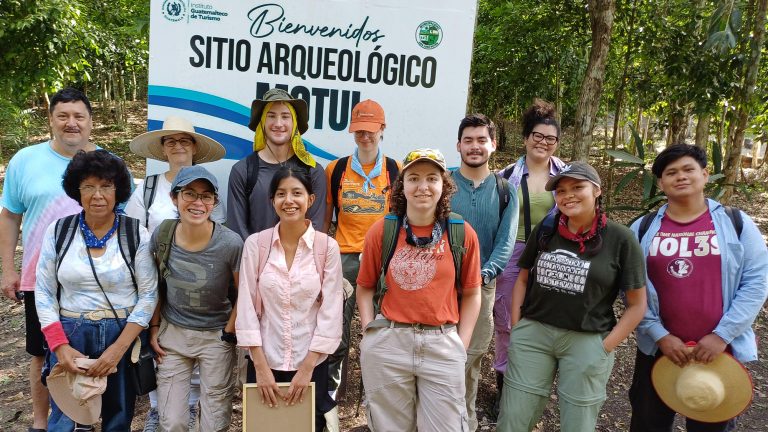
Curriculum & Required Courses
Find the right course for you, whether you’re exploring anthropology and sociology through individual courses or declaring your major.