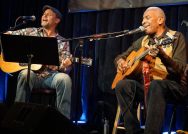
Williams Home Page Eph-clipse Williams students and members of the community gathered at Hopkins Observatory on April 8 to witness the solar eclipse at 96% totality. Thank you to the Astronomy department for hosting and providing eclipse glasses and solar telescope viewings! View more photos from the eclipse here. ConversationsGrammy-nominated singer-songwriter Alastair Moock ’95 is the founder of a collaborative program that uses musical performance and storytelling to encourage interracial conversations about race, gender and class. From the CollegeThe first purpose-built home for the museum—a primary teaching resource for the college across all disciplines, and home to more than 15,000 works—is projected to open in 2027. From the CollegeThe reimagined Davis Center, a hub of programs and spaces supporting historically underrepresented communities within the larger Williams family, is celebrating its opening after a substantial renovation and expansion. MORE STORIES WILLIAMS NEWS From the CollegeThe MRC will serve as the temporary home for Williams’ indoor athletic practices, intramural sports and other recreational activities that were displaced after the Towne Field House closed unexpectedly in spring 2023.MSNBCPolitical science professor James McAllister discusses the relevance of George Orwell's "1984" today on Velshi Banned Book Club.From the CollegeAs the 34th Living Building in the world, the environmental center is the first of four buildings on campus to pursue the International Living Future Institute’s rigorous criteria. MORE NEWS ACADEMICS GIVE TO WILLIAMS ARTS AT WILLIAMS ADMISSION & AID VARSITY SPORTS ENVIRONMENT & SUSTAINABILITY Featured Events Fri 04.19 LOG LUNCH with MAYOR KATHY SHEEHAN, ALBANY, NY Fri 04.19 Berkshire Symphony - Andrius Žlabys, piano Wed 04.24 EARTHWEEK FILM: CONFRONTING CLIMATE CHANGE w/ Eliz.Kolbert,Bill McKibben, Van Jones, James Hansen.. More Events WILLIAMS SOCIAL williamsadmission View Apr 18 Open williamscollege View Apr 17 Open williamsadmission View Apr 16 Open williamscollege View Apr 13 Open williamsadmission View Apr 13 Open williamscollege View Apr 12 Open williamscollege View Apr 11 Open williamsadmission View Apr 11 Open williamscollege View Apr 10 Open williamscollege View Apr 9 Open williamsadmission View Apr 9 Open williamsadmission View Apr 4 Open







Megamenu Social